
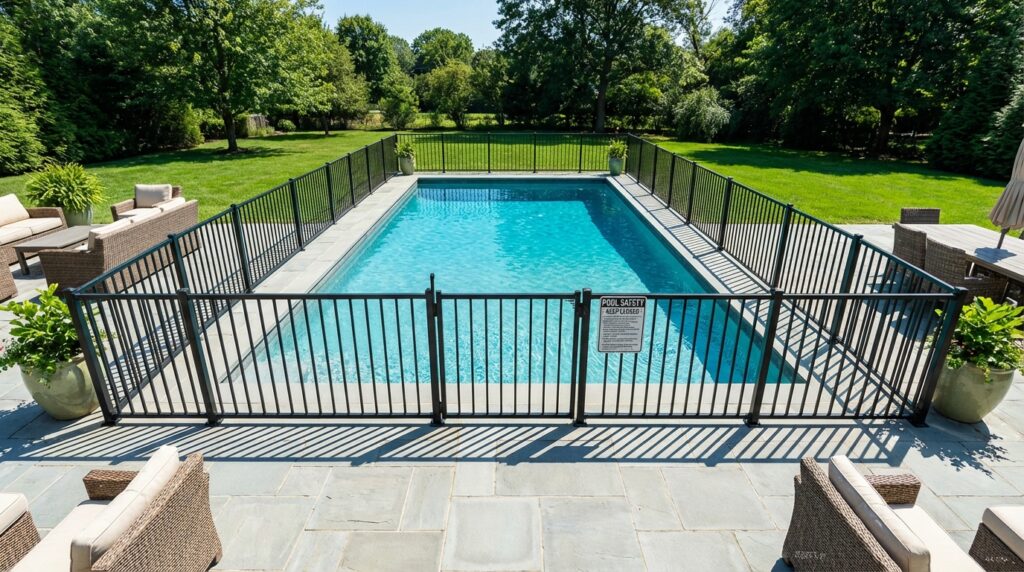
Essential Pool Fence Code Requirements For Safety And Compliance
Securing a backyard oasis involves more than selecting the right tile or water feature; it requires strict adherence to pool fence code requirements to ensure the safety of family and neighbors. Drowning remains a leading cause of accidental death for young children, making these regulations a vital safeguard rather than a legal formality. Navigating the intersection of national standards and local ordinances is the first step in creating a secure environment that meets every safety benchmark.
While the baseline for most jurisdictions begins with a minimum height of 48 inches, modern safety laws often demand even more rigorous specifications. From precise ground clearance measurements to specific gap widths between slats, every inch of a barrier is designed to prevent unauthorized access. Understanding these evolving standards protects property owners from potential liability and provides the peace of mind that a pool is a source of joy, not a hazard.
Key Takeaways
- Residential pool fences must maintain a minimum height of 48 inches and a maximum ground clearance of 2 inches to prevent children from climbing over or crawling under the barrier.
- Safety codes require vertical pickets to be spaced no more than 1.75 to 4 inches apart and horizontal rails to be placed on the interior side to eliminate potential footholds for climbing.
- Access gates must be self-closing, self-latching, and swing outward away from the pool, with release mechanisms positioned high enough to remain inaccessible to small children.
- Professional installation and proper permitting are essential to ensure compliance with both national ISPSC standards and specific local ordinances, protecting homeowners from significant legal and financial liability.
National Safety Standards And ISPSC Dimensions
Navigating the complexities of pool safety starts with understanding the International Swimming Pool and Spa Code (ISPSC), which serves as the premier benchmark for domestic safety regulations. To remain compliant and ensure maximum protection against unauthorized access, a residential pool fence must maintain a minimum height of 48 inches measured from the side facing away from the water. This vertical barrier acts as a primary deterrent, preventing young children from easily climbing over the structure. Professional installation ensures that these height requirements are met consistently across the entire perimeter of the pool area. Expert installers prioritize these dimensions during the planning phase to ensure a project passes local inspections without costly delays or safety failures.
Effective safety standards also address the specific gaps and clearances that could allow a child to slip under or through the barrier. The ISPSC dictates that the ground clearance, which is the space between the bottom of the fence and the finished grade, must never exceed 2 inches. This tight tolerance is designed to prevent a toddler from crawling beneath the fence into the pool zone. Furthermore, the 4 inch sphere rule is a critical safety measurement applied to vertical slat spacing. This rule requires that gaps between pickets are narrow enough that a 4 inch diameter ball cannot pass through at any point. By adhering to these precise measurements, property owners maintain a legally compliant enclosure that meets the highest professional safety standards.
Climb Prevention And Horizontal Rail Placement
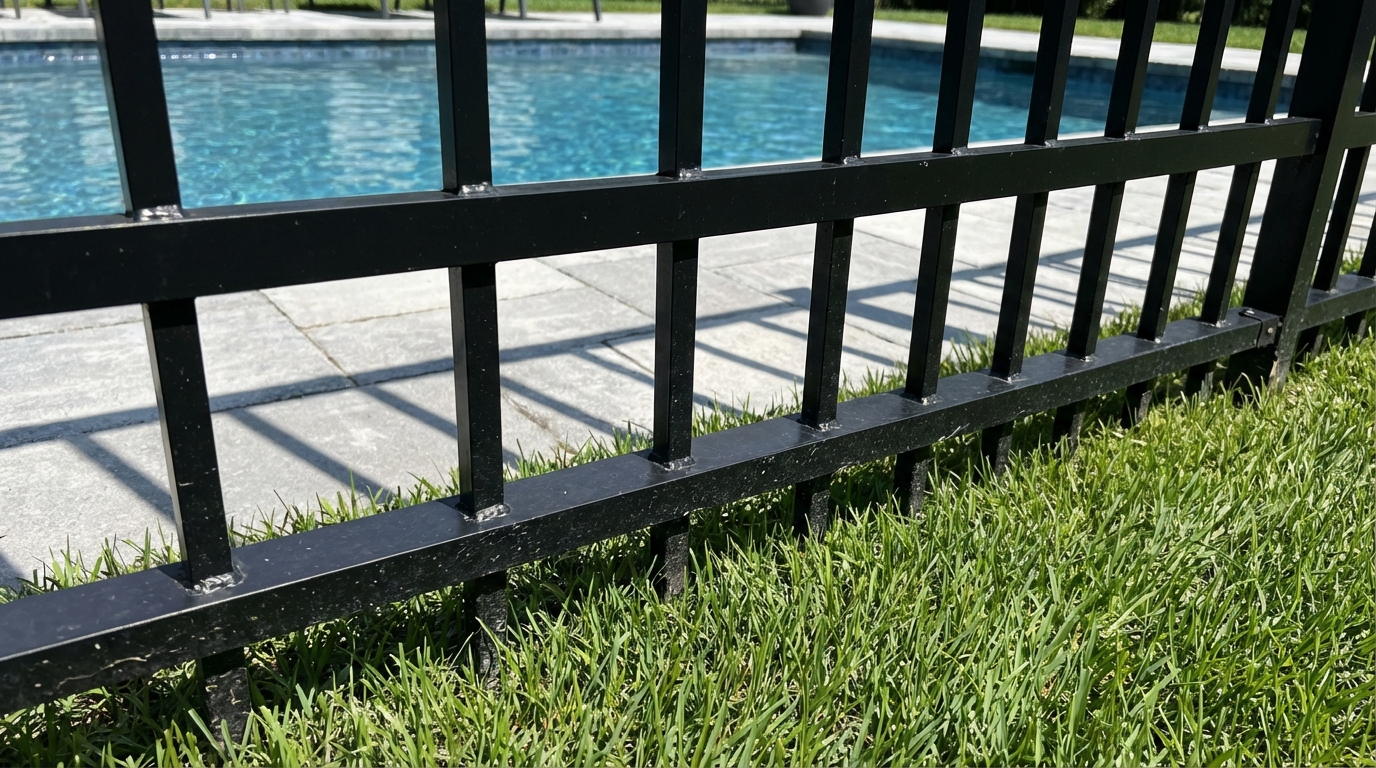
Engineering a pool fence that is truly non-climbable requires a strategic focus on the physical structure of the barrier to eliminate potential footholds. According to the International Swimming Pool and Spa Code, the exterior surface of the fence must be smooth and free of any protrusions or indentations that a child could use to gain leverage. Professional contractors prioritize materials like vertical pickets or fine mesh that prevent a handhold from being established. By removing these horizontal points of contact on the outside of the enclosure, the fence functions as a vertical slab that resists climbing attempts. This design standard is a critical component of local building permits and serves as a primary defense against unauthorized pool access.
The specific placement of horizontal rails is another vital regulatory requirement that property owners must understand during the installation process. To meet safety standards, horizontal members such as top and bottom rails must be positioned on the interior side of the fence, facing the swimming pool. If these rails are placed on the outside, they essentially create a ladder like structure that makes the height of the fence irrelevant. Codes typically require a minimum vertical distance between horizontal rails to ensure that even if a child reaches one, they cannot easily reach the next. Ensuring these structural elements are hidden from the approach side is a hallmark of a code compliant and professionally installed safety system.
Modern safety regulations also dictate the maximum allowable gap between vertical pickets to prevent small children from squeezing through or gaining a foot placement. When horizontal rails are spaced less than 45 inches apart, the vertical pickets must be spaced no more than 1.75 inches apart to maintain a non-climbable rating. This precise engineering ensures that the fence remains a solid barrier regardless of the agility of a young child. Adhering to these specific measurements is not just about passing a final inspection, but about creating a redundant safety environment. Homeowners should work closely with experienced installers who understand how to balance these rigid engineering requirements with the aesthetic goals of the property.
Self-Closing Gates And Latching Mechanism Laws
Adhering to strict safety standards for pool gates is a critical component of professional fence installation and local building code compliance. Every pedestrian access gate must be designed to swing outward, away from the pool area, to prevent a child from easily pushing their way inside. These gates are legally required to be self-closing and self-latching, meaning they must automatically return to a secure, locked position from any open angle. By utilizing high-quality tension hinges and reliable gravity latches, homeowners can ensure their barrier remains a constant line of defense. Professional contractors prioritize these mechanisms to eliminate the risk of a gate being accidentally left ajar by guests or family members.
The positioning of the release handle is another vital regulatory requirement designed to keep curious children out of harm’s way. According to standard safety codes, the latch release must be placed high enough on the interior side of the gate that it remains inaccessible to small children from the outside. If the release mechanism is located lower than 54 inches from the bottom of the gate, it must be shielded so that no opening greater than a half-inch exists within 18 inches of the handle. This specific engineering prevents children from reaching through or over the fence to manipulate the lock. Ensuring these precise measurements are met is a hallmark of a code-compliant installation that protects both the family and the legal standing of the property.
Navigating these complex regulatory requirements is essential for any homeowner looking to avoid costly inspection failures or safety liabilities. Regulatory bodies like the International Swimming Pool and Spa Code establish these benchmarks to provide a uniform level of protection against accidental drownings. Beyond just meeting the minimum height and clearance rules, the integrity of the gate hardware serves as the most frequent point of interaction and potential failure. Selecting professional-grade, weather-resistant latching systems ensures the gate continues to operate smoothly under daily use. Investing in a compliant, expertly installed gate system provides the peace of mind that a pool area is secured according to the highest industry standards.
Permitting Processes And Professional Installation Liability
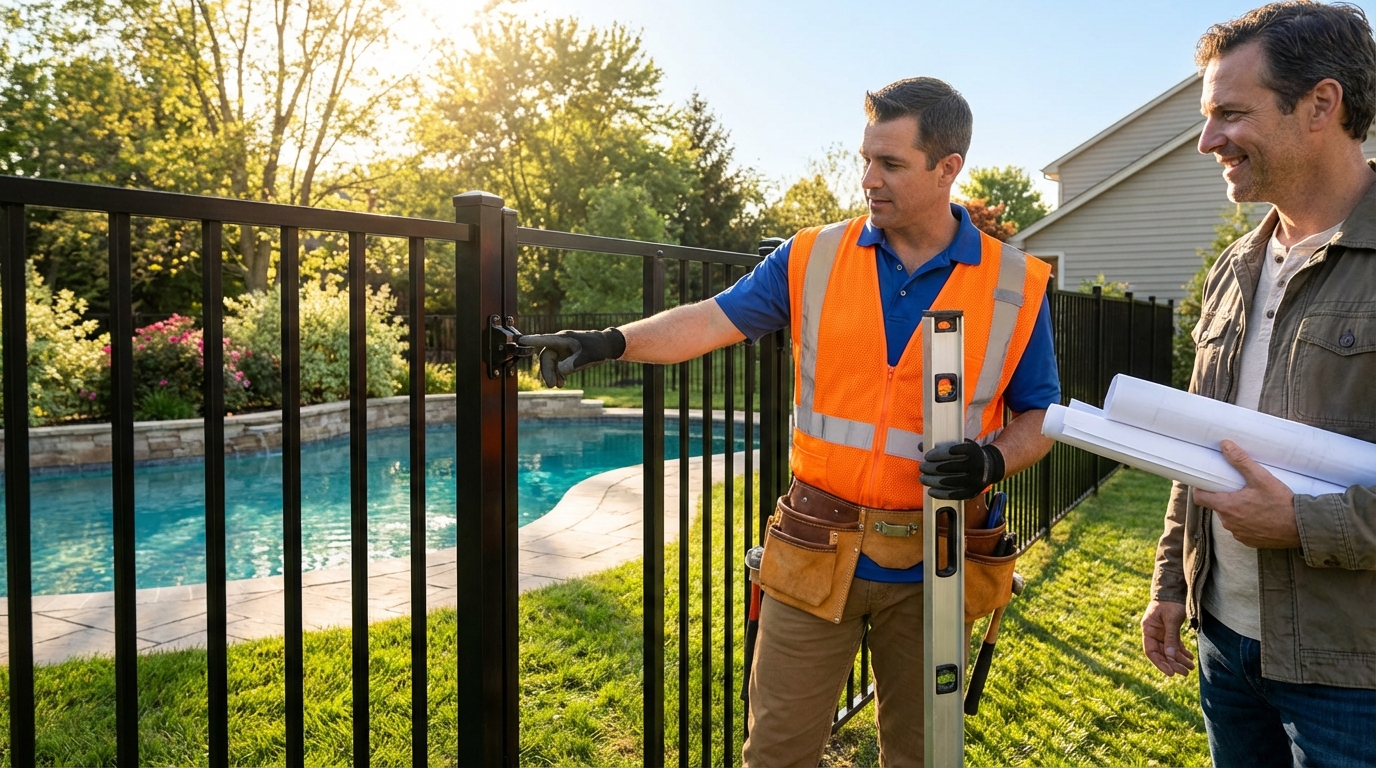
Navigating the complexities of local building permits is a critical step that homeowners must take to ensure their pool area remains legally compliant and safe. Securing the proper permits serves as official verification that safety barriers meet the specific structural and height requirements mandated by the municipality. Local jurisdictions often have unique amendments to national standards, making the permitting process a vital safeguard against future legal liabilities or insurance complications. By obtaining these approvals before construction begins, property owners protect their property value and ensure that safety measures are recognized by local authorities. This administrative oversight is a necessary component of responsible pool ownership and risk management.
Hiring a professional contractor is the most effective way to manage shifting state specific mandates. Certain legislation requires residential pools to be equipped with multiple approved safety measures, a nuance that can easily be overlooked by an unlicensed installer. Professionals stay current on evolving codes and understand the technical specifics of ground clearance and latching mechanisms required by law. When choosing between sliding and swing gates for your property, it is important to remember that pool safety codes specifically mandate outward-swinging pedestrian gates. When partnering with an expert, the burden of liability shifts, as they are responsible for ensuring every inch of the installation adheres to the latest safety protocols. This expertise provides peace of mind that a pool is not only a place of enjoyment but a fully compliant environment that prioritizes the protection of family and guests.
Ensuring Safety Through Strict Code Compliance
Adhering to local and national pool fence codes is a fundamental responsibility that extends far beyond simple home improvement. By strictly following standards such as the four foot minimum height and specific gap limitations, property owners create a reliable barrier that significantly reduces the risk of accidental drowning. These regulations are designed to provide a fail-safe environment for children and pets, ensuring that the backyard remains a place of relaxation rather than a source of danger. Professional installation ensures that every latch and gate meets the rigorous safety criteria required by a specific jurisdiction.
Beyond the immediate safety benefits, compliance with these building codes serves as a critical shield against potential legal and financial liability. Homeowners who neglect to meet ISPSC or local standards may face significant complications with insurance claims or even legal action in the event of an accident. Working with a professional contractor who understands the permitting process and regulatory requirements guarantees that an investment is fully protected from a compliance standpoint. When considering the vinyl vs wood cost for your project, remember that durability and maintenance are key factors in long-term safety compliance. Ultimately, a code-compliant fence offers the invaluable peace of mind that comes from knowing a home is both secure and legally sound.
Frequently Asked Questions
1. What is the standard minimum height for a residential pool fence?
A residential pool fence must maintain a minimum height of 48 inches as measured from the side facing away from the water. This specific height is designed to act as a primary deterrent that prevents young children from climbing over the structure. Adhering to this dimension is a fundamental requirement of the International Swimming Pool and Spa Code (ISPSC).
2. Why is it necessary to follow specific pool fence codes?
Following these codes is essential to prevent accidental drownings, which remain a leading cause of death for young children. Beyond the safety of family and neighbors, strict adherence protects property owners from legal liability and ensures the pool area meets all local and national safety benchmarks. These regulations turn a backyard into a secure environment rather than a potential hazard.
3. What are the requirements for the gap at the bottom of the fence?
The ground clearance, or the gap between the bottom of the fence and the surface below, must be minimal to prevent a child from crawling underneath. Precise measurements are required to ensure that the barrier remains effective across its entire perimeter. Professional installation processes prioritize these clearance standards to guarantee a fence passes local safety inspections.
4. How wide can the gaps between fence slats be?
Specific gap widths between slats are regulated to ensure that a small child cannot slip through the barrier. Every inch of the structure is designed with these dimensions in mind to prevent unauthorized access. Keeping these gaps within code-mandated limits is a vital step in creating a secure and compliant pool area.
5. What is the International Swimming Pool and Spa Code (ISPSC)?
The ISPSC serves as the premier national benchmark for domestic pool and spa safety regulations in the United States. It provides the standardized dimensions and safety specifications that most local jurisdictions adopt as their legal baseline. Understanding and applying these standards is the first step in ensuring a pool barrier is both safe and code-compliant.
6. How do local ordinances interact with national safety standards?
While national standards like the ISPSC provide a baseline, local ordinances often add more rigorous specifications or modern safety requirements. Property owners must navigate the intersection of both sets of rules to ensure a barrier is fully compliant. Professionals focus on these evolving standards during the planning phase to prevent costly delays or safety failures during inspection.