
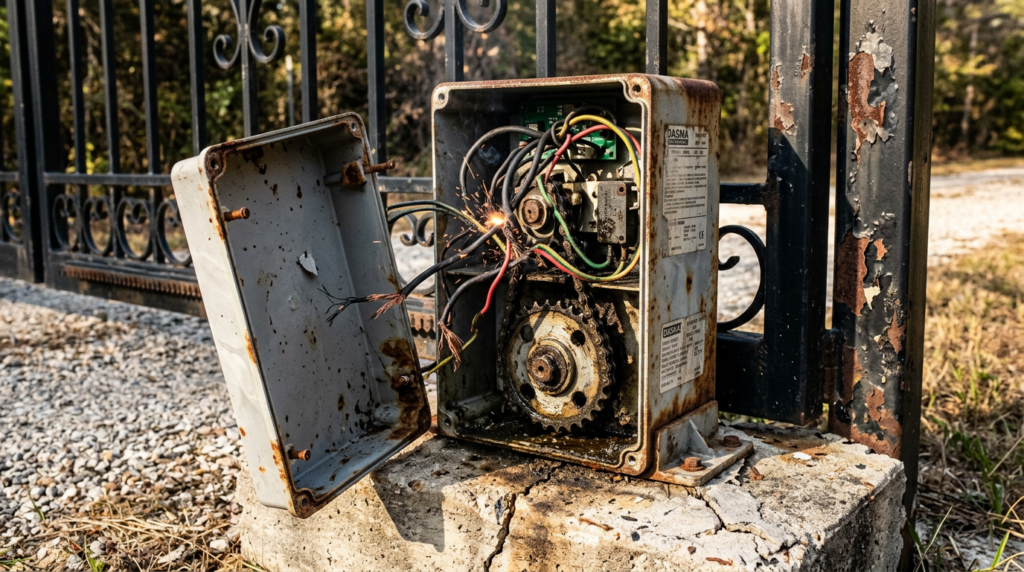
Is It Time To Upgrade? Critical Gate Motor Replacement Signs You Should Not Ignore
Your automatic gate is the primary guardian of your property’s security and convenience, but it isn’t designed to last forever. While these systems typically offer a reliable lifespan of 10 to 15 years, environmental stressors and daily wear can lead to a sudden, frustrating failure. Recognizing the early gate motor replacement signs is essential to avoiding a total lockout or a costly emergency situation.
If you’ve noticed your gate moving with uncharacteristic sluggishness or struggling against internal friction, the internal mechanics may be reaching their breaking point. In modern DC systems, a noticeable drop in speed often signals that the motor or its backup power source can no longer handle the physical load. Staying ahead of these red flags ensures your entrance remains secure and your daily routine stays uninterrupted.
Key Takeaways
- Automatic gate motors typically have a lifespan of 10 to 15 years, but environmental stressors and high usage often necessitate earlier replacement to avoid total system failure.
- Sluggish movement, mechanical stuttering, and inconsistent hesitation are critical indicators that a motor’s internal drive mechanism or gearbox is reaching its breaking point.
- If replacing a DC backup battery fails to restore original gate speed, the issue likely stems from internal motor windings or control board degradation rather than a simple power fault.
- Upgrading to a modern system is more cost-effective than repeatedly repairing an obsolete unit, as new models offer superior energy efficiency, advanced safety sensors, and long-term reliability.
Sluggish Movement And Battery Power Degradation
When your gate begins to move with a noticeable lack of urgency, it is often the first warning that the internal drive mechanism is reaching the end of its functional life. While a gate motor typically lasts between ten and fifteen years, high usage or harsh environmental conditions can accelerate internal wear and fatigue. This sluggishness usually indicates that the motor is struggling to overcome friction or that the power supply can no longer provide the necessary torque for smooth operation. If the speed has dropped significantly below the original factory settings, you are likely facing a choice between a costly series of minor repairs or a more reliable full system upgrade.
Modern gate systems rely heavily on DC backup batteries to handle high current demands during the start and stop cycles of the motor. When these batteries degrade, which typically happens every two to three years, the motor may appear weak or stall entirely during operation. If replacing the battery does not immediately restore the gate to its full speed, the issue is likely rooted in the motor’s internal windings or the control board’s power distribution. Continuing to operate a strained motor can lead to a total system failure at an inconvenient time, making it a critical sign that a replacement is a more cost effective long term solution.
Deciding whether to repair or replace a sluggish system often comes down to the frequency of these performance drops. A motor that consistently fails to reach its designated speed is often signaling that its mechanical components are worn beyond the point of simple maintenance. Investing in a new, modern unit ensures you benefit from updated safety features and improved energy efficiency that older, fatigued models simply cannot provide. By recognizing these signs of power degradation early, you can avoid the frustration of a stuck gate and ensure your property remains secure with a dependable automation system.
Inconsistent Hesitation And Mechanical Stuttering
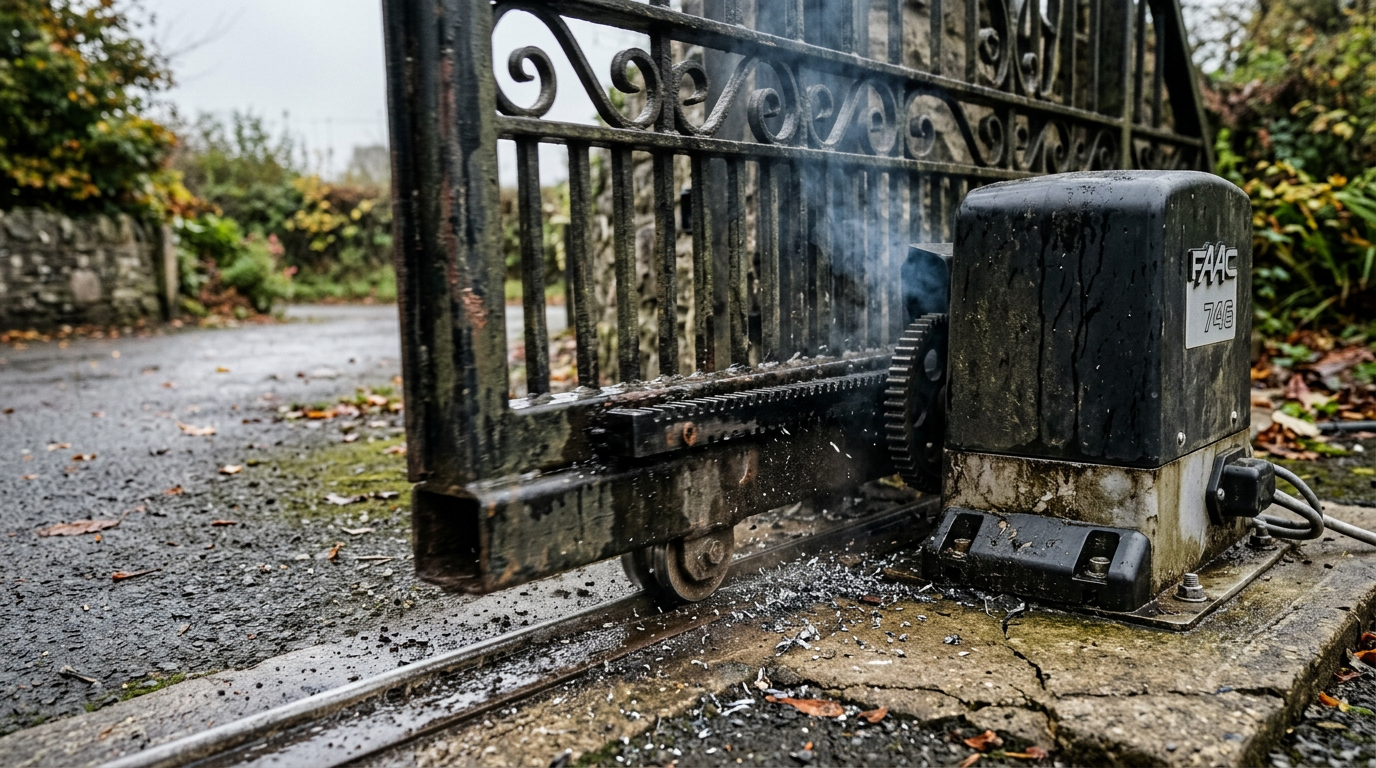
When your gate begins to jerk or stutter during operation, it is often a signal that the internal mechanical components are reaching the end of their functional lifespan. While a single hesitation might seem like a minor glitch, consistent stopping mid-cycle typically indicates significant motor fatigue or a failing gearbox that can no longer handle the physical load. Most modern gate motors are engineered to last between 10 and 15 years, but high-frequency usage or harsh environmental factors can accelerate internal wear. If the system frequently pauses and requires a manual reset to finish its cycle, the motor is likely struggling with a permanent loss of torque. Investing in a full system replacement at this stage is often more cost-effective than attempting to patch a failing unit that will inevitably break down again.
Sensor failures and erratic electronic responses frequently accompany these mechanical stuttering events, creating a safety risk for your property. When a gate hesitates or reverses without an obstruction, it suggests that the control board or the motor’s internal sensors are no longer communicating correctly. These components are highly sensitive to moisture and age, and once they begin to fail, the reliability of the entire security perimeter is compromised. Relying on a stuttering gate puts unnecessary strain on the drive track and hinges, which can lead to even more expensive structural repairs if the motor seizes completely. Upgrading to a modern DC system ensures smoother movement and provides more reliable battery backup technology for consistent performance.
Deciding between a minor repair and a full replacement often comes down to the frequency and severity of these performance red flags. A motor that moves sluggishly or vibrates excessively is usually suffering from internal friction that simple lubrication cannot fix. If your system is approaching the decade mark, these physical symptoms are clear indicators that the hardware is technologically and mechanically obsolete. Choosing a full replacement provides you with the latest safety features and energy-efficient operation, eliminating the frustration of recurring service calls. Proactively installing a new motor ensures that your entrance remains secure and functional without the unpredictability of a dying system.
Deciding Between Costly Repairs And Modern Upgrades
Property owners often face a difficult crossroads when an aging gate motor begins to fail, leading to a cycle of expensive service calls and temporary fixes. While a single part replacement might seem like a budget friendly solution, the cumulative electric gate repair cost of a system that has surpassed its ten to fifteen year lifespan often exceeds the price of a total upgrade. Modern units offer significantly better energy efficiency and faster operation, which can prevent the frustration of dealing with a sluggish gate that compromises your security. Choosing a full replacement eliminates the “sunk cost” fallacy where you continue pouring money into an obsolete system that will inevitably break down again.
Investing in a high efficiency gate motor system provides long term reliability that older, patched together units simply cannot match. Newer DC powered models feature advanced battery backup systems and smoother mechanical transitions, reducing the internal friction that often leads to motor burnout in legacy hardware. By upgrading now, you avoid the risk of a total system failure that could leave your property vulnerable or trap your vehicle inside at an inconvenient time. A modern installation also brings the benefit of updated safety sensors and smart technology integrations that were not available a decade ago.
The decision to upgrade should be driven by a clear assessment of how frequently your current motor requires attention and the availability of its replacement parts. Older models often rely on components that are becoming increasingly scarce, driving up the price of even minor adjustments. Transitioning to a contemporary system ensures that your gate operates at peak performance while providing the peace of mind that comes with a comprehensive manufacturer warranty. Ultimately, replacing a failing motor is a proactive strategy that enhances property value and ensures your daily routine remains uninterrupted by mechanical instability.
Signs Your Gate Motor Needs Replacing
Recognizing the early warning signs of a failing gate motor is essential for maintaining the security and convenience of your property. If your gate has begun moving with uncharacteristic sluggishness or makes grinding noises during operation, these are often indicators of internal mechanical fatigue or a dying motor. Most high quality systems are designed to last between ten and fifteen years, but high frequency use and harsh environmental factors can accelerate this timeline. Ignoring these red flags frequently leads to a total system failure at the most inconvenient possible moment. Deciding between a minor repair and a full system upgrade now can save you from the emergency costs associated with a complete lockdown.
Modern gate automation has advanced significantly, and persistent issues with backup batteries or slow response times often signal that your hardware is reaching the end of its functional life. While a simple battery replacement might offer a temporary fix, recurring electrical faults usually point toward a deeper issue within the control board or the motor itself. Upgrading to a contemporary system ensures you benefit from improved energy efficiency and enhanced safety features that older models lack. It is far more cost effective to plan a controlled replacement than to wait for the equipment to seize entirely. Taking a proactive approach allows you to select a system that perfectly matches your current usage requirements and security needs.
Consulting with a professional technician is the most reliable way to determine if your system can be salvaged or if a full replacement is the smarter investment. An expert assessment will evaluate the integrity of the motor, the condition of the power supply, and the overall mechanical alignment of the gate. They can provide a clear breakdown of whether the cost of ongoing repairs will soon outweigh the price of a new, warrantied installation. Do not wait until you are stuck behind a non-functional gate to address these critical performance issues. When choosing between sliding and swing gates for a new installation, contact a specialist today to schedule a comprehensive diagnostic and ensure your entrance remains secure and operational for years to come.
Frequently Asked Questions
1. How long should I expect my gate motor to last?
A standard automatic gate motor typically provides a reliable lifespan of 10 to 15 years. However, factors like high daily usage and harsh environmental conditions can accelerate wear, potentially leading to an earlier replacement.
2. Why is my gate moving much slower than it used to?
Sluggish movement is often the first sign that the internal drive mechanism is failing or struggling to overcome friction. If your gate speed has dropped significantly below factory settings, the motor may no longer be able to provide the torque necessary for smooth operation.
3. Could my slow gate just be a battery issue?
Modern DC systems rely on backup batteries for peak power demands, and these batteries usually need replacement every two to three years. If installing a fresh battery does not immediately restore the gate to its original speed, the problem is likely rooted in the motor itself.
4. What are the risks of ignoring a struggling gate motor?
Ignoring early warning signs like sluggishness or internal friction can lead to a sudden and total system failure. Taking action when you first notice these red flags helps you avoid a frustrating lockout or the high costs associated with emergency repairs.
5. Should I repair or replace my aging gate motor?
If your motor is reaching the end of its functional life, you often face a choice between a series of expensive minor repairs or a full system upgrade. Choosing a replacement is generally the more reliable and cost effective path to ensure your property remains secure.
6. How do environmental stressors affect my gate’s performance?
Extreme weather and daily wear put significant physical load on the motor and its internal mechanics. These external factors can cause the system to reach its breaking point faster than the manufacturer’s estimated lifespan, necessitating a proactive replacement. Many homeowners also ask, is a solar gate opener worth the investment when considering these environmental impacts on long-term reliability.