
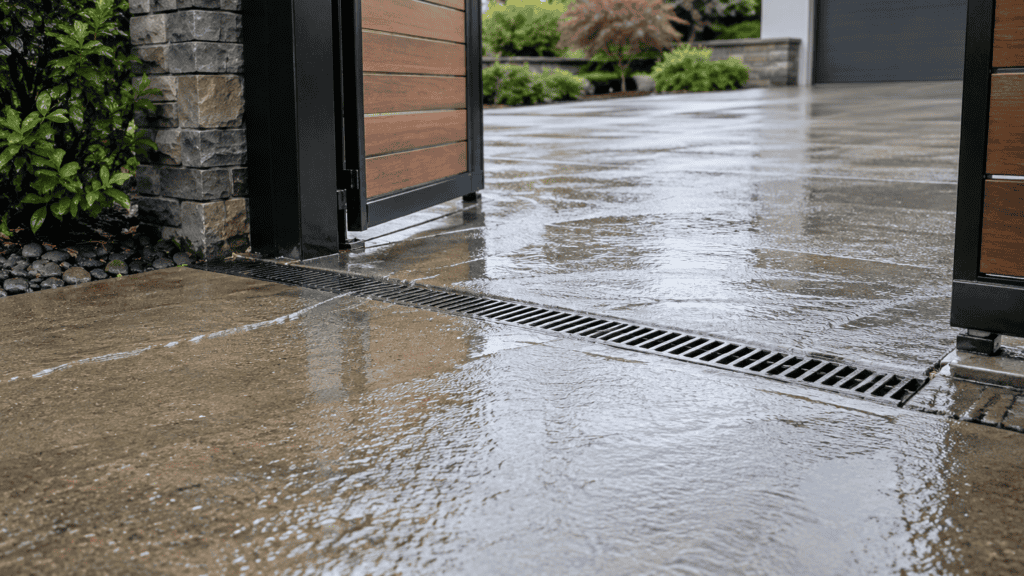
Gate Drainage Solutions: How to Manage Water Around Posts, Tracks, and Driveways
Gate drainage solutions manage water around posts, tracks, and driveways by intercepting runoff before it pools at an entrance or erodes the ground around a post. A channel drain captures surface water across a driveway or gate approach. A flap gate at a pipe outlet allows water to flow outward and closes against backflow. These systems address different parts of the drainage path. Adding a drain without confirming where its water will go may leave the problem unresolved.
The right approach depends on slope, soil, gate movement, and whether the outlet can discharge freely. The Federal Highway Administration’s 2024 Urban Drainage Design Manual (HEC-22), Fourth Edition covers storm-drain design, including drainage structures and piping. As a licensed contractor serving greater Los Angeles, we can consider drainage alongside automated gate systems, driveways, and other outdoor improvements.
Key Takeaways
A channel drain intercepts surface runoff crossing a driveway or gate entrance, while a flap gate at a pipe outlet prevents reverse flow, so the right choice depends on the full route from where water collects to where it can discharge.
A flap gate can restrict outgoing drainage when receiving-water levels rise, and sediment, organic material, or trash can interfere with its operation, so the outlet needs regular inspection and debris removal.
A channel drain should have a concrete base and surround, with its grate about 1/16 to 1/8 inch below adjacent paving; keep vehicles off the concrete until the mix manufacturer’s instructions allow loading.
A 2026 cost guide estimates installed driveway channel drains at $400 to $2,400; HomeGuide’s cost guide provides this broad estimate. We offer onsite evaluations in greater Los Angeles to assess site-specific drainage and gate needs.
What Gate Drainage Solutions Work?
The right gate drainage solution depends on where water collects and where it can safely discharge. A channel or trench drain intercepts runoff at the surface, making it suitable for a driveway or entrance where water crosses the paving toward the gate. The drain must connect to a workable outlet. Collecting water without a discharge route does not resolve the drainage problem.
A flap gate addresses a different issue: reverse flow through a pipe outlet. It allows water to drain outward and closes when water pushes back toward the property. However, when water levels at the receiving end are high, the closed gate can also limit outgoing discharge. The U.S. Army Corps of Engineers describes flap gates as allowing downstream flow while preventing backflow.
Site conditions determine whether either measure is appropriate or whether both are needed. The drainage layout should account for water collecting around posts, along gate tracks, and across entry areas, as well as the path water follows across the property. Drain placement also needs to work with gate movement and vehicle access, rather than obstructing the gate or traffic.
The available discharge route matters as much as the collection point. A pipe outlet exposed to backwater may call for a flap gate, while surface runoff at an entrance may call for a channel drain. Any proposed layout should account for how water will behave when the outlet cannot discharge freely and whether accumulated debris could interfere with a flap gate’s operation.
Why Does Water Collect Near Gates?
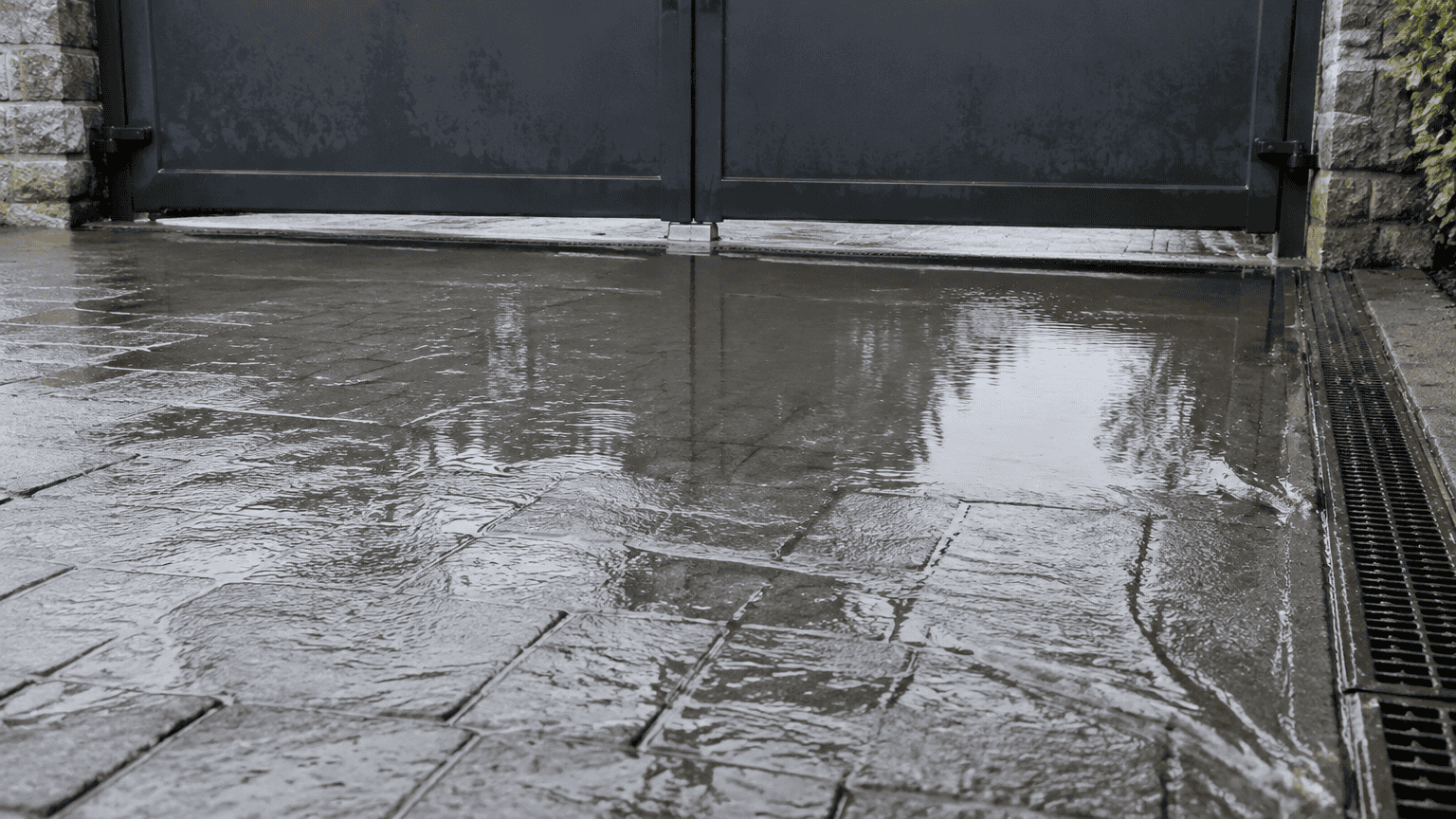
Water collects near gates when runoff reaches a low point faster than the site can carry it away or when water cannot leave through a drainage outlet. A driveway or sloped yard may direct surface water toward the entrance, where paving, a threshold, or a change in grade can hold it in place. Pooling at the entrance may then extend along a gate track or collect around a post.
Surface pooling and drainage backflow are different problems. Surface water is visible as it moves or gathers over the driveway, track, or surrounding hardscape. Backflow may occur when water reverses direction through a pipe outlet, even if the surface drain is clear. A flap gate allows outward flow through a conduit and closes to prevent reverse flow.
Follow the water across the entrance, driveway, gate track, and nearby hardscape as one connected area. Note where runoff first appears, where it gathers, and whether it seems to come from the yard or an outlet. Posts and tracks can show where water is being redirected or held, but the visible pool may not reveal the original source.
The right solution depends on the water source, site layout, and a workable discharge point. When the source or outlet is unclear, an onsite evaluation can help trace the route before you choose a drainage fix.
Which Drainage Option Fits Your Gate?
A channel drain fits surface runoff crossing a driveway or entrance, while a flap gate fits a pipe outlet where reverse flow could cause interior flooding. Some drainage paths may call for both. The two devices address different points in the route water takes across and away from a property. A channel drain intercepts water at the surface and directs it toward an outlet. It can help when runoff flows across paving toward a gate, but it cannot by itself protect a pipe outlet from water pushing back into the property. The drain’s outlet and the route beyond it matter: collected water needs somewhere to go, including when receiving water levels are high. A flap gate may be appropriate where a pipe outlet could allow reverse flow. It permits water to discharge outward and closes against backflow. When receiving water levels rise, however, the closed gate can restrict discharge from the property. A flap gate addresses backflow risk, not surface runoff that needs to be intercepted before it reaches a low point. Before choosing equipment, trace the drainage path from where water first gathers to its intended discharge point. For example, surface runoff crossing an entrance may need to be collected, while a pipe carrying that water to an outlet exposed to backwater may also need protection from reverse flow. Neither device is a universal fix. A channel drain will not solve every outlet problem, and a flap gate will not collect water moving across a driveway. Selecting one or both depends on the full route water must follow and whether it can discharge under changing conditions.
How Do Flap Gates Prevent Backflow?
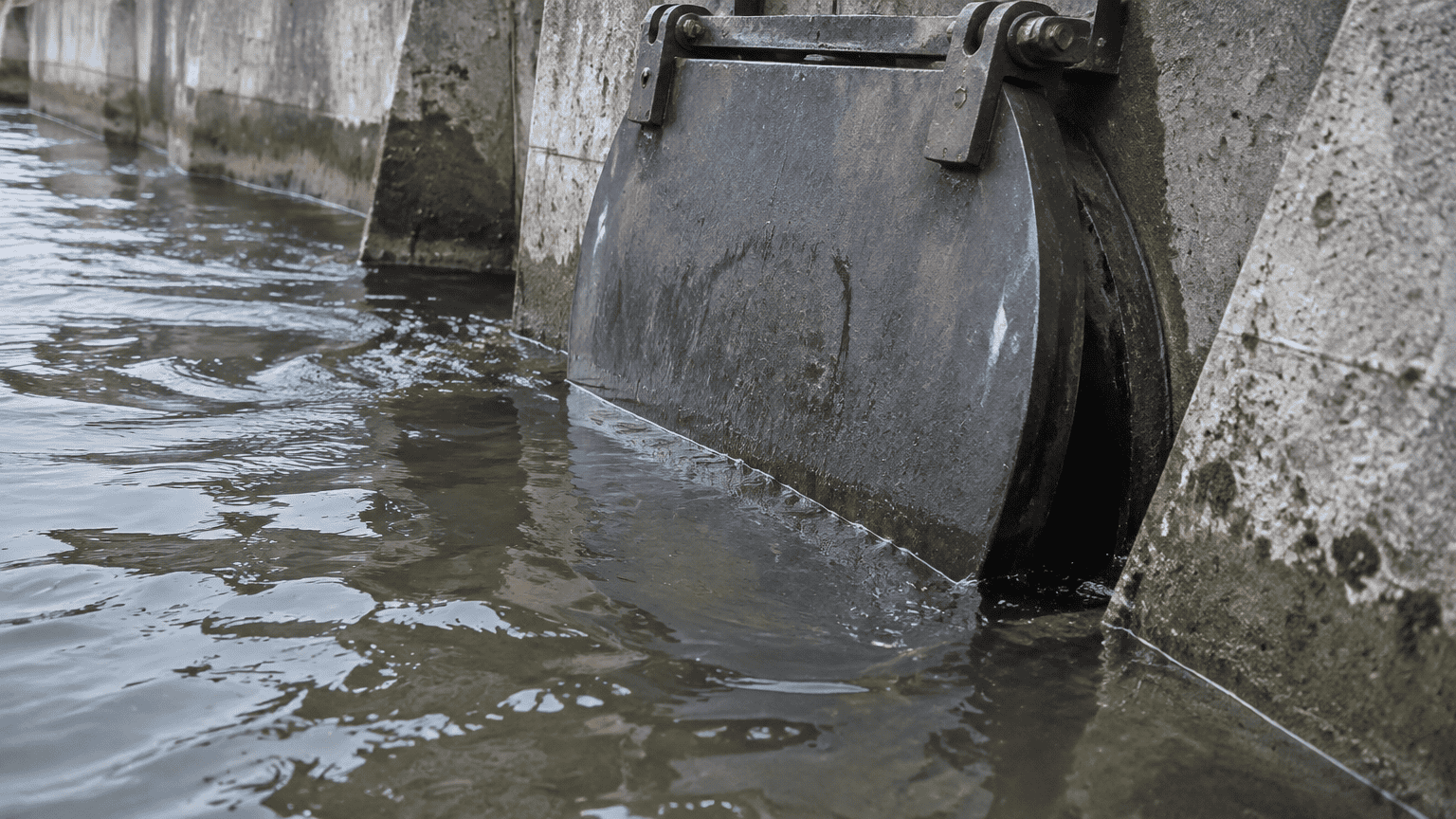
A flap gate prevents backflow by allowing water to flow downstream through a conduit and closing when water pushes in the reverse direction, according to the U.S. Army Corps of Engineers’ HEC-RAS reference. The gate is fitted at a pipe outlet, where it can limit reverse flow from a channel or other receiving water.
Receiving-water levels affect what the gate can do. When water outside the outlet rises enough to close the gate, the gate can also restrict drainage from the property until outside levels fall. The Federal Highway Administration’s 2024 Urban Drainage Design Manual (HEC-22), Fourth Edition covers storm-drain design, including outlet flap gates and their maintenance.
Sediment, organic material, and trash can reduce flow through a flap gate or prevent it from closing fully. FHWA’s HEC-22 maintenance guidance emphasizes regular inspection and removal of accumulated material. An obstructed gate may not provide the intended protection or allow water to drain freely.
A flap gate is not automatically needed at every residential entrance. The U.S. Army Corps of Engineers’ Los Angeles District side-drain policy addresses cases where high channel water could cause backflow and interior flooding, requiring a gate on a side-drain outlet under the policy’s criteria. That guidance concerns a specific flood-risk condition, not every driveway or gate.
What Does Channel Drain Installation Involve?
Channel-drain installation involves supporting the channel with concrete, setting the grate slightly below the paving, allowing the concrete to cure, and inspecting connected pipework where applicable. The installation sequence should account for the intended water route and any project or local requirements.
Set the channel drain on a concrete base and provide a concrete surround. NDS recommends placing the grate about 1/16 to 1/8 inch below the adjacent surface so runoff can enter the drain. NDS’s channel-drain installation guidance describes these support and placement details.
Keep traffic off the concrete until the mix manufacturer’s recommendations allow loading. NDS says many residential fast-setting mixes reach sufficient strength within 24 hours, but the appropriate wait depends on the product used. Follow the mix manufacturer’s instructions before allowing vehicles over the installation.
Inspect connected reinforced-concrete pipework where the project includes it. ASTM C1840/C1840M-22 covers inspection and acceptance of installed reinforced-concrete culvert, storm-drain, and storm-sewer pipe in gravity, non-pressure applications.
Permit coverage may also affect construction work. The EPA’s construction-stormwater guidance says qualifying projects disturbing at least one acre and discharging stormwater to U.S. waters generally need NPDES permit coverage where EPA is the permitting authority. State and local requirements may also apply, so check the rules that govern the specific project.
How Much Does a Driveway Drain Cost?
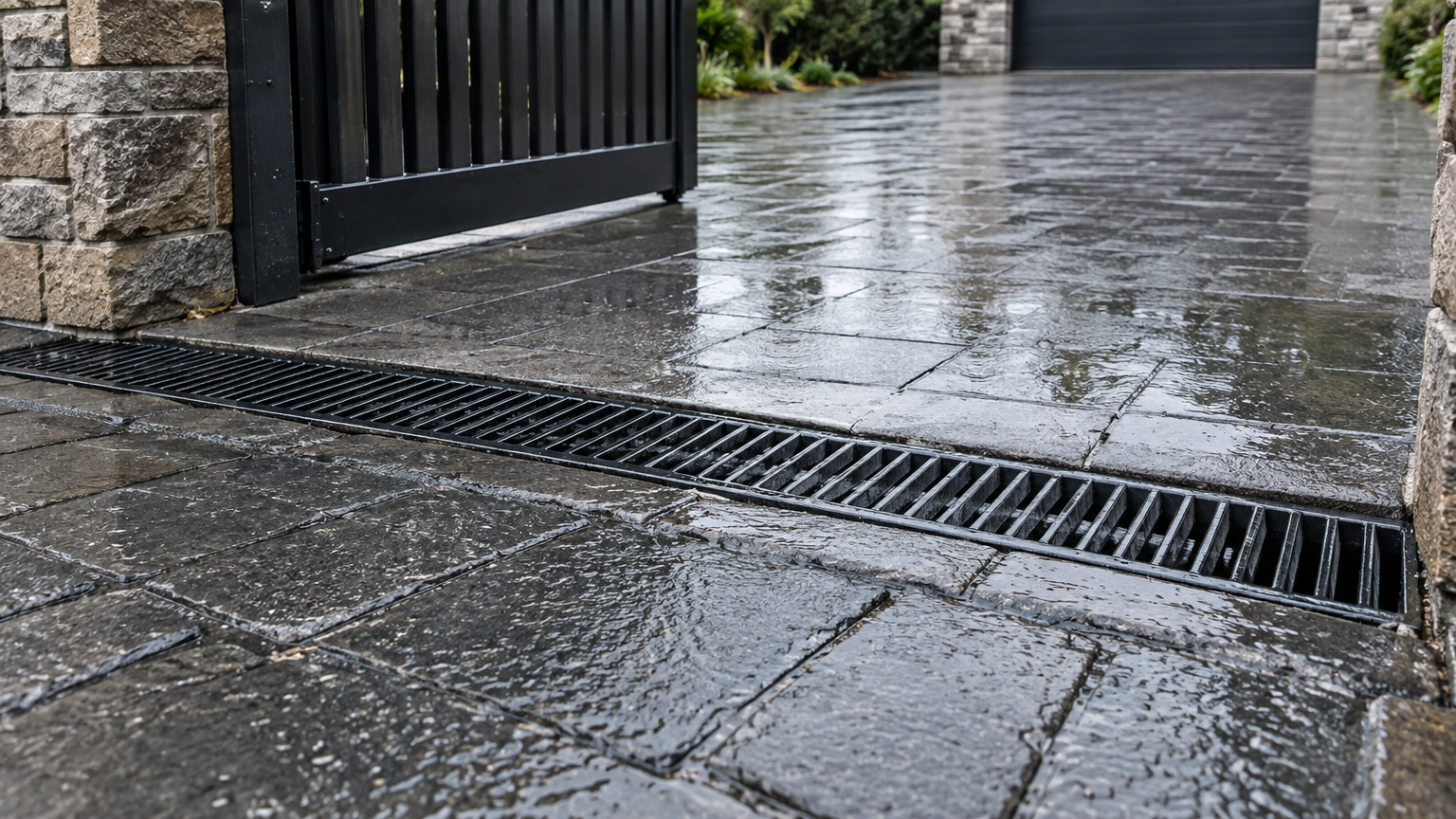
A 2026 cost guide estimates installed driveway trench or channel drains at $400–$2,400, depending on drain size, channel width, and grate material. This is a broad market estimate, not a site-specific quote.
Dura Trench lists residential driveway drain kits at $940.24 for 16 feet, $1,380.36 for 24 feet, and $1,840.48 for 32 feet. These are kit prices, not installed project estimates, so the figures are not directly interchangeable.
A custom estimate depends on the site layout and the length of drain needed to intercept runoff across the driveway or entrance. Materials, including the channel and grate, also affect the project scope. Related driveway or hardscape work can change the estimate, such as work needed to fit the drain into the existing paved area. The final price depends on the specific drainage route and construction involved, not just a kit price or general cost range.
How Can Gate and Drainage Work Coordinate?
Gate and drainage work coordinate best when the water route, gate operation, driveway, and surrounding landscape are considered as one property plan. A channel drain near an automated gate, for example, needs to intercept runoff without interfering with the gate’s track or vehicle access. We are a licensed contractor serving greater Los Angeles. We install custom wood, wrought iron, vinyl, and chain link fencing. Our services also include hardscaping, pool remodeling, and construction of decks, patios, and retaining walls. During an integrated evaluation, we can consider gate automation alongside driveway and landscape construction, including where water collects and how proposed improvements fit together. You can request an onsite evaluation and quote for your specific water and gate concerns. The right layout depends on the property’s drainage route and the space needed for gates, vehicles, and outdoor features to function.
Request a Gate Drainage Evaluation
If water is pooling around a gate post, sitting in the track, or crossing the driveway toward the entrance, request an onsite evaluation from us. We serve the greater Los Angeles area and can consider drainage alongside gate, driveway, and landscape work.
Before contacting us, note where water first appears, where it collects, and whether you can identify a pipe outlet or low point where it should drain. Photos taken during or after rainfall can help show the flow path. Let us know whether the gate is automated and whether water affects its movement or vehicle access.
Contact All County Fence and Gate to discuss your property and arrange an evaluation. We are a licensed contractor specializing in custom fencing and automated electric gates, with hardscaping and driveway construction among our broader outdoor services. Our integrated scope can help us consider how a drainage change may fit with the gate, paving, and surrounding property.
A site-specific quote depends on the drainage route and the construction involved. Share your observations when you reach out so we can understand the concern and discuss an appropriate next step.
Frequently Asked Questions
1. Can a channel drain be added to an existing concrete driveway?
Yes, a channel drain can be added if the driveway can be modified and the drain can connect to a suitable outlet. The channel needs a concrete base and surround, and its grate should sit slightly below the adjacent paving so runoff can enter.
2. How often should a driveway channel drain be cleaned?
Clean the drain when leaves, sediment, or other debris begin to obstruct the grate or channel, and check it regularly to catch buildup early. The right inspection schedule depends on how much debris and runoff reach the driveway.