
The High Cost Of Neglecting Sliding Gate Track Maintenance
A smooth-gliding entrance is the hallmark of a secure and functional property, but it requires more than just a sturdy motor. Proper sliding gate track maintenance is the frontline defense against costly mechanical failures and safety hazards. Keeping your gate in peak condition means moving beyond reactive repairs and embracing proactive care. Neglecting the debris and alignment of your track does not just cause an annoying rattle, it places unnecessary strain on your automation system.
Modern smart home ecosystems allow for a more sophisticated, data-informed approach to property management. By integrating condition-led monitoring, you can identify friction points before they compromise your gate’s longevity or trigger false sensor alerts. Maintaining a clean, well-lubricated track ensures your security system remains responsive and your motor stays under warranty. Investing a few minutes in a disciplined upkeep routine preserves both the aesthetic appeal and the operational integrity of your investment.
Key Takeaways
- Prioritize proactive maintenance over reactive repairs to prevent excessive motor strain, internal overheating, and the eventual burnout of expensive automation components.
- Identify early warning signs of track failure, such as grinding noises or jerky movements, to address structural misalignments before they lead to catastrophic derailment.
- Maintain a strict cleaning regimen using a stiff-bristle brush and silicone-based lubricants, avoiding heavy grease that attracts abrasive grit and accelerates hardware wear.
- Leverage smart monitoring and IoT sensors to track real-time resistance levels, allowing for data-informed interventions before subtle friction points escalate into total system failure.
Identifying Early Warning Signs Of Track Obstruction
Ignoring the subtle changes in your gate’s operation can lead to catastrophic motor failure and costly structural repairs. A common early indicator of trouble is a persistent grinding or scraping sound that occurs during the opening or closing cycle. This noise often signals that the rollers are fighting against compacted debris or that the track itself has shifted out of its necessary alignment. When a gate meets resistance, the motor must work significantly harder to move the same weight, which generates excessive heat and wears down internal gears. Identifying these auditory cues early allows you to address the root cause before the system suffers a total mechanical breakdown.
Jerky movements or stuttering during operation are equally concerning signs that the track requires professional attention. If the gate pauses momentarily or vibrates as it travels, it is likely encountering a physical obstruction or a warped section of the rail. Modern smart sensors may even trigger a safety reversal if the resistance becomes too high, which can leave your property vulnerable or trap vehicles inside. These hiccups in movement are rarely self-correcting and typically point to loose mounting bolts or a track that has settled unevenly into the ground. Addressing these misalignments immediately ensures the gate continues to glide smoothly without straining the expensive drive unit.
Proactive troubleshooting of these symptoms is the most effective way to determine if you need a simple cleaning or a full component replacement. While basic sweeping can resolve minor issues, persistent friction often requires a professional assessment to check for structural integrity and precise leveling. If you notice that the gate has become increasingly sluggish despite regular maintenance, the rollers may have developed flat spots or the track could be permanently bowed. Catching these issues during the early warning phase prevents the need for an emergency service call when the gate eventually jumps its track or the motor burns out completely. By closely monitoring how the gate responds to daily use, you can maintain a secure and functional entrance while avoiding the high costs of major hardware failure.
Critical Cleaning And Proper Lubrication Standards

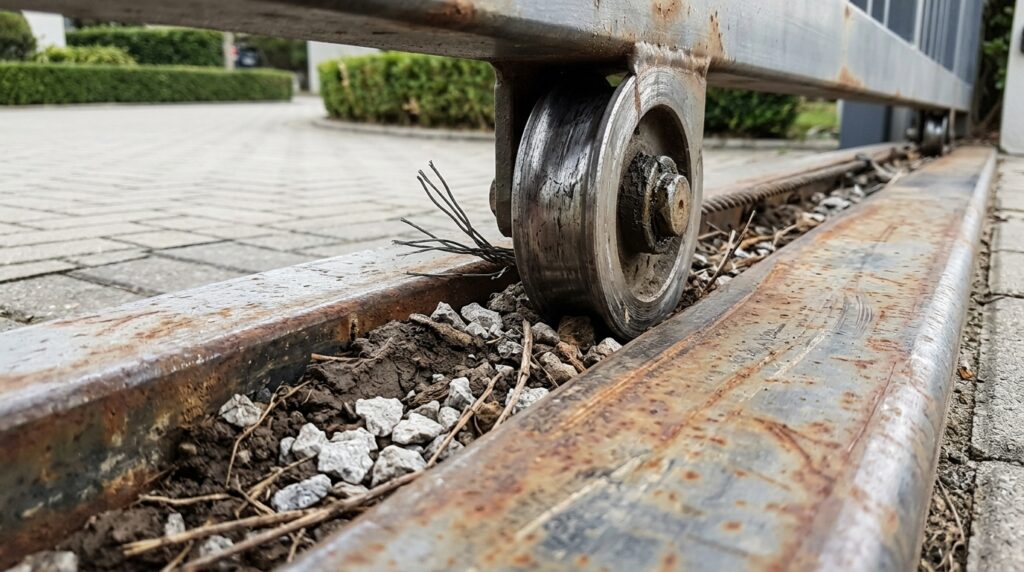
Neglecting the cleanliness of your sliding gate track is a primary catalyst for premature motor failure and costly structural repairs. You should utilize a stiff-bristle brush to aggressively clear away stones, compacted soil, and organic debris that inevitably collect within the track groove. These small obstructions force the gate motor to work harder, leading to internal overheating and the eventual burnout of sensitive electronic components. By maintaining a clear path, you ensure the gate operates with minimal resistance, which preserves the integrity of the drive system and prevents the stuttering movement that often signals an impending breakdown.
The choice of lubricant is equally vital, as using the wrong substance can inadvertently accelerate the wear and tear on your gate rollers. Many property owners mistakenly apply heavy grease or oil-based products, which act as magnets for dust and abrasive grit that grind down the metal surfaces over time. Instead, you must apply high-quality silicone-based lubricants to create a dry, protective barrier that repels contaminants while ensuring smooth operation. This specific lubrication standard prevents the buildup of sludge that causes rollers to seize, helping you avoid the need for emergency professional part replacements or structural realignments.
If you notice your gate is grinding or struggling despite regular cleaning, these symptoms often indicate that the track has already sustained physical damage or misalignment. Data-informed maintenance suggests that persistent noise or hesitation is a warning sign that the internal bearings or the track itself may require professional adjustment. Catching these issues early through proper cleaning and lubrication can save you from a complete system failure that leaves your property unsecured. Establishing these high maintenance standards now is the most effective way to troubleshoot performance gaps before they escalate into expensive mechanical disasters.
Structural Integrity And Hardware Replacement Triggers
Regular inspections must go beyond simple cleaning to address the structural stability of the track’s fastening system. Vibrations from heavy daily use often cause mounting bolts to back out, leading to subtle shifts that put immense strain on the gate motor. You should systematically check every anchor point to ensure the track remains flush with the ground and perfectly straight. If you notice a bolt that spins freely or a section of the track that bounces when the gate passes over, the structural integrity is compromised. Ignoring these loose components can lead to a catastrophic derailment, potentially damaging the gate frame or injuring bystanders.
Terminal rust and physical warping serve as the primary indicators that a track has reached the end of its functional life. While surface oxidation can often be sanded and treated, deep pitting or flaking metal suggests that the internal strength of the steel is gone. You should run a level along the entire length of the track to look for waves or dips that have developed over time due to soil shifting or heavy vehicle traffic. If the track is visibly bent or the metal has thinned to the point of deformity, simple adjustments will no longer suffice. These structural failures require a professional replacement to prevent the gate motor from burning out due to excessive resistance.
Identifying when a track has moved from a maintenance task to a replacement project is vital for property safety and budget management. A warped track forces the rollers to climb and drop, creating a jarring motion that shakes the entire gate assembly and loosens internal hardware. When you hear grinding noises or see the gate hesitate at specific points despite a clean track, the geometry of the steel has likely failed. Professional intervention is necessary at this stage because installing a new track requires precise leveling and welding that cannot be replicated with DIY patches. Addressing these terminal triggers early prevents the much higher repair cost of replacing a seized motor or a collapsed gate panel.
Smart Monitoring And Condition Led Maintenance Schedules
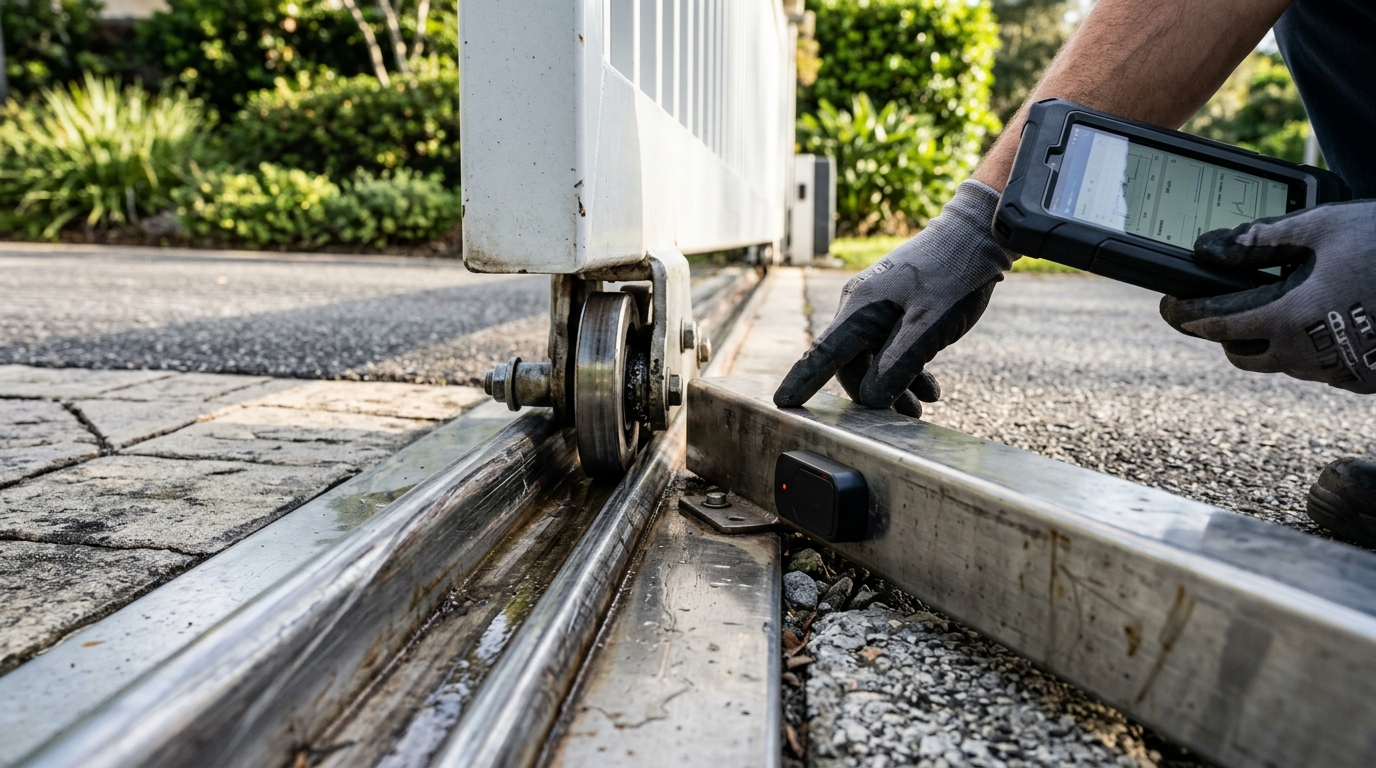
Modern sliding gate systems have evolved to include IoT sensors that provide real-time feedback on the physical health of your track and rollers. These smart monitoring tools track the electrical draw and resistance levels of the motor, instantly flagging subtle increases in friction that are invisible to the naked eye. When the system detects that the gate is struggling to overcome debris or a slight misalignment, it sends an immediate alert to your smartphone. This data-informed approach allows you to address minor obstructions or lubrication needs before they escalate into a complete mechanical failure. By catching these warnings early, you avoid the safety hazards associated with a gate that might stall or reverse unexpectedly during operation.
Proactive intervention based on sensor data is far more cost-effective than waiting for the audible signs of a failing system. While a simple track cleaning or roller adjustment is inexpensive, ignoring early friction warnings often leads to burnt-out motors and warped tracks that require total replacement. If your troubleshooting reveals significant mechanical wear or deep structural damage to the track, it is essential to contact a professional technician immediately. Expert intervention ensures that the gate is balanced correctly and that all safety sensors are functioning as intended. Ultimately, a consistent maintenance schedule backed by smart technology protects your financial investment and ensures the long-term security of your property.
Preventing Costly Repairs Through Track Maintenance
Ignoring the warning signs of a failing sliding gate track is a recipe for expensive motor repairs and potential safety hazards. While regular sweeping and lubrication are vital, persistent grinding noises or jerky movements often indicate deeper structural issues like track misalignment or ground shifting. When your gate begins to struggle despite routine cleaning, it is likely that the rollers or the track itself have sustained wear that requires professional intervention. Address these red flags immediately to prevent the gate motor from burning out due to excessive friction and resistance.
Modern maintenance has evolved beyond simple visual checks to include data-informed monitoring that alerts you to mechanical stress before a total failure occurs. Even with smart sensors, the physical integrity of the track remains the foundation of your security system. If you notice rust patches or loose mounting bolts that do not tighten, the system’s structural stability is compromised. These symptoms suggest that a professional adjustment or part replacement is necessary to restore smooth operation and ensure the safety of your property.
Ultimately, proactive troubleshooting is the best way to avoid the high costs of emergency service calls and complete system overhauls. By combining a strict weekly cleaning schedule with a keen eye for mechanical inconsistencies, you can extend the lifespan of your sliding gate significantly. When the gate no longer glides effortlessly or the obstruction sensors trigger without cause, take it as a signal to consult a specialist. Maintaining a clear, level, and well-lubricated track ensures that your automated entry remains a reliable asset rather than a liability.
Frequently Asked Questions
1. What are the first signs that my sliding gate track needs maintenance?
You should listen for persistent grinding or scraping sounds and watch for jerky, stuttering movements during the gate’s cycle. These symptoms indicate that your motor is overworking to overcome friction from debris or misalignment, which can lead to total mechanical failure if ignored.
2. How does track debris affect my gate automation system?
Accumulated debris forces your motor to generate excessive heat and places unnecessary strain on internal gears, which can void your warranty. Furthermore, obstructions often trigger false sensor alerts, compromising the responsiveness and overall security of your property.
3. Why is proactive maintenance better than reactive repairs?
Proactive care identifies friction points before they cause catastrophic structural damage or motor burnout. By maintaining a disciplined upkeep routine, you preserve the operational integrity of your investment and avoid the high costs associated with emergency mechanical replacements.
4. Can I use smart home technology to monitor my gate’s health?
Modern smart home ecosystems allow you to integrate condition-led monitoring to track your gate’s performance data. This sophisticated approach helps you identify alignment issues and resistance early, ensuring your entrance remains both secure and functional.
5. How often should I clean and lubricate my sliding gate track?
You should inspect and clean your track regularly to prevent the buildup of compacted debris that causes rollers to slip. A well-lubricated track ensures a smooth gliding motion, reducing the workload on your automation system and extending the lifespan of the hardware.
6. Will neglecting my gate track impact my property security?
Yes, a poorly maintained track can cause your gate to become unresponsive or fail to close properly, leaving your property vulnerable. Keeping the track clear and aligned ensures that your security sensors function accurately and your entrance remains a reliable frontline defense.