
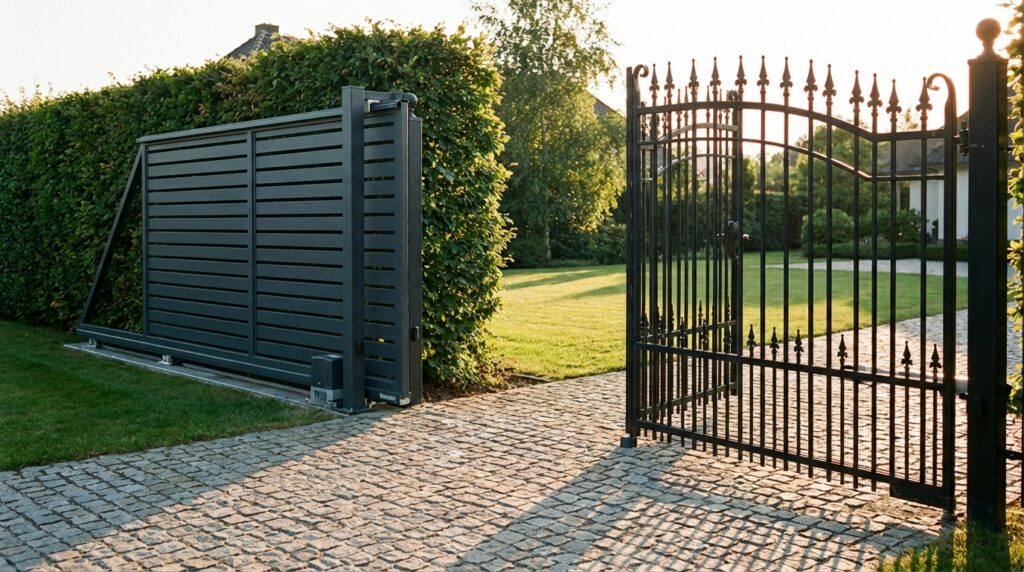
Choosing Between Sliding and Swing Gates for Your Property
Choosing the perfect entrance for your property is a balance between aesthetic appeal and functional necessity. When weighing the pros and cons of sliding vs swing gates, the decision often comes down to your driveway’s specific layout and your daily security needs. Whether you are dealing with a steep incline or a narrow frontage, selecting the right mechanism ensures seamless access while enhancing your home’s curb appeal.
Modern innovations have transformed these traditional barriers into sophisticated systems capable of withstanding extreme weather and integrating with smart technology. While swing gates offer a classic look for level ground, sliding systems provide a space-saving solution for modern properties. Understanding how terrain, clearance, and durability intersect will help you invest in a gate that provides both convenience and long-term reliability.
Key Takeaways
- Select a sliding gate for properties with steep inclines or limited driveway depth, as their horizontal movement avoids ground clearance issues and saves significant ‘dead space.’
- Prioritize sliding gates in high-wind or coastal areas because their low-profile horizontal operation offers superior structural resistance to wind force compared to the sail-like surface of swing gates.
- Opt for swing gates when seeking a cost-effective, classic aesthetic for level ground, though they require more driveway depth and heavy-duty hinges to ensure long-term reliability.
- Enhance any gate system with smart technology and automated locks to transform physical barriers into sophisticated, remote-monitored security assets.
Analyzing Driveway Space and Terrain Requirements
Selecting the ideal gate system begins with a thorough evaluation of your property’s depth and the available side clearance along your fence line. Swing gates require a significant amount of “dead space” to accommodate the arc of the gate as it opens, which can be a major drawback for short driveways where a parked car might obstruct the path. If your property lacks the necessary depth for a swinging motion, a sliding gate offers a space-saving alternative by moving horizontally. This configuration requires ample lateral room to the left or right of the opening, but it keeps the driveway itself completely clear for vehicle maneuvering.
The physical terrain and slope of your entrance play an equally critical role in determining which mechanical solution will function reliably over time. Swing gates generally demand a level surface to prevent the bottom edge from scraping against rising ground or putting undue stress on the hinges. For properties with steep inclines or uneven landscaping, a sliding or cantilever system is often the superior choice because it operates independently of the ground’s grade. Modern sliding hardware is specifically engineered to glide over dips and rises, ensuring that a challenging environment does not compromise the security or smooth operation of your entry point.
Beyond the physical footprint, property owners must consider how environmental factors and smart technology integration will impact long-term performance. Sliding gates are often favored in high-wind areas because they are less susceptible to the wind resistance that can strain the motors of a swinging system during a storm. Recent advancements in smart technology allow both styles to be equipped with high-tech sensors and remote monitoring, but the structural integrity of the gate remains the foundation of your security. By matching the gate’s mechanical movement to your specific terrain, you ensure a durable installation that provides both curb appeal and reliable protection for years to come.
Impact of Wind Resistance and Weather Durability
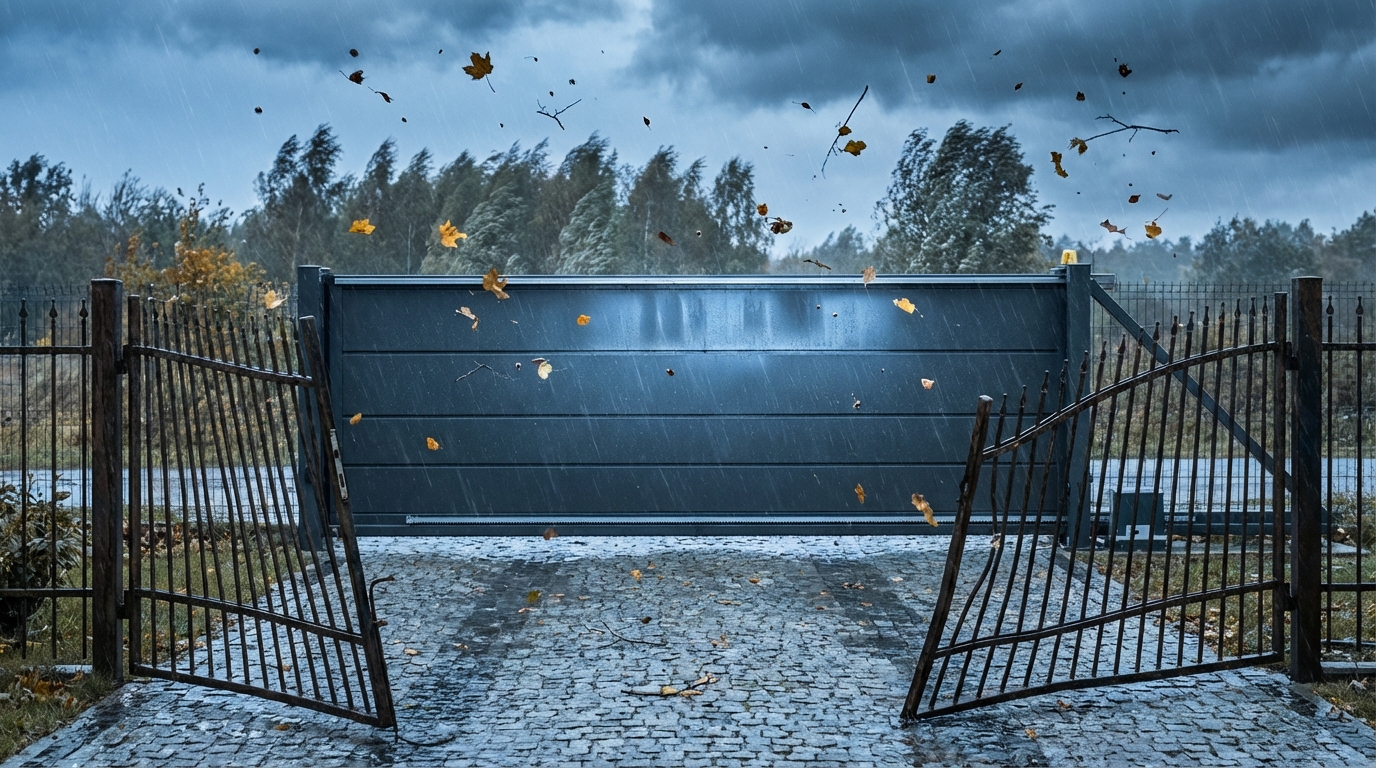
Environmental conditions play a decisive role in the long-term reliability of your property’s entry system, particularly when dealing with high-wind scenarios. Swing gates act much like a sail on a boat, catching the wind across their entire surface area as they move through a wide arc. This creates immense pressure on the hinges and the motor, which can lead to mechanical failure or safety risks during a storm. In contrast, sliding gates glide horizontally along a fixed track or cantilever system, presenting a much smaller profile to the wind’s force during operation. This structural advantage makes sliding models the preferred choice for coastal properties or open areas where gusts are frequent and unpredictable.
Beyond wind resistance, the overall durability of the gate hardware must withstand the rigors of seasonal weather changes. Swing gates rely on a precise balance that can be easily disrupted if the ground shifts due to freezing temperatures or heavy rainfall, often causing the gate to drag or misalign. Sliding gates are generally more robust against these environmental stressors because their weight is distributed evenly along a track or support tower. Modern advancements in weather-resistant coatings and heavy-duty rollers further ensure that sliding systems remain operational even in harsh climates. By choosing a mechanism that works with the elements rather than against them, property owners can significantly reduce maintenance costs and ensure consistent security year-round.
Comparing Security Features and Access Control Integration
Structural integrity plays a vital role in determining which gate system offers the best protection for your property. Sliding gates are widely considered the more formidable option because they are anchored within a track or cantilever system, making them incredibly difficult to ram or force open. Because the weight is distributed along a horizontal line, these gates can support heavier, reinforced materials that deter unauthorized entry. Swing gates, while elegant, rely heavily on their hinges and can be vulnerable to forced entry if they are not properly reinforced. To mitigate this risk, high quality swing systems often require heavy duty magnetic locks to ensure the leaves cannot be pried apart by intruders.
Modern access control technology has changed how both sliding and swing gates function within a comprehensive security plan. Property owners can now integrate smart sensors, video intercoms, and cellular gate openers that allow for remote monitoring from any smartphone. These digital upgrades work seamlessly with magnetic locks and mechanical stops to provide a multi layered defense against security breaches. Sliding gates often benefit from automated locking mechanisms that engage the moment the gate reaches the post, while swing gates can be programmed with delayed closing sequences for added safety. Choosing the right integration ensures that your gate serves as a smart gatekeeper rather than just a physical barrier.
The environmental conditions and layout of your driveway will ultimately dictate which security features are most effective for your specific installation. For properties with steep inclines or limited depth, a sliding gate provides a secure perimeter without sacrificing valuable driveway space. Swing gates remain a popular choice for level ground where a traditional aesthetic is preferred, provided they are equipped with robust hardware to withstand wind resistance and physical pressure. Both systems can be enhanced with backup battery power and manual overrides to ensure security is never compromised during a power outage. Investing in the right combination of mechanical strength and smart technology provides long term peace of mind for any property owner.
Long-Term Maintenance and Installation Cost Factors
When evaluating the initial investment for a custom gate, swing gates generally offer a more budget-friendly entry point because they require fewer mechanical components. The installation process for a swing system focuses primarily on robust gate posts and heavy-duty hinges, which simplifies the labor compared to more complex setups. However, property owners must consider that dual swing gates require two separate motors, which can narrow the price gap between these and a single sliding unit. Because the hardware is less intricate, the upfront labor costs remain lower for properties with level ground and ample clearance.
Sliding gates typically command a higher installation price due to the specialized infrastructure required for smooth horizontal movement. This process often involves pouring a precise concrete trench for the track or installing a sophisticated cantilever system to suspend the gate. While the initial costs are higher, this investment is often necessary for properties with steep inclines or limited driveway depth where a swing arc is impossible. The complexity of the track and roller assembly requires professional precision to ensure long-term functionality and structural alignment.
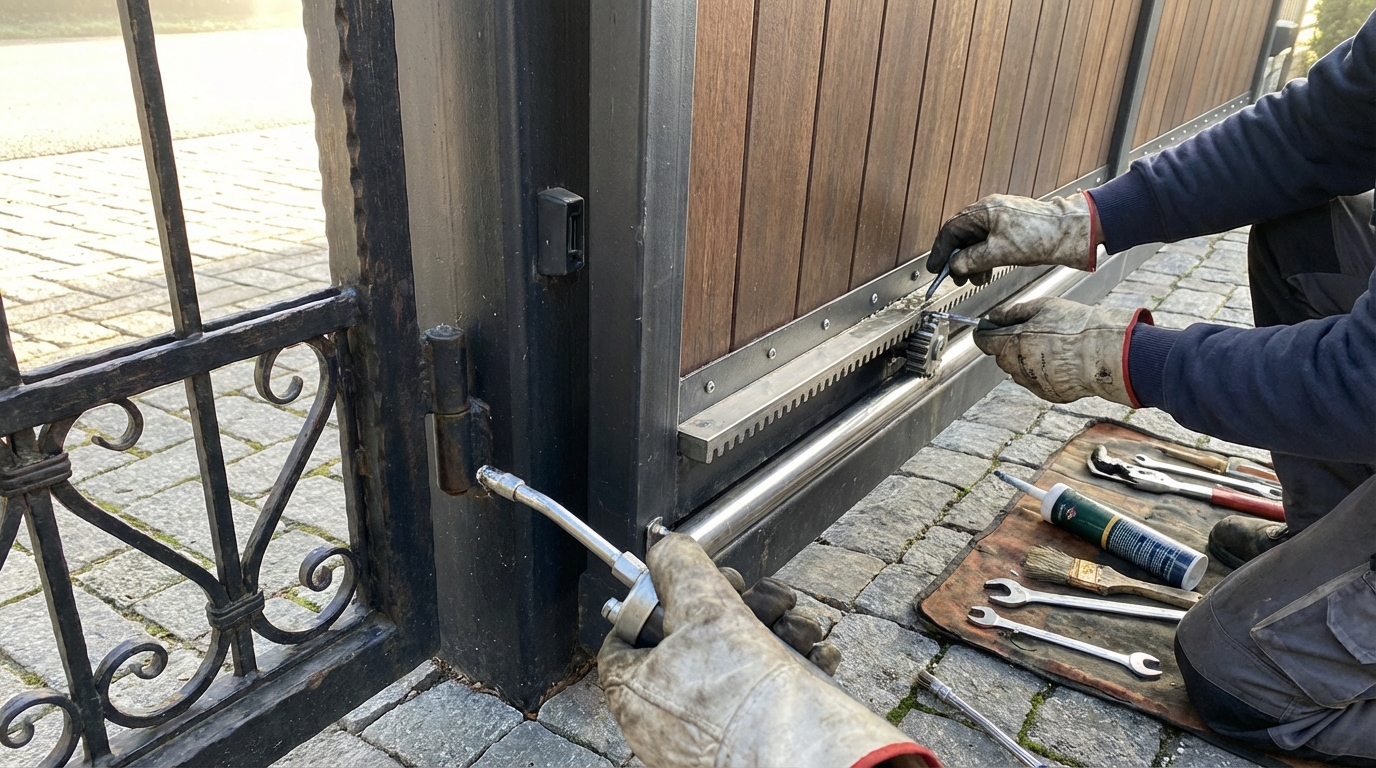
Long-term maintenance requirements differ significantly between the two styles and should influence your final decision. Sliding gates demand regular attention to the ground track to prevent debris, ice, or gravel from obstructing the rollers and straining the motor. In contrast, swing gate maintenance focuses on lubricating hinges and ensuring the arms remain calibrated to prevent sagging over time. Both systems benefit from modern smart controls and weather-resistant finishes, but the sliding gate’s reliance on a clear path makes it slightly more labor-intensive to maintain in harsh environmental conditions.
Choosing the Right Gate for Your Property
Choosing the ideal gate system requires a careful balance between your property’s physical layout and your specific performance expectations. If your driveway features a steep incline or limited depth, a sliding gate offers a space-saving solution that operates reliably on uneven terrain. These systems are particularly effective for high-security applications because their horizontal movement makes them significantly harder to force open than traditional hinged designs. While the initial investment for a sliding mechanism is often higher due to the complexity of the track or cantilever hardware, the long-term durability and space efficiency frequently justify the cost for modern homeowners.
Swing gates remain a classic choice for properties with ample driveway space and level ground where a grand entrance is desired. This configuration is generally more cost-effective and easier to maintain because it relies on a simpler hinge-based mechanical system. However, you must ensure the opening arc is completely clear of obstructions and that the gate can withstand local wind loads without straining the motor. Integrating smart access controls and weather-resistant materials can further enhance the performance of a swing gate, making it a sophisticated and functional addition to your perimeter.
Ultimately, your decision should prioritize the unique constraints of your property alongside your daily usage needs. Modern advancements in automation technology mean that both sliding and swing gates can now offer seamless integration with mobile apps and home security networks. By evaluating the width of your side clearance against the depth of your driveway, you can select a custom installation that provides maximum security and curb appeal. A well-chosen gate not only protects your property but also serves as a reliable, long-term investment in your home’s accessibility and overall value.
Frequently Asked Questions
1. Which gate is better for a driveway with a steep incline?
A sliding gate is the superior choice for properties with steep slopes or uneven terrain. Because these gates move horizontally along a track, they avoid the clearance issues and hinge strain that occur when a swing gate attempts to open against rising ground.
2. How much space is required for a swing gate to operate?
Swing gates require a significant amount of internal or external depth to accommodate the arc of the gate panels. You must ensure your driveway is long enough so that a parked vehicle does not obstruct the gate as it swings open or closed.
3. Are sliding gates more space-efficient than swing gates?
Yes, sliding gates are ideal for modern properties with limited depth because they do not require any clearance within the driveway itself. While you will need lateral space along your fence line for the gate to retract, the driveway remains entirely open for vehicle maneuvering.
4. Can these gate systems be integrated with smart technology?
Modern gate systems are fully compatible with sophisticated smart technology and remote access controls. You can easily manage your property security through integrated apps and automated systems that withstand extreme weather conditions.
5. What are the main maintenance considerations for sliding gates?
Sliding gates require you to keep the ground track clear of debris, leaves, and snow to ensure some horizontal movement. Regular inspections of the rollers and motor will guarantee long term reliability and prevent the mechanism from jamming.
6. Which gate style offers a more traditional aesthetic?
Swing gates provide a classic, elegant appearance that many homeowners prefer for traditional or level properties. They offer a grand entrance feel that enhances curb appeal while maintaining high security standards for your home, especially when paired with a cost analysis of the best perimeter materials.