
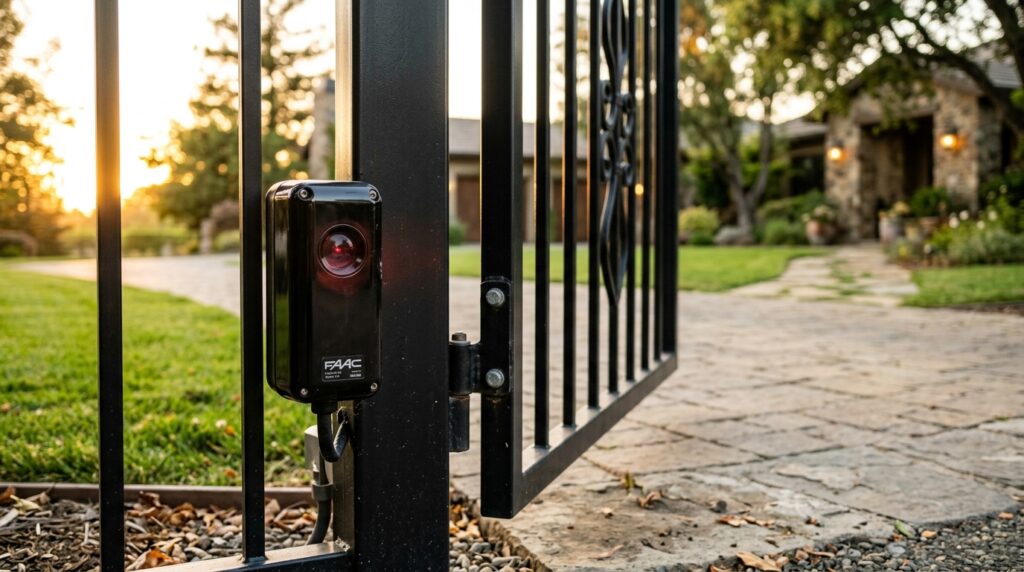
Protecting Your Property With Advanced Automatic Gate Safety Sensors
An automatic gate offers unparalleled convenience and security, but without modern safety sensors, heavy moving machinery can become a significant liability. Safety standards have evolved beyond simple stop buttons, shifting toward sophisticated, non-contact systems designed to eliminate the risk of entrapment or crushing. Whether securing a private residence or a high-traffic commercial facility, understanding the technology that protects pedestrians and vehicles is the first step in ensuring a reliable entry point.
Current industry regulations, such as UL 325 and ASTM F2200, demand a multi-layered approach to protection that combines physical construction rules with high-tech detection. These standards mandate that every gate operator must feature at least two independent safety points to prevent accidents. By integrating advanced sensors with structural safeguards like fall-over protection, property owners can achieve a balance between automated efficiency and uncompromising physical safety.
Key Takeaways
- Compliance with UL 325 and ASTM F2200 standards is a legal necessity that requires at least two independent safety points for every direction of gate travel.
- A comprehensive safety strategy must combine non-contact photoelectric beams for proactive detection with pressure-sensitive edges as a physical redundant fail-safe.
- Modern gate safety requires a multi-layered approach that integrates high-tech sensors with structural mechanical safeguards like fall-over protection and protective guards.
- Smart integration and proactive monthly maintenance are essential for monitoring system health and ensuring sensors remain compliant with national safety codes.
UL 325 And ASTM F2200 Compliance Standards
Homeowners investing in automated entry systems must prioritize UL 325 and ASTM F2200 standards to ensure the highest level of protection for families and guests. These national safety codes are critical requirements that professional installers follow to mitigate the risk of entrapment or crushing injuries. By adhering to UL 325, a technician ensures the gate operator includes at least two independent safety points, such as photo-eye sensors and pressure-sensitive edges, for every direction of travel. This redundant protection acts as a fail-safe, stopping the gate instantly if a child, pet, or vehicle enters the path of movement. Choosing a compliant installation protects against significant liability while providing assurance that the gate operates with maximum security.
The physical construction of the gate itself is governed by the ASTM F2200 standard, which focuses on structural integrity and mechanical safety features. Professional installations incorporate specific design elements like fall-over protection to prevent a heavy gate from collapsing if it ever detaches from its track. Furthermore, these standards require the installation of guards and screens over openings to prevent hands or limbs from becoming caught in the moving hardware. Modern gate systems integrate these physical barriers with smart sensors to create a comprehensive safety envelope around a property entrance. Prioritizing these engineering benchmarks is an investment in a sophisticated system that balances convenience with rigorous technology.
Photoelectric Infrared Beams And Non-Contact Detection
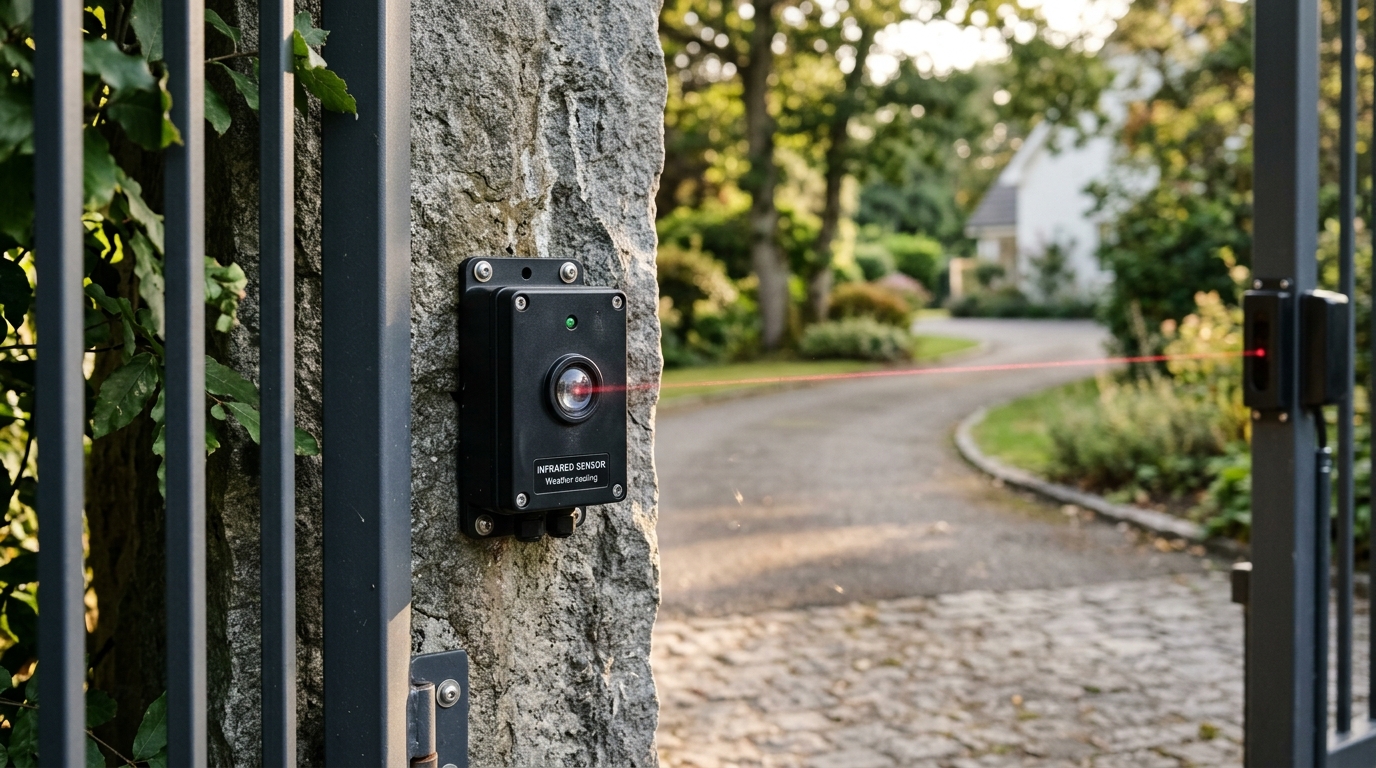
Photoelectric infrared beams serve as the primary line of defense for modern automatic gate systems by creating an invisible safety zone across a driveway. These non-contact sensors consist of a transmitter and a receiver that project a continuous light beam across the gate path. When a person, pet, or vehicle interrupts this signal, the system instantly recognizes an obstruction and sends a command to the gate operator. This technology is essential for homeowners who want to prevent accidental contact before it occurs. By detecting an object without requiring physical impact, these sensors provide a proactive layer of protection that significantly reduces the risk of property damage or personal injury.
Professional installation focuses on strategic placement to ensure full compliance with safety standards. Technicians position these photo eyes at specific heights and locations to cover potential entrapment zones where a moving gate could cause harm. Modern gate operators are engineered to require these monitored safety devices to function, meaning the gate will default to a safe mode if the sensors are misaligned or blocked. This fail-safe approach ensures that the machinery of an automated entrance remains under constant electronic supervision. Investing in high-tech infrared detection is a critical step in meeting legal safety requirements and protecting property owner liability.
These smart sensors are designed to withstand outdoor elements while maintaining precise detection capabilities during rain, snow, or fog. Integrating non-contact detection into a gate system allows for a seamless flow of traffic without compromising the rigorous safety protocols required by current engineering codes. When the photoelectric beams are broken, the gate is programmed to immediately reverse its motion or stop entirely, preventing the gate from closing on a vehicle or a pedestrian. This sophisticated level of monitoring transforms a standard entrance into a high-tech security feature that prioritizes the well-being of everyone on the property. By combining physical barriers with these invisible light curtains, owners create a comprehensive safety environment that meets the highest industry benchmarks.
Redundant Safety Using Pressure Sensitive Edges
Pressure sensitive edges, often referred to as contact sensors, serve as a vital secondary defense in a comprehensive gate safety strategy. While photo-eye beams detect obstacles from a distance, these specialized rubber strips are mounted directly onto the leading edges of the gate to provide a physical fail-safe. If an object or person makes even slight contact with the edge during operation, the sensor immediately sends a signal to the motor to stop and reverse direction. This redundant layer of protection is essential for those who want to eliminate the risk of entrapment or crushing injuries. By integrating these devices, property owners ensure that the premises remain secure without posing a danger to family members, pets, or visiting guests.
Adhering to UL 325 standards is a legal and ethical necessity for any professional gate installation. These regulations mandate that every automated system must have at least two independent entrapment protection points for each direction of travel. Pressure sensitive edges fulfill this requirement by acting as a reliable backup to non-contact sensors like infrared beams. If environmental factors like heavy rain or thick fog interfere with a light sensor, the physical contact edge remains fully functional and ready to trigger an emergency stop. Investing in this hardware demonstrates a commitment to liability reduction and long-term property safety.
Choosing a professional installer ensures that these contact sensors are positioned at the most critical pinch points and impact zones of a specific gate design. Every installation is unique, and a technician will calibrate the sensitivity of the edges to react instantly to pressure while avoiding false alarms from wind or vibration. These systems are designed to withstand harsh outdoor elements, maintaining their flexibility and responsiveness over years of constant use. When robust construction is combined with smart contact technology, it creates a seamless security solution that prioritizes human life. This proactive approach to gate safety provides peace of mind regarding the operation of automated machinery.
Smart Integration And Proactive Sensor Maintenance
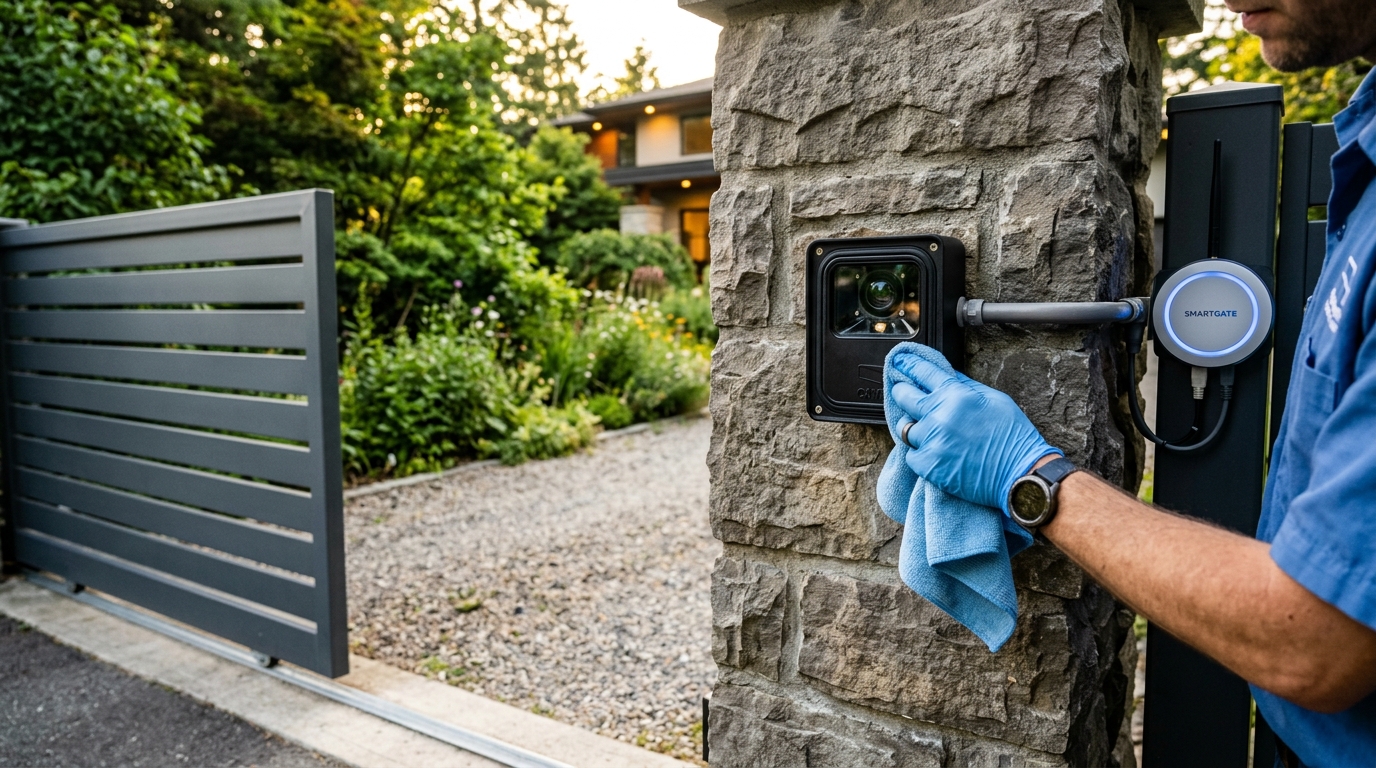
Integrating gate safety sensors with a smart controller transforms a standard barrier into an intelligent, proactive security system. This modern approach allows homeowners to receive real-time alerts and status updates directly to their smartphones, ensuring total visibility into gate operation. By connecting photo eyes and edge sensors to a centralized smart hub, owners can monitor for obstructions or system faults the moment they occur. This connectivity is essential for maintaining compliance, as it provides a digital log of safety triggers and system health. Investing in smart integration ensures that family and guests are protected by a system that constantly communicates its status.
Proactive maintenance is the cornerstone of a reliable automatic gate system and a primary defense against liability concerns. Regular testing of non-contact sensors ensures that infrared beams and pressure sensitive edges react instantly to any person or vehicle in the path of travel. Owners should perform proactive monthly maintenance to confirm that the gate reverses or stops exactly as designed by industry safety standards. Dust, debris, or minor shifts in gate alignment can compromise sensor accuracy over time, making professional inspections a vital part of a property care routine. A well-maintained sensor system prevents entrapment accidents before they can happen.
Professional installation and routine calibration are necessary to keep high-tech sensors functioning at peak performance. When safety components are correctly aligned and integrated, they create a shield of protection around the property. These systems are specifically engineered to meet ASTM F2200 and UL 325 requirements, which prioritize the physical safety of everyone who interacts with the entrance. By prioritizing regular sensor checks and software updates, owners ensure the gate remains a secure and compliant asset for years to come. Choosing a sophisticated, monitored solution demonstrates a commitment to safety that protects both the household and the investment. Understanding the electric gate repair cost for maintaining these sensors is a key part of long-term property management.
Ensuring Safety Through Premium Sensor Integration
Prioritizing high-quality safety sensors is an essential investment for any property owner looking to balance convenience with peace of mind. By choosing premium components that exceed industry standards, owners protect family and guests from the physical risks of entrapment while shielding themselves from significant liability. Modern integrated systems offer a sophisticated layer of protection that goes beyond basic functionality, ensuring the gate reacts instantly to any obstruction. These solutions provide a reliable barrier against accidents, transforming a driveway into a secure and controlled entry point.
Compliance with UL 325 and ASTM F2200 standards is not just a legal formality but a vital blueprint for a safe automated system. Professional installation ensures that every non-contact sensor and physical guard is positioned correctly to eliminate dangerous gaps or mechanical failures. Experts understand the complex engineering required to sync gate motor replacement with secondary entrapment protection, providing a level of precision that DIY setups often lack. Entrusting a gate to a professional installer guarantees that the system remains fully compliant, functional, and secure.
Ultimately, the safety of an automated entry system depends on the synergy between advanced technology and expert craftsmanship. Selecting durable, smart sensors ensures that a gate remains a proactive security feature rather than a potential hazard. As technology continues to evolve, staying ahead of safety requirements protects property value and the well-being of everyone who enters. When choosing between sliding and swing gates for your property, investing in a professionally installed, compliant system is the most effective way to achieve a seamless experience at the property perimeter. For those seeking energy independence, determining is a solar gate opener worth the investment can help in selecting a power source that supports these critical safety components.