
The Future Of Commercial Gate Access Systems And Unified Entry Security
The days of clunky mechanical barriers and manual keycards are rapidly fading into the past. Today, modern commercial gate access systems have evolved into intelligent, unified security hubs that serve as the first line of defense for a multi-billion dollar industry. This shift toward invisible security means that while the hardware remains sleek and unobtrusive, sophisticated software is doing the heavy lifting to ensure only authorized personnel enter your perimeter.
As smart lock adoption continues to skyrocket across the commercial and multifamily sectors, property owners are prioritizing seamless integration over standalone hardware. With the access control market projected to nearly double in value by 2033, staying ahead of these technological shifts is no longer optional for maintaining a secure facility. Business leaders now demand systems that offer high-precision verification without sacrificing the speed and convenience of a modern workplace.
Key Takeaways
- Modern commercial gate systems have evolved into unified security hubs that integrate heavy-duty physical barriers with cloud-based software for seamless, remote perimeter management.
- The industry is rapidly shifting away from physical keys and fobs toward AI-driven License Plate Recognition (LPR) and mobile biometric verification to enhance security and traffic flow.
- Cloud-based management platforms allow property owners to centralize security, HVAC, and lighting into a single interface, providing data-driven insights and real-time visibility.
- Investing in scalable, high-security hardware like crash-rated barriers and encrypted digital consoles is essential for maintaining property value and defending critical infrastructure.
High Security Hardware For Commercial Gate Access Systems
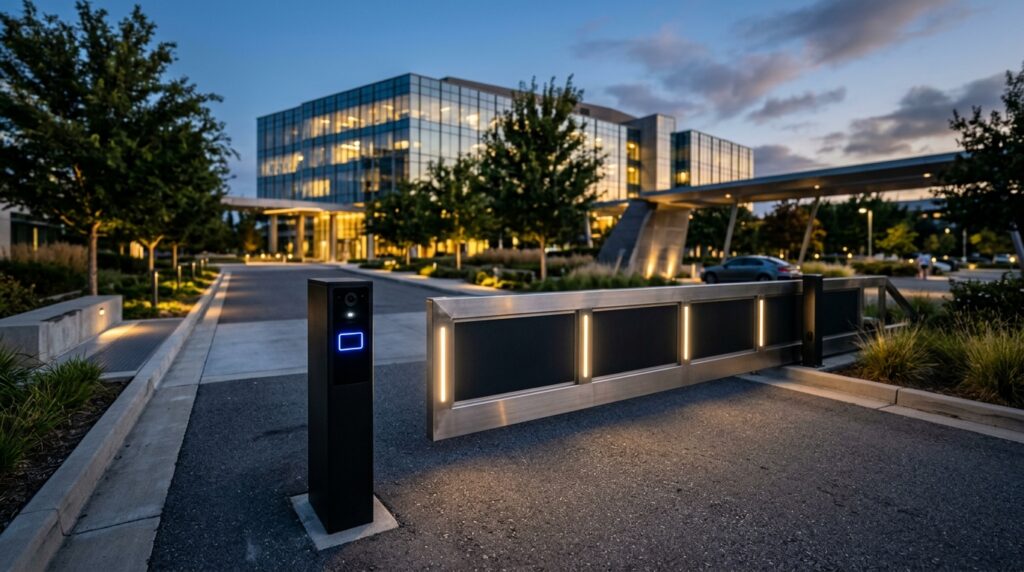
Modern business security demands a robust physical foundation, starting with heavy-duty slide gates and cantilever systems designed to withstand high-volume traffic. Unlike residential gates, these commercial-grade structures utilize precision-engineered rollers and internal track systems that ensure smooth operation and longevity under constant use. For facilities requiring the highest level of protection, crash-rated barriers provide an essential defense against unauthorized vehicle forced entry. These systems are engineered to absorb massive kinetic energy, safeguarding critical infrastructure while maintaining a professional aesthetic. Property managers increasingly prioritize these hardware solutions to mitigate liability and ensure the physical integrity of their perimeter.
Integrating these physical barriers with advanced digital interfaces transforms a simple gate into an intelligent access hub. Industrial-grade telephone entry systems and encrypted keypad consoles allow for seamless, secure communication between visitors and authorized personnel. These consoles are built to endure harsh environmental conditions while providing encrypted data transmission to prevent hacking or credential cloning. By implementing unified security hubs that pair heavy-duty hardware with sophisticated verification software, business owners can manage site access remotely with total confidence. This evolution toward intelligent security hubs reflects a market trend where hardware and software work in tandem to provide comprehensive perimeter control.
Cloud Based Management And Building Intelligence Platforms
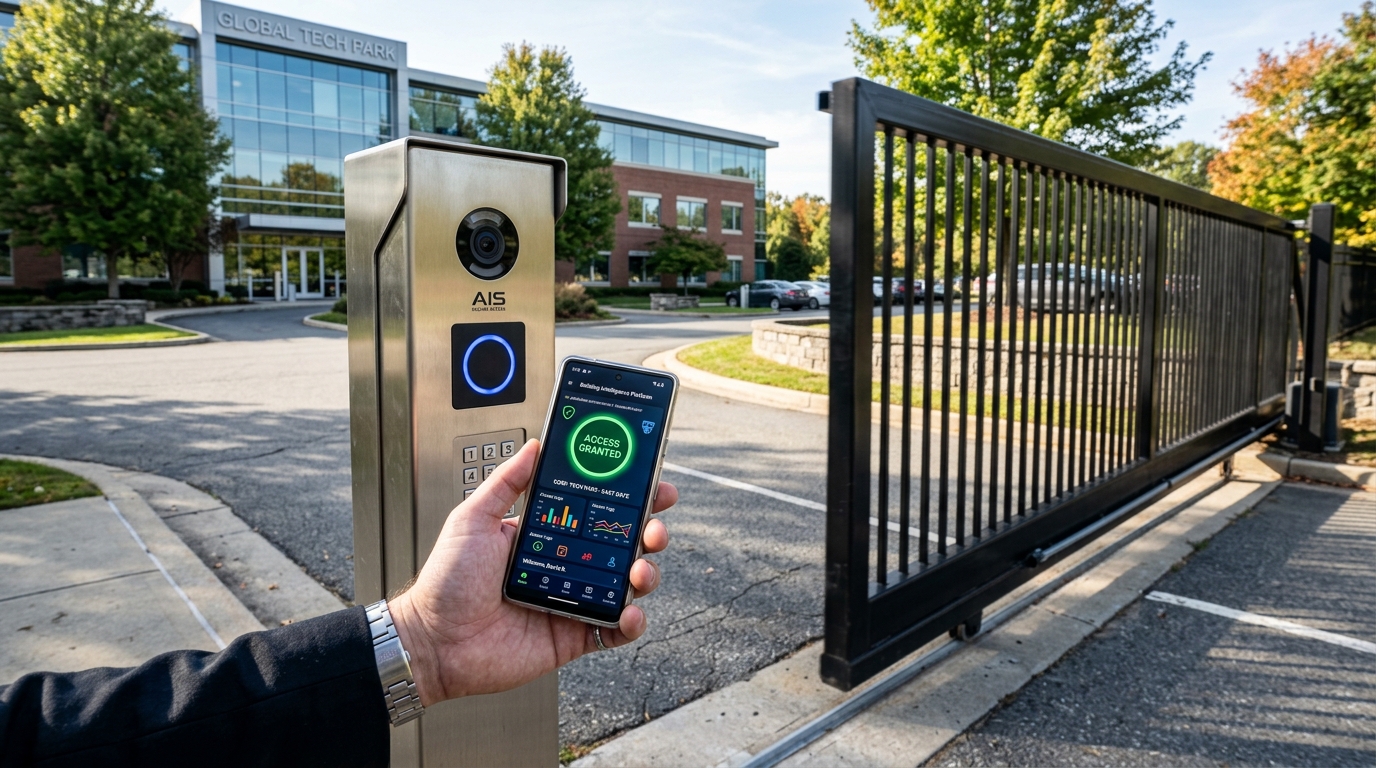
Modern gate controllers have evolved into sophisticated edge devices that serve as the foundation for comprehensive building intelligence. By migrating entry management to the cloud, property managers can now oversee vehicle access alongside HVAC systems and lighting through a single, unified interface. This integration eliminates the need for siloed hardware, allowing for automated responses such as adjusting climate controls or internal security protocols when an authorized vehicle enters the perimeter. Business owners benefit from a streamlined operational workflow that reduces manual oversight while ensuring that all facility systems work in perfect synchronization.
The shift toward centralized dashboards provides unparalleled visibility into real-time site activity and long-term data trends. These platforms aggregate video surveillance feeds directly with gate event logs, enabling instant visual verification of every entry and exit from a remote workstation or mobile device. High-security features like programmable keypads and digital telephone entry systems are no longer standalone tools, as they now feed critical data into the broader security ecosystem. This holistic approach allows for rapid incident response and more informed decision-making regarding facility occupancy and resource allocation.
Investing in a unified management platform ensures that your commercial security infrastructure remains scalable and future-proof. As smart building technology continues to advance, cloud-based systems allow for seamless software updates and the addition of new hardware without requiring a complete overhaul of the existing network. This flexibility is essential for growing enterprises that need to maintain strict access protocols while managing multiple entry points across various locations. By prioritizing integrated software solutions, businesses can achieve a higher standard of security that balances robust perimeter protection with modern operational efficiency.
Advanced License Plate Recognition And Biometric Verification
Modern commercial facilities are rapidly transitioning away from traditional hardware like physical keys and fobs in favor of AI-driven license plate recognition (LPR) systems. These advanced cameras act as intelligent security hubs, cross-referencing vehicle plates against a digital database in real time to grant or deny access instantly. For property managers, this shift eliminates the logistical headache of distributing and tracking physical credentials that can be lost or stolen. The precision of high-speed sensors ensures that traffic flows smoothly while maintaining a rigorous security perimeter. By relying on vehicle identification, businesses can achieve a seamless entry experience that requires zero interaction from the driver.
Smartphone-based credentials and biometric verification are also redefining how personnel move through secure commercial gates. Today’s systems allow employees and authorized visitors to gain entry using encrypted digital keys stored on their mobile devices, leveraging Bluetooth or NFC technology for touchless operation. This approach provides an additional layer of security by utilizing the biometric features already built into modern phones, such as facial recognition or fingerprint scanning. Property owners benefit from a unified dashboard where they can grant or revoke access permissions remotely at any time. This level of control is essential for managing high-traffic commercial environments that demand both efficiency and uncompromising protection.
The current market trajectory reflects a massive surge in the adoption of these intelligent access solutions as businesses prioritize unified security platforms. With the commercial access control sector projected to reach significant valuations by 2033, the integration of AI and cloud-based software is no longer a luxury but a standard requirement. These systems offer more than just entry management, as they provide valuable data insights and audit trails that help managers optimize facility operations. Investing in these touchless technologies ensures that a property remains competitive and secure. By consolidating hardware into sleek, unobtrusive units, facilities can maintain a professional aesthetic without sacrificing safety.
Elevating Security with Intelligent Access Hubs
Investing in a modern commercial gate access system is no longer just about installing a physical barrier, but rather about creating an intelligent, unified security hub. For business owners and property managers, these integrated environments provide a significant boost to property value by offering the sophisticated entry solutions that today’s high-end tenants expect. Transitioning away from basic residential repairs toward high-security telephone entry and keypad systems ensures that your facility remains competitive in a rapidly evolving market. With the access control sector projected to see massive growth through 2033, early adoption of these technologies positions your property as a premier, secure destination. These systems act as a silent partner in property management, handling complex verification tasks while maintaining a professional and unobtrusive aesthetic.
Scalability remains a primary advantage of these advanced entry solutions, allowing security protocols to grow alongside your business operations. Modern software-driven hardware allows managers to oversee multiple entry points from a single interface, reducing the need for constant on-site oversight. When choosing between sliding and swing gates for your property, selecting a system that can adapt to new technological shifts is essential for long-term viability. As smart building technology continues to advance, cloud-based systems allow for seamless software updates and the addition of new hardware without requiring a complete overhaul of the existing network. By prioritizing these high-tech entry solutions, you provide a seamless experience for authorized personnel while maintaining a formidable defense against unauthorized access. Ultimately, an integrated gate environment delivers the peace of mind and operational efficiency required to protect your assets in an increasingly digital world.
Frequently Asked Questions
1. What are the primary benefits of upgrading to a modern commercial gate system?
Modern systems transform your perimeter into an intelligent security hub that balances high-precision verification with workplace speed. You gain a seamless integration of hardware and software that eliminates the need for clunky manual barriers while significantly reducing liability risks.
2. How do commercial-grade gates differ from residential gate systems?
Commercial systems utilize heavy-duty slide gates and cantilever structures engineered for high-volume traffic and constant use. These professional-grade solutions feature precision rollers and internal tracks that ensure long-term durability and smooth operation that residential models cannot match.
3. What are crash-rated barriers and does my facility need them?
Crash-rated barriers are specialized systems engineered to absorb massive kinetic energy and stop unauthorized vehicle forced entry. You should prioritize these if you need to protect critical infrastructure or maintain the highest level of physical integrity for your perimeter.
4. Can I integrate my gate access with my existing security software?
Yes, current industry trends prioritize unified security hubs over standalone hardware. You can integrate industrial-grade digital interfaces with your physical barriers to create a centralized system that offers both high-level protection and data-driven insights.
5. Why is the commercial access control market growing so rapidly?
The market is projected to nearly double by 2033 because property owners are rapidly adopting smart lock technology and invisible security measures. Staying ahead of these technological shifts is now a requirement for maintaining a secure and modern commercial or multifamily facility.
6. How does ‘invisible security’ improve the user experience at my facility?
Invisible security uses sophisticated software to handle authorization in the background, allowing for a sleek and unobtrusive physical aesthetic. This approach ensures your personnel can enter the perimeter quickly and conveniently without sacrificing the rigorous verification your business demands.