
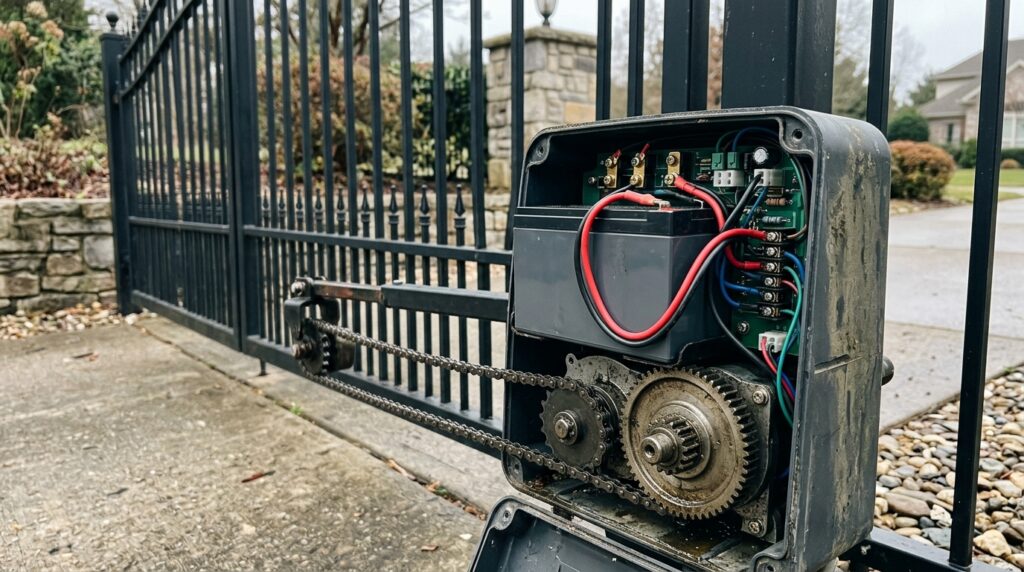
What Happens to an Automatic Gate During a Power Outage?
A gate opener battery backup can keep your swing gate, slide gate, or barrier arm operating when a power outage shuts down the rest of your property. I understand how disruptive it can be to lose secure vehicle access, especially during storms, emergencies, or extended outages. The right backup system uses a rechargeable 12- or 24-volt battery and accounts for gate size, traffic frequency, accessories, and local conditions.
Choosing the right setup means looking beyond the battery label. I consider cycle capacity, standby time, charging method, temperature, and maintenance needs. Solar charging, remote diagnostics, and connected access controls can add resilience, while a tailored installation helps ensure the system performs when you need it most. With the right information and service support, I can help make reliable gate access part of your everyday security plan.
Key Takeaways
- Choose a gate backup battery based on the operator’s voltage, gate size and weight, traffic frequency, accessories, charging capacity, and manufacturer requirements—not amp-hour rating alone.
- Backup runtime and cycle capacity vary with motor efficiency, gate usage, temperature, standby power draw, and connected devices such as keypads, cameras, sensors, and heaters.
- Solar charging can improve resilience during extended outages, but the panel and charge controller must be sized for local sunlight, seasonal conditions, battery capacity, gate cycles, and accessory loads.
- Test batteries under load and inspect charging voltage, connections, and safety components regularly; professional service can identify whether poor performance comes from the battery, charger, wiring, or excessive gate resistance.
Gate Opener Battery Backup Systems
A gate opener battery backup keeps an automatic swing gate, slide gate, or barrier arm operating when utility power fails. Most systems use rechargeable 12- or 24-volt batteries that connect directly to the gate operator and its backup charging circuit. When utility power returns, the operator recharges the battery automatically, restoring its reserve for the next outage. I recommend viewing the battery as part of a complete system because the operator, charger, control board, and accessories must work together.
Residential gate operators commonly use 7 to 8 Ah batteries, which can provide dependable backup for typical household traffic when properly maintained. Larger commercial installations may use 33 to 50 Ah batteries to support heavier gates, more frequent cycles, access control equipment, or longer outage periods. Actual runtime depends on gate weight, cycle frequency, standby power draw, temperature, and connected accessories such as keypads, loops, cameras, or exit devices. A larger battery is not automatically a better choice if the operator or charger is not designed to support it.
When selecting a replacement or upgrade, I check the operator’s voltage, battery type, charging capacity, connector configuration, and manufacturer requirements before comparing amp-hour ratings. Using an incompatible 12- or 24-volt battery can prevent proper charging, shorten battery life, or damage the equipment. Professional testing can also show whether reduced backup performance comes from an aging battery, a faulty charger, excessive accessory draw, or a gate that requires too much force to move. This system-based approach helps me match backup capacity to the property’s actual access needs instead of relying on battery size alone.
Gate Opener Battery Cycle Capacity
A gate backup battery’s cycle capacity depends on more than its amp-hour rating. I consider gate weight, travel distance, opening frequency, temperature, and motor efficiency together because a heavy slide gate or wide swing gate requires more energy for each movement than a lighter residential gate. Cold weather can temporarily reduce battery performance, while an efficient motor can extend runtime by using less power during each opening and closing cycle. As a result, one system may provide about 100 backup cycles, while another may deliver several hundred under lighter-duty conditions.
Standby time also affects how long the backup system remains useful during an outage. A battery may power a rarely used gate for several weeks or even roughly six months, but frequent vehicle traffic can reduce that period quickly. Accessories draw energy even when the motor is not running. These may include photo eyes, loop detectors, wireless receivers, Wi-Fi modules, radios, keypads, and control boards. Heaters for cold-weather equipment can consume substantially more power, so I include those loads when estimating practical runtime instead of relying only on the manufacturer’s maximum cycle figure.
The best capacity estimate comes from matching the battery and charging method to the way your gate operates. I ask how many openings occur each day, how heavy the gate is, whether the system relies on solar charging, and which safety or access control devices remain active during an outage. This application-focused approach helps set realistic expectations and prevents published figures from being treated as guarantees. It also makes it easier for me to recommend a custom backup configuration that supports dependable access for your property and local conditions.
Solar Gate Opener Battery Charging
Solar charging can keep a gate opener battery ready in locations without dependable utility power or where extended outages are common. I size the panel based on battery voltage and capacity, daily gate cycles, standby draw, accessories, and local weather conditions. A panel that works for a lightly used residential gate may be undersized for a busy commercial entrance, especially when keypads, sensors, cameras, or cellular controls also consume power. The charge controller must match the battery chemistry and voltage so charging remains safe and consistent.
Sunlight availability is just as important as panel wattage. A south-facing location with minimal shade generally provides the best results, while trees, nearby buildings, snow cover, and shorter winter days can significantly reduce charging performance. I account for seasonal changes and allow enough reserve for cloudy periods because a system that performs well in summer may struggle during winter or extended storms. Battery condition and temperature also affect capacity, so routine inspection helps confirm that the system is storing energy as expected.
Professional configuration brings the panel, controller, battery, and opener together as one dependable system. I verify polarity, charging voltage, low-voltage protection, panel placement, and the expected number of gate cycles before putting the system into service. Proper setup can prevent chronic undercharging, premature battery failure, and unexpected loss of access during an outage. For each property, I tailor the equipment and settings to its traffic pattern, climate, and available sunlight instead of relying on a standard configuration.
Gate Battery Testing And Replacement
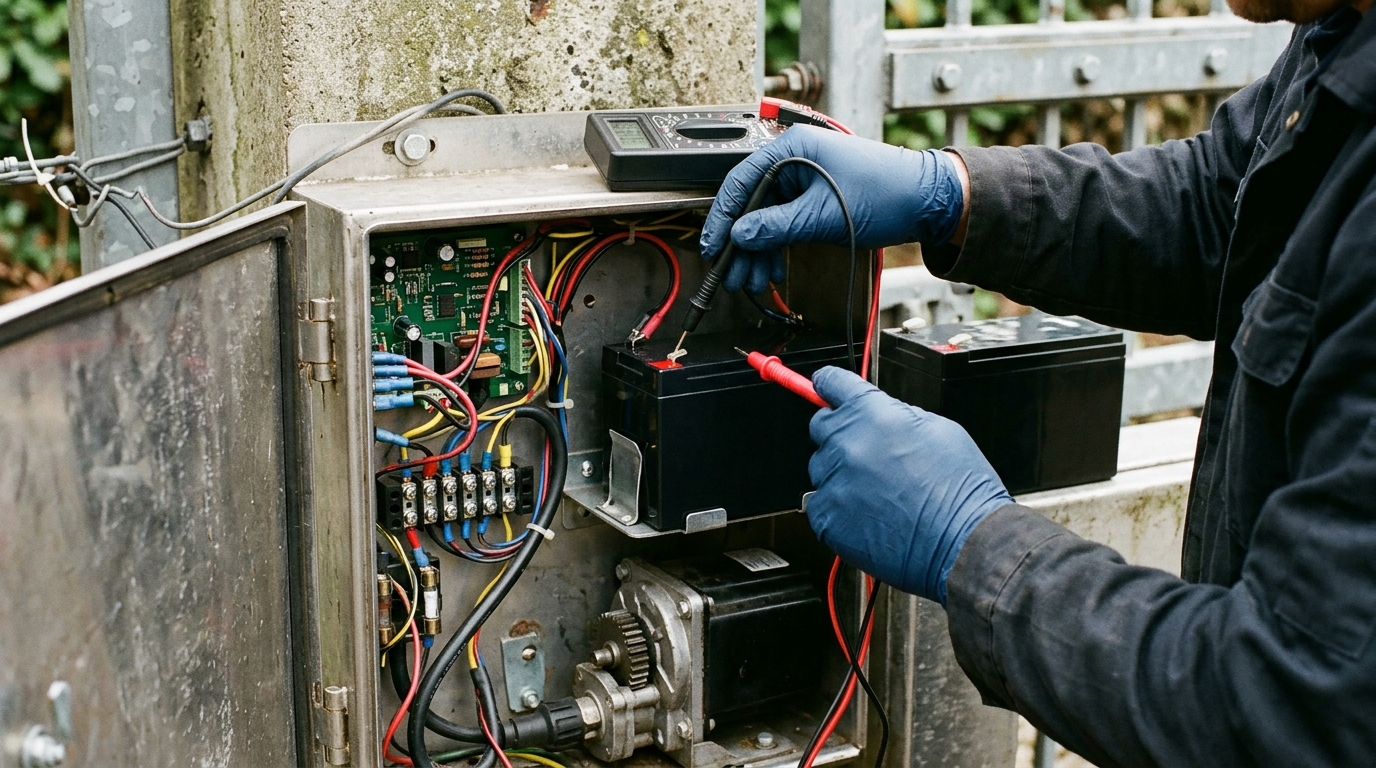
I test a gate opener battery backup by measuring charging voltage at the battery and comparing the reading with the operator manufacturer’s specifications. I also inspect terminals for corrosion, loose connections, swelling, leaks, or damaged cables because poor contact can mimic a weak battery. A battery may show an acceptable voltage at rest but still fail under load, so I test cycle performance by observing how reliably the gate opens and closes through repeated cycles. Reduced speed, hesitation, short backup runtime, or a sharp voltage drop can indicate that replacement is needed.
Battery replacement should be based on condition and performance rather than an automatic calendar schedule. I consider the gate’s weight and travel distance, the operator and battery size, wiring quality, safety devices, access controls, cameras, and other accessories that draw power. Local climate matters as well because extreme heat can shorten battery life, while cold weather can reduce available capacity and backup cycles. After evaluating the complete system, I recommend a custom solution that may include a properly sized battery, improved connections, solar charging, or other appropriate upgrades.
When choosing a service provider, I look for dependable availability and installation support, especially when the gate protects a busy home or business entrance. Clear explanations, documented testing, and practical maintenance guidance make it easier to understand what the system needs now and in the future. Client testimonials can show how well a provider communicates and completes the work, while before-and-after photos and measured results can demonstrate improvements in reliability, wiring, and backup performance. These details help homeowners choose support suited to their gate, traffic level, and local conditions instead of relying on a standard recommendation.
Gate Opener Battery Backup Conclusion
A dependable gate opener battery backup keeps your automatic gate operating when utility power fails, helping preserve access for residents, employees, deliveries, and emergency services. The right system must match the operator’s voltage and motor requirements, as well as the gate’s size, weight, travel distance, and expected traffic volume. Connected accessories such as keypads, intercoms, card readers, safety sensors, and vehicle detectors also draw power and can affect backup runtime. I evaluate these factors together instead of treating the battery as a universal replacement part.
For properties with frequent outages or limited utility access, a solar-backed system may provide added resilience by recharging the battery between uses. During an assessment, I can review your gate’s condition, usage patterns, available sunlight, and service needs before recommending a dependable battery or solar-supported setup. A properly matched system helps maintain reliable entry and exit while reducing the risk of unexpected access problems. Request a professional assessment so I can recommend a custom solution suited to your property and provide ongoing service when you need it.
Choose the Right Gate Battery Backup
A gate opener battery backup provides continued access when utility power fails, making it an important part of a reliable automatic gate system. Most residential and light-commercial units use 12- or 24-volt rechargeable batteries, while larger gates may require higher-capacity options. Actual performance depends on gate weight, battery size, weather, accessories, and operating frequency, so published cycle counts should be treated as estimates rather than guarantees. I recommend choosing a backup system based on your gate’s specific demands, not just its voltage or advertised standby time.
Regular testing and maintenance help ensure the battery is ready when you need it most. I suggest checking battery condition, charging performance, connections, and safety features during routine service. Solar charging and remote diagnostics can provide additional resilience and visibility. With the right configuration and scheduled care, a gate opener battery backup can support secure, convenient access during outages and reduce unexpected downtime. A professional assessment can match the battery capacity, charging method, and service schedule to your property, operating hours, and access needs.