
What Safety Devices Should an Automatic Driveway Gate Have?
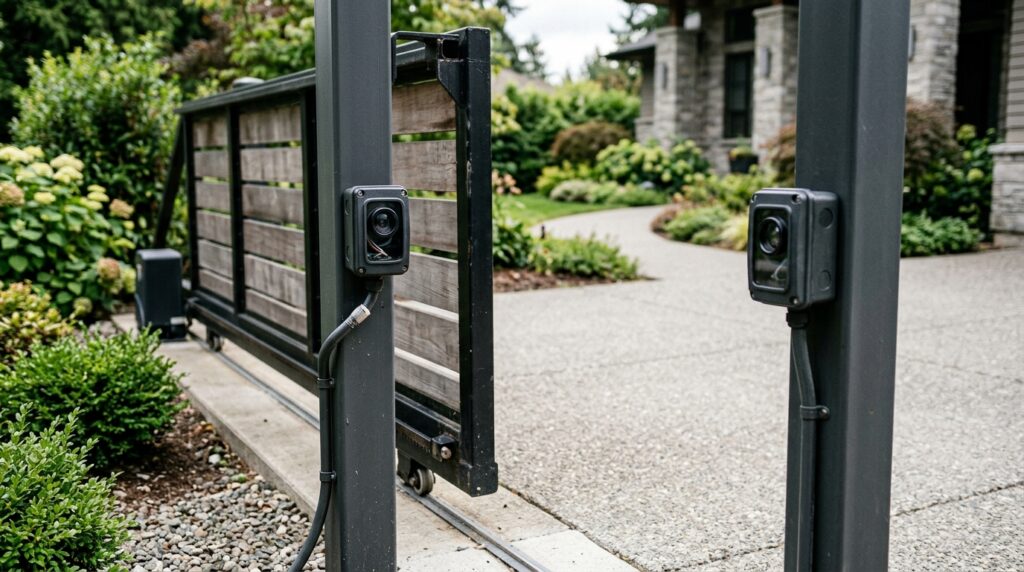
A powered gate should open and close on command, not when a person, vehicle, pet, or child is in its path. I use driveway gate safety sensors to help detect obstructions and reduce the risk of entrapment, crushing, impact, and costly gate damage. Unlike remotes, keypads, cameras, and vehicle loops, these devices are designed specifically to support safe gate movement.
Choosing the right protection depends on whether you have a sliding, swing, vertical-lift, or pivot gate, as well as its layout and operating controls. I focus on practical, custom solutions that fit the property and meet applicable safety requirements. I then verify that the system responds reliably under real-world conditions. Knowing what to look for can make your gate safer, more dependable, and easier to use every day.
Key Takeaways
- Driveway gate safety sensors are essential for detecting people, vehicles, and objects and stopping or reversing gate movement to reduce entrapment, crushing, impact, and property damage. Remotes, keypads, cameras, and vehicle loops do not replace dedicated entrapment protection.
- Use a layered safety system that combines monitored photoelectric sensors, safety edges, force reversal, warning devices, secure controls, and properly constructed gate components. Equipment and installation should follow applicable ANSI/CAN/UL 325, ASTM F2200, manufacturer, and local code requirements.
- Sensor placement must match the gate type and site hazards, including sliding travel paths, swing arcs, vertical-lift areas, pivot zones, posts, hinges, pinch points, and pedestrian routes. Protect every potential entrapment zone—not only the main driveway opening.
- Test and maintain the system regularly by checking stopping and reversing functions, alignment, lenses, wiring, mounting, warning devices, and gate hardware. Never bypass a failed sensor; remove the gate from service and use qualified professional repair when protection is unreliable.
Introduction To Driveway Gate Safety Sensors
Driveway gate safety sensors detect people, vehicles, or objects in the gate’s travel path and help prevent dangerous contact. On a sliding, swing, vertical-lift, or pivot gate, properly positioned sensors can reduce the risk of entrapment, crushing, and impact while the gate is closing or moving. They can also help prevent damage to the gate, vehicle, posts, and surrounding property by signaling the operator to stop or reverse. I consider these devices an essential part of a properly planned powered gate system, not a substitute for careful installation and maintenance.
Common examples include photoelectric sensors, which create an invisible beam across an opening, and monitored safety edges, which respond when they contact an obstruction. Placement depends on the gate design, direction of travel, nearby walls or fences, and hazards present at the property. A remote, keypad, or telephone entry system tells the operator who is requesting access, but it does not usually detect an object in the gate’s path. Similarly, vehicle loops detect a vehicle in a defined area, while security cameras observe and record activity rather than directly providing entrapment protection through the gate operator.
I recommend treating access control, vehicle detection, security monitoring, and safety protection as separate functions that work together. For example, a keypad may open a commercial driveway gate for an authorized user, while photo sensors and safety edges help prevent the gate from closing on a person, delivery vehicle, or child. Sensors should be installed, tested, and maintained according to the operator manufacturer’s instructions and applicable safety requirements, including the UL 325 framework for gate operators and external entrapment protection. Because every driveway has different traffic patterns and hazards, I use the site layout to determine the right sensor combination and placement.
UL 325 And ASTM F2200 Requirements
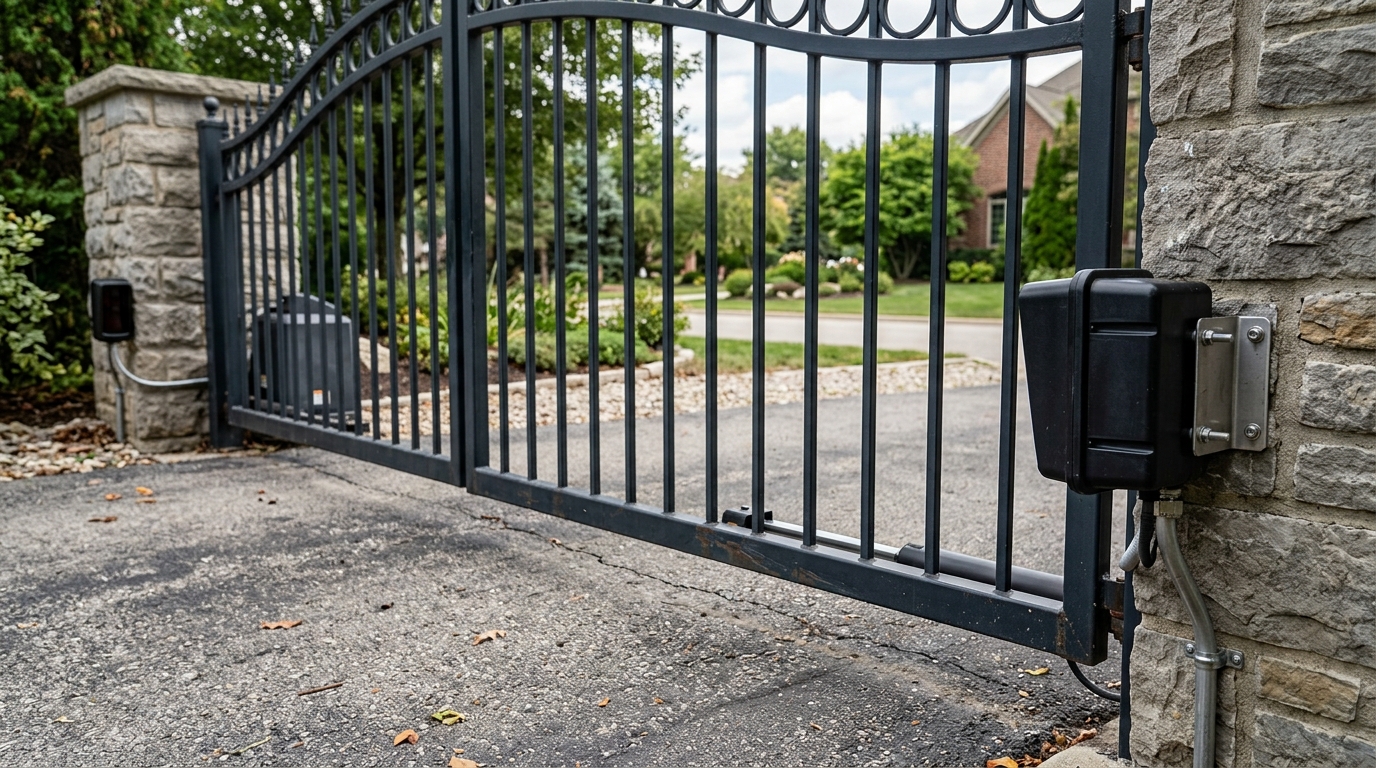
UL 325 establishes safety requirements for automated gate operators and their external entrapment protection. When I evaluate a driveway gate system, I look for monitored photoelectric sensors, safety edges, or other listed devices positioned to detect a person, vehicle, or object before the gate can cause injury or damage. “Monitored” means the operator checks that the safety device is connected and functioning. The operator will not run normally if a required circuit is broken or the device fails. The exact protection method depends on the operator, gate style, travel path, and identified entrapment zones.
ASTM F2200 addresses the construction of automated vehicular gates, including sliding, swing, vertical-lift, and vertical-pivot designs. It covers important details such as gate openings, exposed rollers, guides, guarding, and clearances that help reduce crushing, shearing, and snagging hazards. A properly installed sensor cannot compensate for a gate with unsafe gaps, unstable hardware, or accessible moving parts. For that reason, I treat the gate and operator as one safety system rather than evaluating the driveway gate safety sensors alone.
A dependable installation typically combines several layers of protection instead of relying on a single sensor. Inherent force reversal can stop or reverse the gate when it encounters resistance, while monitored photo eyes and safety edges provide additional protection around the travel path and pinch points. Warning signs, physical guarding, secure controls, and correctly designed gate components further reduce risk and help users understand where to stand or drive. Because requirements can vary by equipment and location, I verify the manufacturer’s instructions, applicable UL 325 provisions, ASTM F2200 requirements, and local code before completing a custom installation.
Photoelectric Sensors And Safety Edges
Monitored photoelectric sensors, often called photo eyes, use an invisible beam to detect a person, vehicle, or object in the gate path before contact occurs. When the beam is interrupted, the gate operator is designed to stop or reverse the gate instead of continuing its movement. I view photo eyes as a noncontact layer of protection, which is especially useful across a driveway opening or near the travel area of a sliding or swing gate. Because monitored sensors can report a wiring or sensor fault to the operator, they provide more dependable protection than an unmonitored device that may fail without warning. Placement still matters because a single beam may not detect someone outside its height or approaching a separate entrapment zone.
Pressure-sensitive safety edges provide another type of protection by responding when the moving gate physically contacts a person or object. Mounted along leading edges, posts, or other hazardous surfaces, these flexible strips send a signal to stop or reverse the gate when compressed. They can help address crushing and draw-in hazards, such as the space where a sliding gate moves toward a fixed post or where a swing gate closes against a stationary surface. In my experience, the strongest safety design often combines photo eyes with appropriately placed safety edges. One detects an obstruction before contact, while the other responds at the point of contact. Both devices should be installed, tested, and maintained according to the operator’s instructions and applicable safety requirements.
Sensor Placement For Gate Types
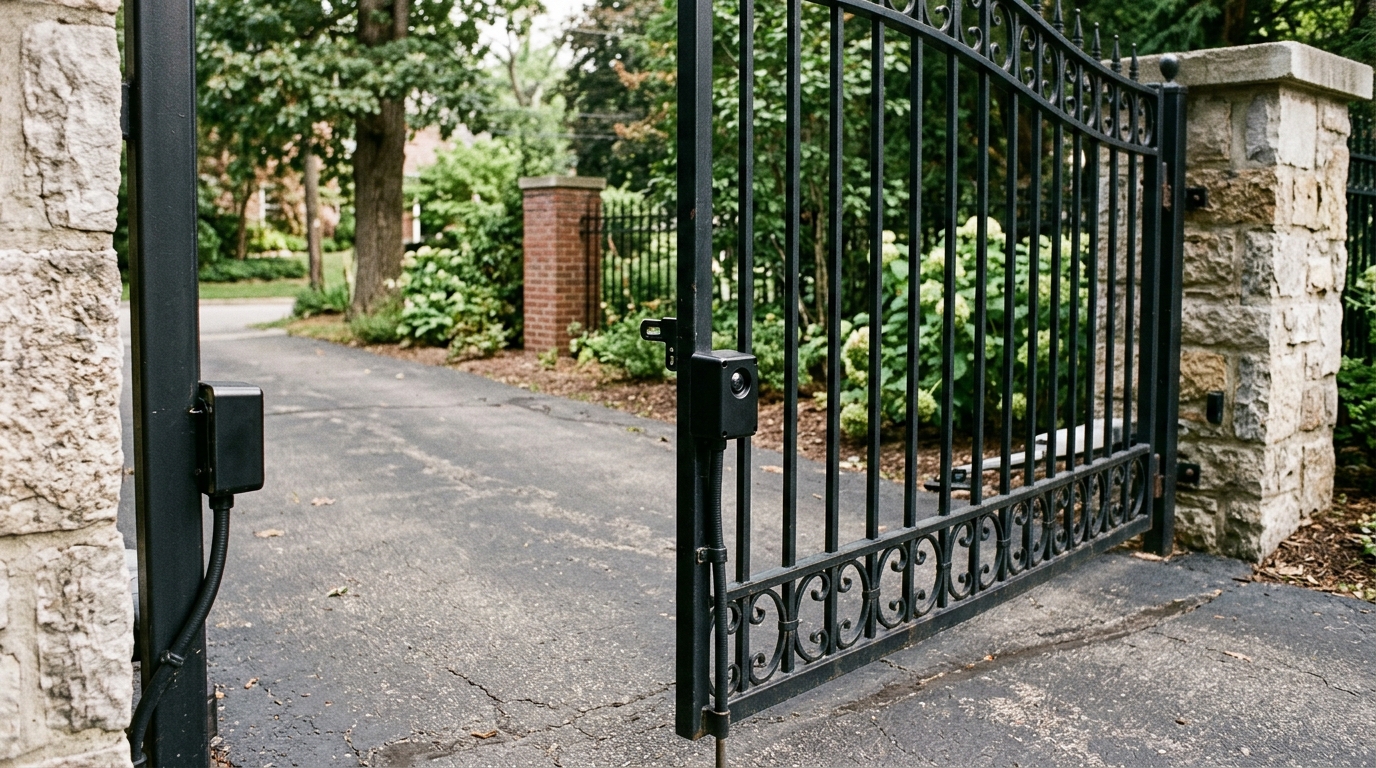
Sliding gates need sensors positioned along the panel’s travel path, especially where the moving gate could trap someone against a fence, post, or other fixed object. I pay close attention to the leading edge, the rear edge as it enters a pocket or enclosure, and the opening where vehicles and pedestrians pass. Swing gates require protection across the gate’s arc, at the leading edge, and around hinges and posts where pinch points can form as the panels move. Photoelectric sensors can monitor the opening, while monitored edges or other approved devices help detect contact with people or objects.
Vertical-lift gates create danger zones beneath the rising panel and along the side posts or guides. Sensors should protect the space under the gate and detect anyone or anything entering its path before the panel descends or moves upward. Vertical-pivot gates need coverage around the pivot hardware, nearby posts, and the sweeping path of the panel as it rotates, including the leading edge where clearance changes. For overhead-pivot gates, I also consider the underside of the panel, the overhead travel area, and the points where the gate could crush an object against a support or ceiling structure.
Sensor placement should protect every area where a person, vehicle, or object could be struck, trapped, or crushed, not just the main driveway opening. Vehicle loops and access-control devices can help manage traffic, but they do not replace entrapment protection sensors designed for the operator and gate type. Because each installation has different posts, slopes, hinge locations, and pedestrian routes, I use the manufacturer’s instructions and applicable safety requirements to determine the final locations. After installation, I test each sensor while the gate is operating to confirm that the system stops or reverses before contact occurs.
Testing Maintenance And Professional Service
I begin a safety check by placing an appropriate object in the sensor beam and activating the gate from a safe position, never by standing in its path. The gate should stop or reverse promptly when the beam is interrupted, and I repeat the test from several approach points. I also inspect sensor lenses for dirt or damage, confirm that the units face each other correctly, and check that their mounting brackets have not shifted. Wiring should be secure, protected from moisture and abrasion, and free of loose connections or visible damage. If the gate fails any test, it should remain out of service until the cause is identified and corrected.
Maintenance should also confirm that warning lights, audible alarms, signage, and other required warning devices operate clearly during each gate cycle. I create a custom assessment for the gate type, site layout, traffic pattern, and operator controls because a sliding gate may require different checks than a swing or vertical-lift system. Before-and-after photos, test results, and notes about completed adjustments provide a useful record for property owners and facility managers. If alignment, wiring, controls, or safety devices need repair, I recommend professional service rather than bypassing or disabling a sensor. Client feedback and documented service records can also help demonstrate that ongoing maintenance is being handled carefully.
Support should continue after installation with practical guidance on routine checks and prompt attention when a sensor begins acting inconsistently. I offer scheduling designed around each client’s needs, including flexible hours, and serve a broad service area for inspections, repairs, and maintenance visits. Each visit focuses on explaining the issue clearly, presenting appropriate repair options, and confirming safe operation before the gate returns to regular use. With consistent testing and responsive service, driveway gate safety sensors can remain a dependable part of the system’s entrapment and impact protection.
Conclusion On Safer Driveway Gates
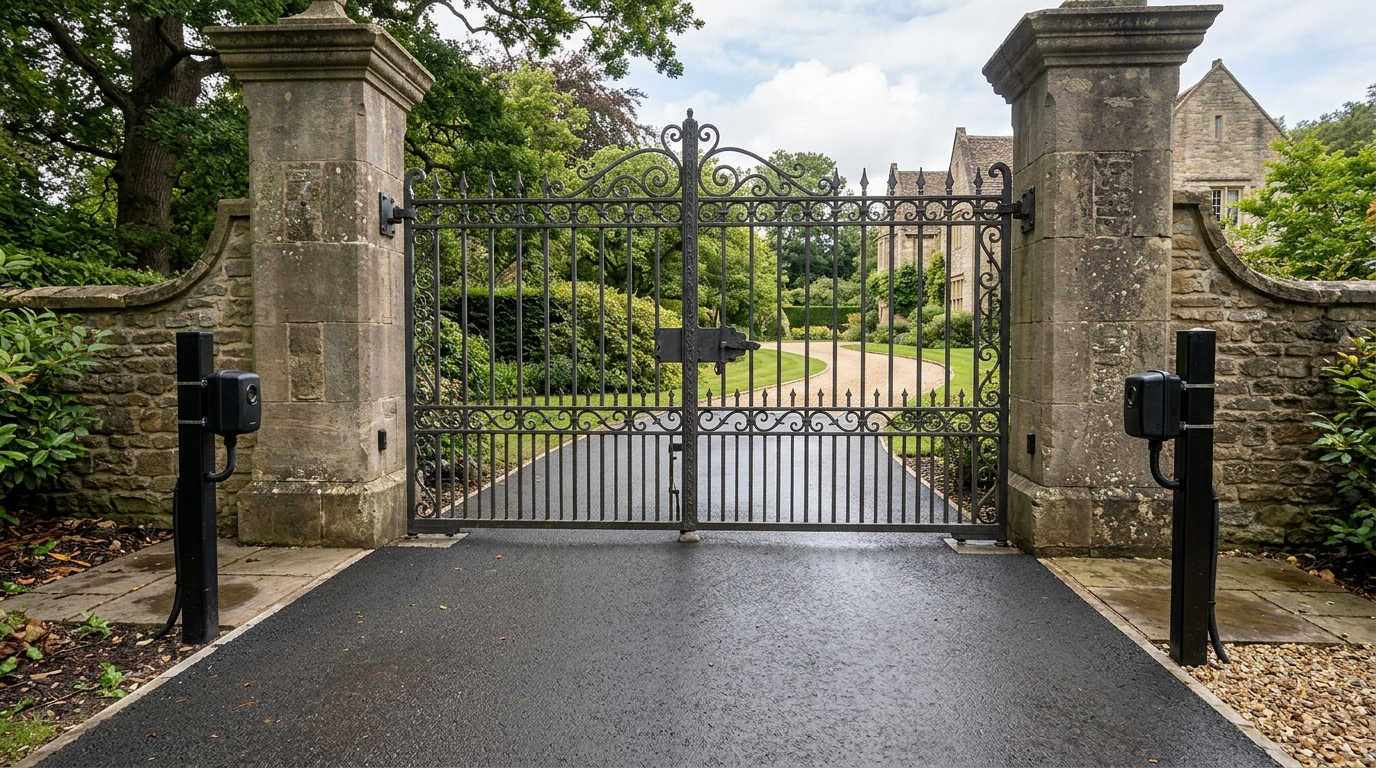
Safer driveway gates begin with treating safety sensors as one part of a complete entrapment-protection system. I recommend combining properly positioned photo eyes, monitored edge sensors, appropriate gate controls, and correctly constructed gate components to help reduce the risk of crushing, impact, and entrapment. A sensor may detect an obstruction, but it cannot correct a damaged hinge, an improperly balanced gate, or an operator that continues running after a fault. Equipment should be properly rated for the gate’s size, weight, movement, and operating environment, with installation guided by applicable requirements such as ANSI/CAN/UL 325 and ASTM F2200.
Regular inspections are just as important as the initial installation because sensors can shift, become dirty, or stop communicating reliably over time. I encourage property owners to test reversing and stopping functions, keep detection areas clear, and schedule professional maintenance before small issues become hazards. An experienced gate professional can evaluate traffic patterns, slopes, clearances, weather exposure, and the needs of people and vehicles using the property. With a tailored design, properly maintained equipment, and ongoing attention to every layer of protection, a driveway gate can provide dependable access without sacrificing safety.
How Safety Sensors Protect Your Driveway Gate
Driveway gate safety sensors are essential for reducing the risk of entrapment, crushing, impact, and damage around powered gates. I view them as a separate safety system from remotes, keypads, vehicle loops, and cameras because their primary purpose is to detect hazards and stop or reverse gate movement. Photoelectric sensors can identify a person, vehicle, or object in the gate’s path, while monitored edge sensors respond when the gate makes contact with an obstruction. A properly designed system should match the gate’s style, movement, and surrounding layout, whether it is a sliding, swing, vertical-lift, or pivot gate.
Reliable protection also depends on correct installation, testing, and regular maintenance. I recommend checking sensor alignment, wiring, mounting, and response at scheduled intervals because dirt, weather, landscaping, or accidental damage can reduce performance. The gate operator and safety devices should be selected and installed according to applicable requirements, including ANSI/CAN/UL 325 and ASTM F2200, along with local codes. When I assess a property, I focus on its specific traffic patterns, slopes, visibility, and potential entrapment zones so the solution provides practical protection without compromising convenient access.