
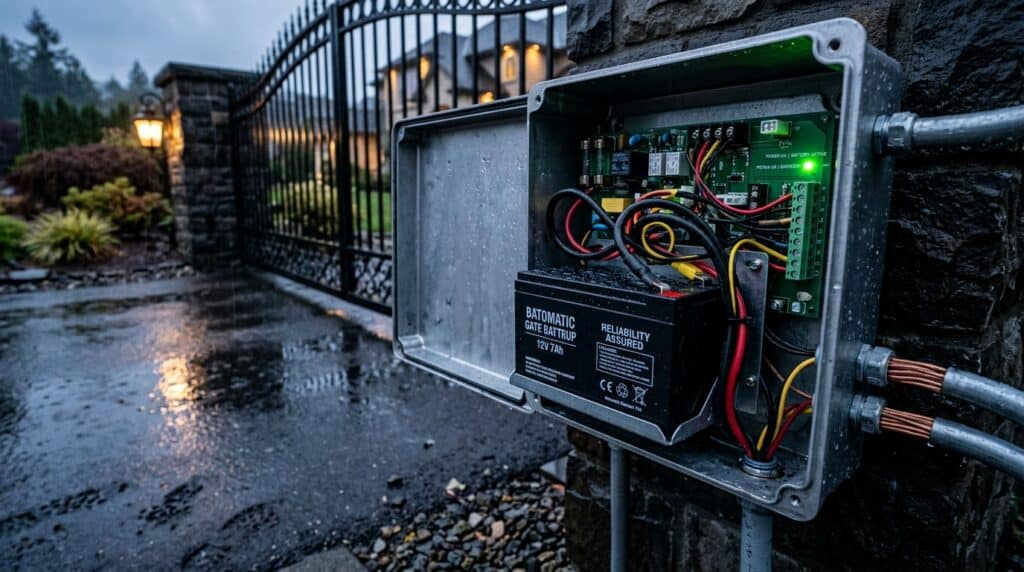
Why An Automatic Gate Battery Backup Is Essential For Modern Security
In an era where grid instability is becoming more common, a power outage should not mean being locked out of your property or leaving your perimeter vulnerable. An automatic gate battery backup has evolved from a luxury add-on to a critical standard for modern security and convenience. These systems ensure that your home remains accessible and secure even when the local power grid fails.
Modern backup solutions offer remarkable reliability, providing dozens of operational cycles to bridge the gap during extended blackouts. Whether you prioritize emergency access with fail-open settings or constant protection through fail-secure modes, the right battery technology is your first line of defense. Investing in a high-capacity system guarantees that your gate continues to function seamlessly, protecting your peace of mind regardless of external conditions.
Key Takeaways
- Upgrading to Lithium Iron Phosphate (LiFePO4) batteries provides a superior ten-year lifespan and thousands of discharge cycles, making them a more cost-effective and reliable long-term investment than traditional lead-acid options.
- Property owners must choose between fail-safe configurations for emergency access and fail-secure modes for constant protection to ensure the gate behaves correctly during total power loss.
- Integrating solar charging into a gate backup system creates a self-sufficient security asset that functions entirely off the grid and prevents deep battery discharge during extended outages.
- A high-capacity backup system typically provides 20 to 100 operational cycles, ensuring a standard household remains secure and accessible for 24 to 48 hours during a grid failure.
Comparing Lead Acid Versus Lithium Ion Performance
When upgrading your automatic gate battery backup, the choice between lead acid and Lithium Iron Phosphate (LiFePO4) is the most significant factor in long term reliability. Traditional lead acid batteries have been the industry standard for years due to their low initial cost and simple integration. However, these batteries typically only offer a lifespan of three to five years and can be sensitive to extreme temperature fluctuations. Their discharge cycles are also limited, meaning they lose capacity quickly if they are frequently called into action during power outages. For homeowners seeking a reliable solution, the frequent maintenance and replacement schedule of lead acid can become a hidden recurring expense.
Modern LiFePO4 batteries represent a premium advancement in perimeter security technology, offering a service life that can exceed ten years. These lithium variants are designed to handle thousands of discharge cycles without significant degradation, ensuring your gate remains operational through extended grid instability. While the upfront investment is higher, the cost per cycle is significantly lower than traditional options because you will not need to replace them every few seasons. This durability makes lithium the preferred choice for high traffic residential or commercial properties where failure is not an option. Investing in lithium technology transforms your gate system into a robust, low maintenance asset that provides peace of mind for a decade or more.
The performance gap becomes even more apparent when analyzing how these batteries handle depth of discharge during an emergency. Lead acid batteries can suffer permanent damage if they are drained too low, often limiting their effective capacity during a prolonged blackout. In contrast, lithium ion backups can be discharged almost completely without harming the internal cells, providing more usable energy in a smaller and lighter package. This efficiency ensures that your gate achieves the maximum number of operational cycles when the main power grid fails. Choosing the right battery chemistry is ultimately about balancing immediate budget needs against the desire for a high performance, fail secure entrance.
Fail Safe Versus Fail Secure Configuration Options
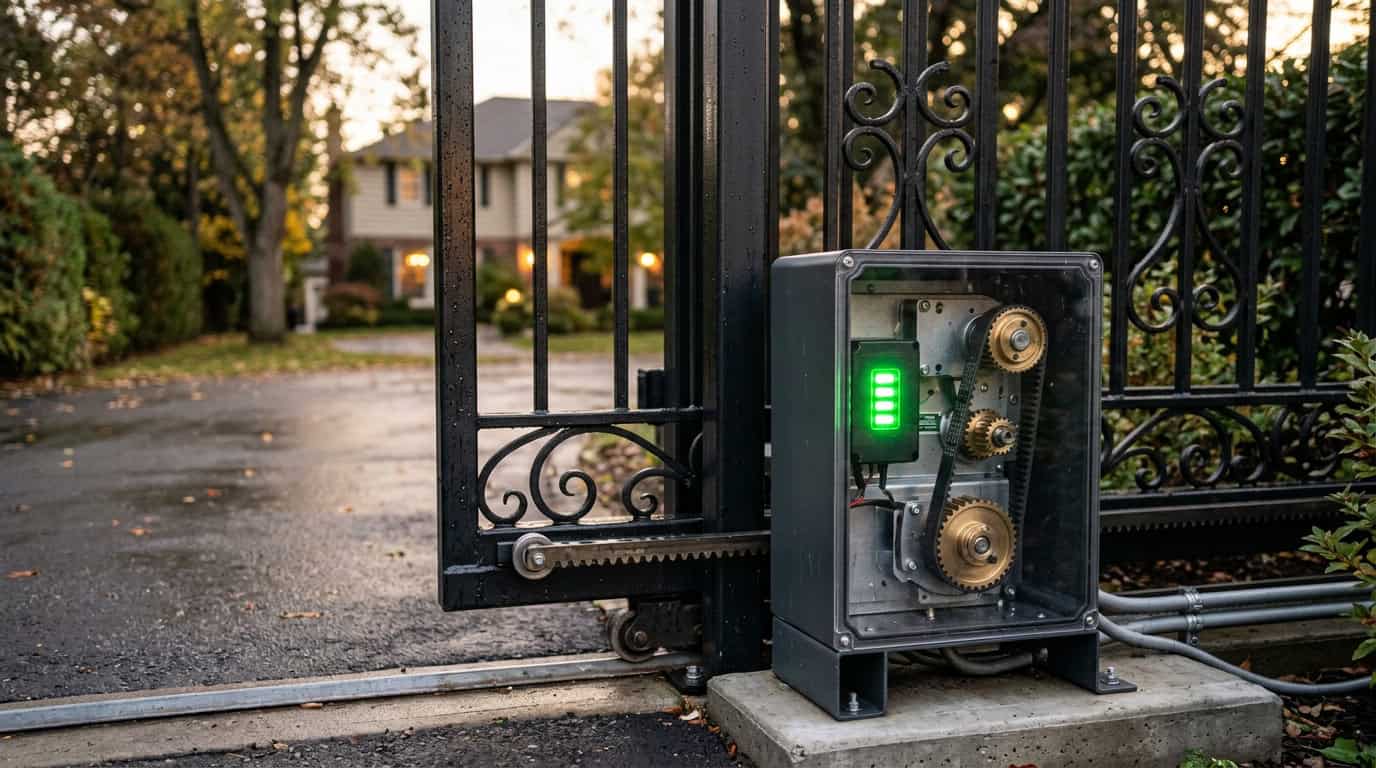
When configuring your automatic gate battery backup, the choice between fail-safe and fail-secure modes determines how your property handles a total power loss. A fail-safe configuration is designed to prioritize emergency access by automatically opening the gate and keeping it in the open position when the primary power source fails. This setup is often a requirement for multi family residential complexes or commercial facilities where fire departments and emergency responders must have unimpeded entry. By choosing this option, you ensure that residents are never trapped inside during a grid failure, though it does temporarily suspend the perimeter security of the property. Investing in a high quality backup system allows you to pre program these behaviors so that the gate responds instantly without manual intervention.
For owners who prioritize constant protection, a fail-secure configuration ensures the gate remains closed and continues to operate normally using stored battery energy. Modern systems can provide between 20 and 100 cycles on a single charge, allowing the gate to function for several days even while the neighborhood is dark. Once the battery reaches a critical low voltage threshold, the system can be programmed to perform one final action, such as locking shut to maintain a secure perimeter. This setup is ideal for high value residential estates where security is the primary concern during an extended outage. Selecting a lithium iron phosphate battery variant can further enhance this reliability, offering a lifespan of up to ten years to ensure your fail-secure protocols remain ready for action.
Choosing the right configuration is a vital step in upgrading your gate into a comprehensive security asset that adds significant value to your home. Professional installation ensures that these sophisticated power management settings are calibrated to your specific needs and local safety codes, often working in tandem with advanced automatic gate safety sensors to prevent accidents during operation. You can also integrate these backup systems into broader smart home ecosystems to receive real time alerts regarding battery health and power status. By making these decisions during the installation phase, you eliminate the risk of being caught off guard by an unexpected blackout. This proactive approach to gate automation provides peace of mind by balancing the dual needs of emergency accessibility and robust property defense.
Calculating Gate Cycles and Operational Capacity
Estimating the operational capacity of your gate during a power failure requires a clear understanding of your daily traffic patterns and the specific hardware installed. Most premium residential backup systems are engineered to provide between 20 and 100 full cycles, which accounts for one complete opening and closing of the entrance. For a typical household, this capacity comfortably covers a 24 to 48 hour outage without any loss in security or convenience. You should consider the weight of your gate and the frequency of guests when calculating your needs, as heavier ornamental gates will naturally draw more power from the battery than lightweight aluminum designs. Understanding how long do electric gate openers last can help you determine when it is time to upgrade your motor and backup system for maximum efficiency. Investing in a system with a higher cycle rating ensures that your perimeter remains secure even during extended periods of grid instability.
The longevity and reliability of your backup system are also heavily influenced by the battery chemistry you choose for your installation. While traditional lead acid batteries offer a cost effective solution with a lifespan of three to five years, many modern homeowners are upgrading to Lithium Iron Phosphate (LiFePO4) variants for superior performance. These advanced units can last over a decade and maintain a more consistent discharge rate, ensuring the gate motor operates at full speed even as the charge depletes. When planning your system, it is vital to consult an electric gate repair cost guide to understand how different components impact your long-term maintenance budget. Selecting the right combination of capacity and technology transforms your gate from a potential liability into a reliable asset that protects your property regardless of local power conditions.
Integrating Solar Charging With Backup Power Systems
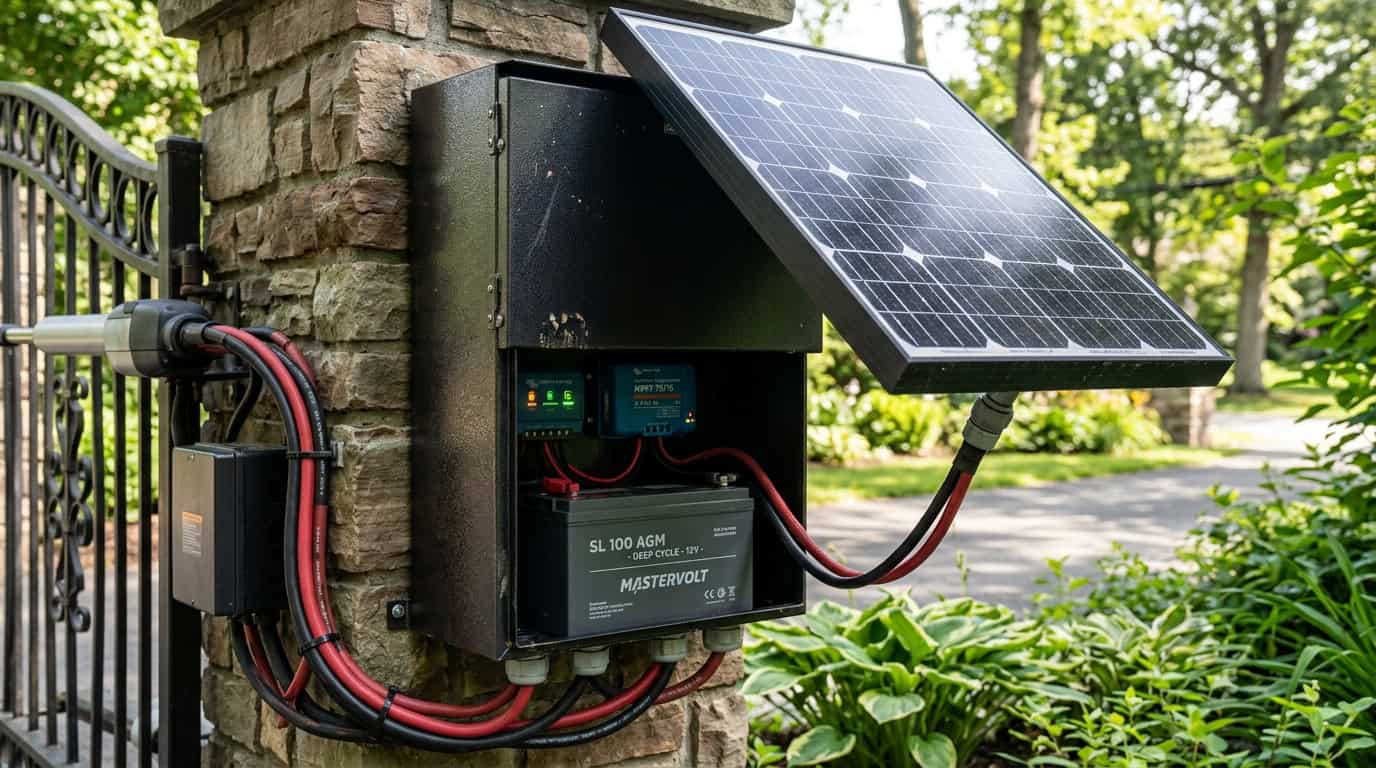
Investing in a solar-integrated battery backup transforms your gate operator into a self-sufficient security asset that functions entirely off the grid. By pairing high-efficiency solar panels with advanced lithium or lead-acid batteries, you ensure that your property remains accessible and secure even during prolonged regional power failures. This setup is particularly valuable for expansive estates or commercial sites where running traditional electrical lines can be prohibitively expensive. The solar array continuously trickles power into the backup system during daylight hours, maintaining a full charge so the gate is ready for heavy use at any time. Homeowners who choose this comprehensive installation package benefit from a significant reduction in long-term energy costs while gaining peace of mind.
Modern solar charging kits are designed to work seamlessly with high-performance battery backups to provide consistent operational capacity. During an outage, these systems can typically handle dozens of cycles per day because the solar panels replenish the energy consumed by each gate movement. Many property owners ask is a solar gate opener worth the investment when considering these upgrades, and the answer lies in the long-term energy independence they provide. Integrating solar charging prevents the battery from reaching a deep discharge state, which significantly extends the overall lifespan of your hardware. Choosing a professional solar and battery integration is a strategic decision that maximizes the reliability of your perimeter security investment for years to come.
Securing Property Access with Reliable Battery Backups
Investing in a high-capacity automatic gate battery backup is a fundamental component of a comprehensive perimeter security strategy. As power grid instability becomes more frequent, the ability to maintain uninterrupted access to your property ensures that your daily routine remains seamless and your assets stay protected. Choosing a robust system, particularly one utilizing long-lasting Lithium Iron Phosphate technology, provides the peace of mind that your gate will remain functional for up to a decade with minimal maintenance. This proactive investment transforms a standard gate into a reliable security barrier that performs exactly when you need it most. By prioritizing a high-cycle backup solution, you eliminate the risk of being locked out or leaving your premises vulnerable during unexpected outages.
The long-term value of a premium backup system extends beyond simple convenience to encompass significant safety and financial benefits. A high-quality installation ensures that your gate can be programmed for specific fail-safe behaviors, such as remaining secure during a crisis or opening automatically for emergency services. This level of customization allows property owners to tailor their security posture to their specific environmental needs and risk profiles. Furthermore, integrating a high-capacity battery into a comprehensive installation package increases the overall value of your home or commercial asset. When you consider the potential costs of emergency repairs or critical gate motor replacement signs, the initial expense of a superior backup system is easily justified. Reliable power management is the final piece of the puzzle for any modern, high-performance automated entrance.
Frequently Asked Questions
1. Why is a battery backup necessary for my automatic gate?
A battery backup ensures your property remains accessible and secure during local power grid failures or unexpected blackouts. Without this system, you risk being locked out of your own home or leaving your perimeter vulnerable when the electricity goes out.
2. How many times will my gate operate during a power outage?
Modern backup solutions are designed to provide dozens of operational cycles, allowing you to enter and exit multiple times during an extended outage. The exact number of cycles depends on your specific battery capacity and the weight of your gate.
3. What is the difference between lead acid and lithium gate batteries?
Lead acid batteries are affordable but typically only last three to five years and are sensitive to temperature changes. Lithium Iron Phosphate (LiFePO4) batteries offer a premium service life exceeding ten years and can handle thousands of discharge cycles without losing power.
4. How often should I expect to replace my gate’s backup battery?
Traditional lead acid batteries generally require replacement every three to five years due to capacity loss. If you upgrade to a lithium system, you can expect a much longer lifespan that often exceeds a decade of reliable service.
5. What happens to my gate if the backup battery eventually dies?
You can configure your system to either fail-open for emergency access or fail-secure to maintain constant protection. Choosing a high-capacity backup system is the best way to ensure your gate continues to function regardless of external conditions.
6. Are lithium batteries worth the higher initial investment?
Yes, lithium batteries are a superior choice for homeowners seeking a reliable solution for their perimeter security. Their ability to handle frequent discharge cycles and resist extreme temperatures makes them more cost effective over the long term.