
Residential Gate Opener Mistakes That Create Serious Safety Risks
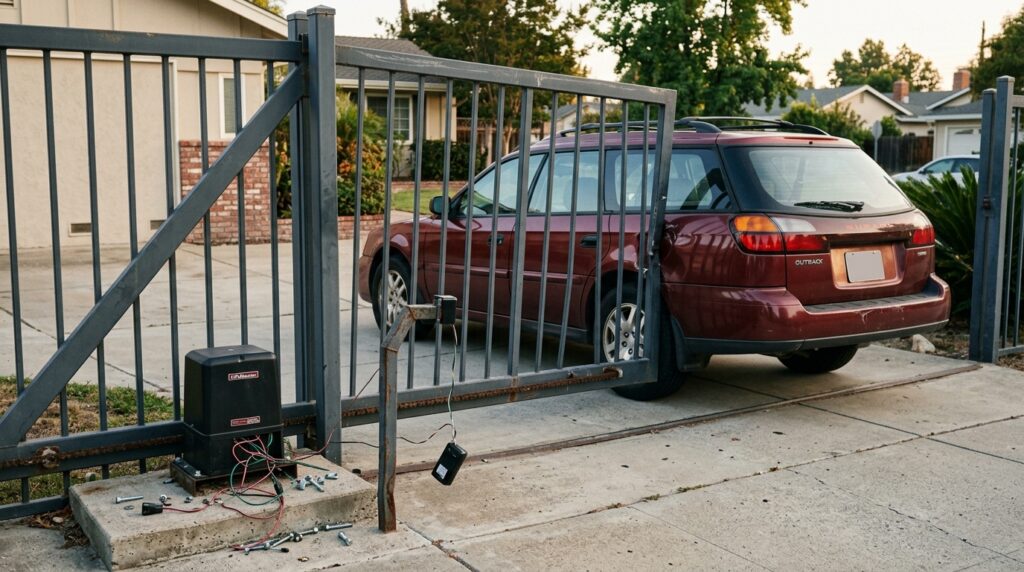
A few overlooked residential gate opener mistakes can turn a convenient driveway gate into a serious safety hazard. Entrapment, crushing, impact, vehicle collisions, electric shock, and a gate leaving its track can occur when the opener is treated as a standalone appliance. The complete safety system includes the gate, hinges or rollers, operator, controls, sensors, wiring, signage, and maintenance.
Whether you have a sliding or swinging vehicular gate, safe operation depends on every component working together. Choosing the wrong equipment, skipping safety devices, ignoring unusual movement, or relying on infrequent maintenance can put family members, visitors, vehicles, and property at risk. Recognizing these common errors is the first step toward preventing dangerous failures and keeping the gate operating as intended.
Key Takeaways
- Treat the gate opener as part of a complete safety system that includes the gate structure, hinges or rollers, operator, controls, sensors, wiring, signage, and emergency-release features—not as a standalone appliance.
- Repair and properly balance any gate that drags, sags, binds, or leaves its track before automation. Select an opener rated for the gate’s type, size, weight, wind exposure, slope, and duty cycle rather than using extra motor power to overcome mechanical problems.
- Install and test photo eyes, edge sensors, vehicle detection, secure controls, warning signs, emergency releases, and properly grounded wiring according to manufacturer instructions and applicable electrical standards. Never bypass safety devices to resolve nuisance trips or malfunctions.
- Perform regular inspections and maintenance of tracks, rollers, hinges, fasteners, wiring, batteries, sensors, and reversal functions, and stop using the gate when it moves unpredictably or fails to reverse. Professional installation and servicing are especially important for heavy, unreliable, high-use, or electrically complex systems.
Introduction To Residential Gate Opener Mistakes
Residential gate opener mistakes often begin with treating a motorized driveway gate like a simple appliance. Whether the system uses a slide gate or a swing gate, safe operation depends on the gate, hinges or rollers, operator, controls, sensors, wiring, and signage working together. A poorly balanced gate, damaged track, weak posts, or undersized hardware can create crushing, impact, shearing, or vehicle collision hazards. The opener cannot correct an unsafe structure, and adding more power may make the problem worse.
DIY installation and poor equipment selection can also leave critical protections out of the system. Missing photo eyes, edge sensors, warning signs, emergency release features, or properly configured controls may allow unexpected movement or fail to stop the gate when a person, pet, or vehicle is detected. Electrical work completed without appropriate protection can introduce shock risks, while an improperly supported swing gate or unstable slide gate can fall, derail, or leave its track. Choosing equipment certified for the gate’s size and weight, then installing every safety device according to the manufacturer’s instructions, is essential.
Even a professionally installed opener requires regular inspection and maintenance to remain dependable. Dirt, rust, worn rollers, loose hinges, damaged wiring, misaligned sensors, and a failing backup battery can gradually undermine safe operation. Testing reversal and entrapment protection, checking mounting points, and servicing the gate before forcing the motor to work harder can prevent small issues from becoming serious failures. The following sections examine these common mistakes and explain why professional installation, quality equipment, and scheduled maintenance provide a safer foundation than trying to compensate for deficiencies later.
Automating Unsafe Gates And Hardware
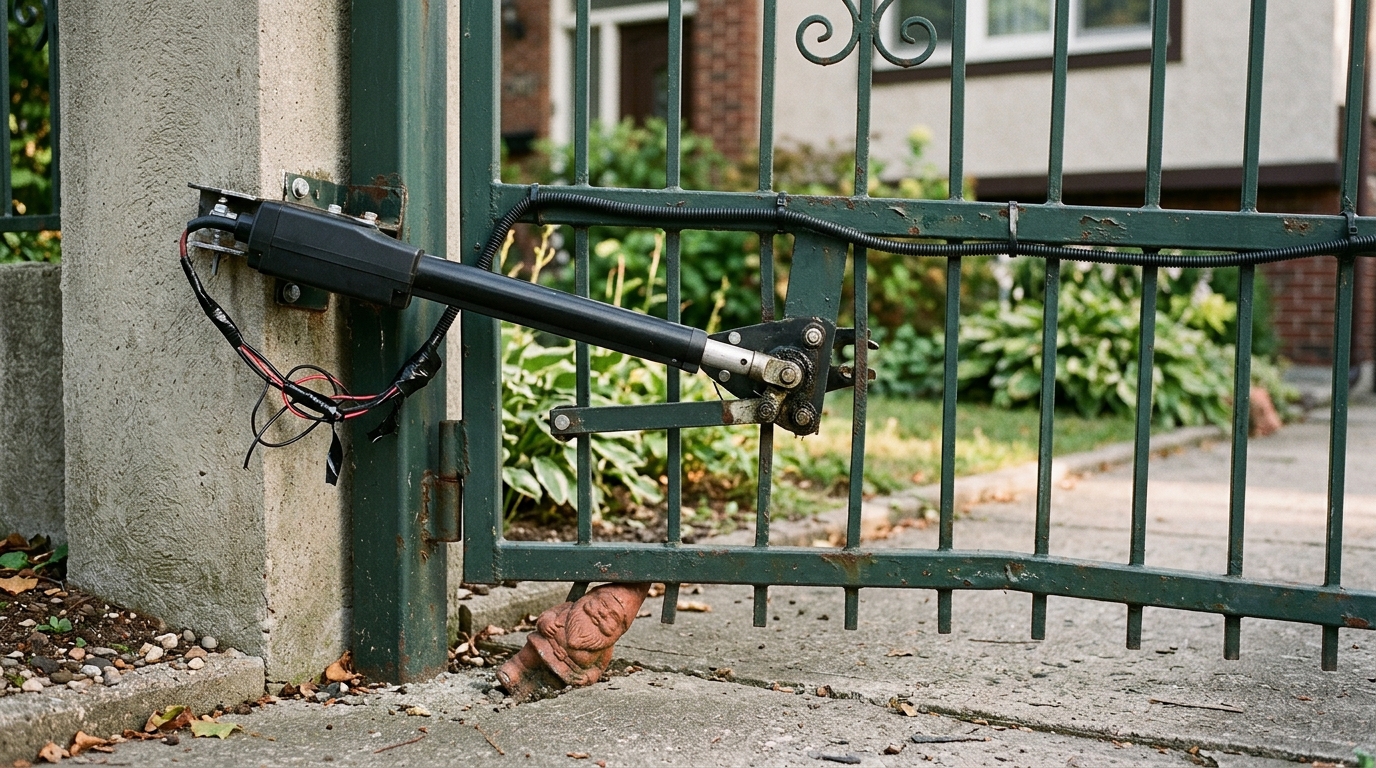
Automating a gate that drags, sags, or binds turns a mechanical defect into a serious safety hazard. An opener may force a misaligned swing gate or slide gate to move, increasing the risk of crushing, shearing, impact, and unexpected movement. A gate that jumps its track can derail, collide with a vehicle, or fall into the travel path, while loose hinges and worn rollers can allow the gate to shift unpredictably. Without positive stops, the operator may continue pushing beyond the intended open or closed position, damaging the gate and its hardware.
Repair and balance the gate before installing an opener, rather than relying on the motor to compensate for resistance. Hinges, rollers, tracks, posts, frames, and attachment points should be secure, properly aligned, and capable of supporting the gate throughout its full travel. The gate should move smoothly by hand and stop firmly at both ends without swinging or rolling past its intended limits. Correcting these issues first helps prevent derailment, falling gates, premature operator failure, and excessive strain on safety equipment.
A professional installation also matches the operator, controls, sensors, and wiring to the gate’s size, weight, travel, and operating environment. Selecting an undersized, uncertified, or poor-quality opener can create unreliable movement and provide inadequate protection against entrapment or vehicle collisions. Qualified installers verify positive stops, entrapment protection, reversing functions, access controls, warning signage, and other required safeguards before placing the system into service. Investing in properly balanced hardware and correctly rated equipment is safer than automating a defective gate and expecting the opener to solve the problem.
Choosing Undersized Gate Openers
A common residential gate opener mistake is choosing an operator based only on the gate’s weight. A long gate can place far more strain on the motor than a shorter gate of the same weight, while wind exposure and broad surface area can create substantial resistance during each cycle. Slope, uneven ground, and the gate’s construction also affect how much force is required to start and stop movement. Slide gates and swing gates use different operating mechanisms, so an opener rated for one design may be unsuitable for the other. Ignoring these factors can cause stalling, overheating, excessive wear, and unsafe or unpredictable movement.
The gate’s duty cycle matters as much as its size and weight, especially in households with frequent vehicle access or multiple users. A light-duty residential operator may not withstand repeated openings, while a heavy gate with solid panels can demand extra power whenever wind pushes against it. Hinges, rollers, tracks, posts, and alignment must also allow smooth movement, because a weak or obstructed gate can overload even a properly rated motor. Repeated strain can damage gears and electrical components, shorten the opener’s service life, and prevent the gate from stopping or reversing as intended. These risks make low-cost, undersized equipment a poor substitute for accurate site evaluation.
Professional installation begins with assessing the complete gate system rather than matching a motor to a weight rating. A qualified installer can account for gate length, surface area, wind conditions, slope, construction, duty cycle, and the mechanical differences between slide and swing designs before recommending properly rated, certified equipment. The operator must also work with correctly positioned controls, entrapment protection, warning signage, wiring, and other safety devices to reduce crushing, impact, and unexpected-movement hazards. Choosing quality equipment and having it installed and maintained as an integrated system helps protect people, vehicles, and the gate itself.
Skipping Sensors Controls And Wiring
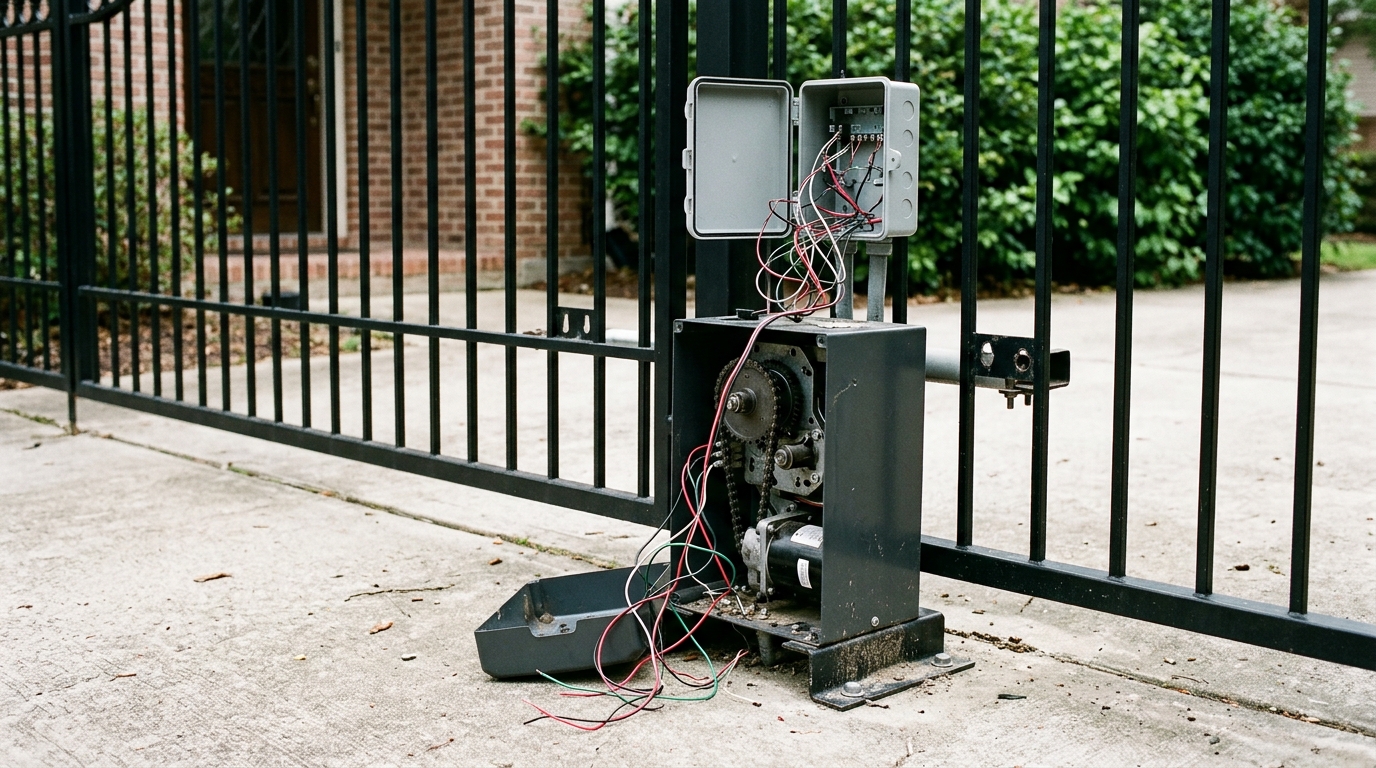
Photo eyes and edge sensors are often omitted, mounted too high, aimed incorrectly, or blocked by landscaping, preventing them from detecting a person, vehicle, or object in the gate’s path. The gate may then continue closing against an obstruction, increasing the risk of entrapment, crushing, impact, and shearing injuries. Vehicle detection systems also require proper placement and testing, because a poorly positioned loop or sensor may fail to recognize a vehicle or trigger unexpected movement. These devices should be installed, adjusted, and tested according to the opener’s instructions rather than bypassed to solve nuisance trips.
Controls and emergency features create additional hazards when they are treated as optional accessories. Remote controls should be programmed securely and protected from unintended activation, while keypads, push buttons, and other controls must be positioned so users have a clear view of the gate before operating it. An emergency release should remain accessible during a power outage, but it must be installed so it cannot be easily misused or reached by unauthorized children. Required warning signs should also be visible near the gate, communicating moving-gate hazards and helping visitors avoid standing in pinch points or travel areas.
Improper control wiring can expose users to electric shock, cause erratic operation, or make the gate move without warning. DIY connections, undersized conductors, missing grounding, damaged conduit, and moisture intrusion can undermine both the operator and its safety devices. Certified equipment requirements and manufacturer instructions should govern the entire installation, including compatible sensors, controls, wiring methods, and testing procedures. A qualified installer can verify that the gate structure, operator, safety devices, and controls work together instead of relying on a poor-quality opener or a bypass that only hides an underlying problem.
DIY Installation And Maintenance Errors
DIY installation is one of the most common residential gate opener mistakes because homeowners may treat the operator like a simple appliance. Ignoring the manufacturer’s instructions, installing an undersized unit, or mounting it to a weak gate can lead to unexpected movement, impact, crushing, or a gate leaving its track. Improvised wiring, unsuitable electrical connections, missing grounding, and inadequate weather protection also create shock and fire risks. Safety sensors, warning devices, and entrapment protection should never be bypassed simply to stop nuisance openings or get a malfunctioning system running. Every control, sensor, and emergency release should be installed according to the equipment requirements and local electrical standards.
Routine maintenance errors can be just as dangerous as poor installation. Homeowners should inspect and lubricate hinges, rollers, tracks, chains, and other moving parts while also checking batteries, mounting brackets, fasteners, and gate alignment for wear or loosening. A gate that drags, binds, sags, or becomes difficult to move manually can overload the opener and cause premature failure. Test the reversal function and obstruction sensors regularly, and stop using the system if the gate fails to reverse, moves unpredictably, or does not remain securely on its track. Never assume that a working remote or illuminated control panel means the entire safety system is operating correctly.
Professional evaluation is especially important when a gate is heavy, exposed to wind, installed on a slope, unreliable, or connected to keypads, intercoms, vehicle detection, or other access-control equipment. These conditions require proper operator sizing, structural assessment, compatible wiring, and coordinated safety controls rather than a quick replacement or low-cost workaround. A qualified installer can identify hazards that are easy to miss, verify reversal and entrapment protection, and confirm that the gate and opener function as one system. Investing in professional installation and properly certified equipment can reduce breakdowns while protecting people, vehicles, and property.
Conclusion For Safer Gate Automation
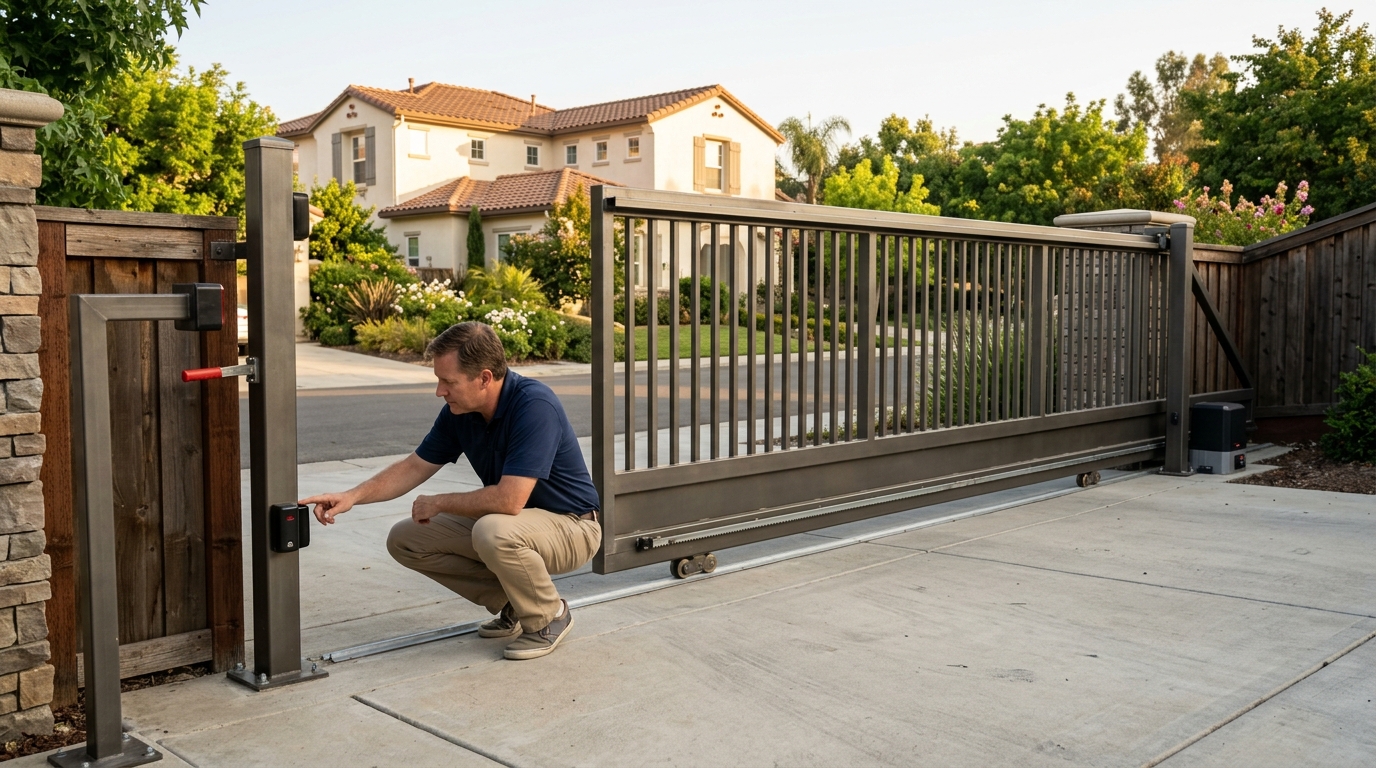
Most residential gate opener mistakes begin with treating the operator as a standalone appliance instead of one part of a complete safety system. The gate itself must move smoothly and remain secure on its hinges, rollers, and track before an opener is installed. Controls, entrapment sensors, wiring, warning signage, and emergency release features must also work together. Ignoring these details can create crushing, impact, shearing, vehicle collision, electric shock, or derailment hazards, even when the motor appears to operate normally. Regular inspection and maintenance are essential because worn hardware, damaged wiring, or misaligned sensors can turn a previously reliable system into a serious risk.
Correcting the gate first, selecting equipment rated for its size, weight, duty cycle, and operating environment, and following the manufacturer’s safety requirements can prevent many avoidable failures. DIY shortcuts, bargain equipment, and improvised wiring may save money initially, but they can compromise protective devices and reduce long-term reliability. A qualified professional can evaluate the entire installation, verify that safety devices respond properly, and ensure the operator is installed and adjusted for the specific gate. Taking a system-wide approach makes residential gate automation safer, more dependable, and better prepared for years of use.
Avoid Costly Residential Gate Opener Mistakes
Residential gate opener mistakes often begin with treating the operator as a standalone appliance instead of part of a complete gate system. Choosing an underpowered, uncertified, or incompatible opener can lead to unreliable movement, premature wear, and dangerous failures. Other common errors include ignoring gate alignment, installing inadequate hinges or rollers, bypassing photo eyes and edge sensors, or relying on poorly placed controls. These shortcuts can increase the risk of crushing, entrapment, impact, vehicle collision, electric shock, or a gate leaving its track. Proper installation starts with evaluating the gate structure, selecting equipment designed for its size and usage, and following all manufacturer safety requirements.
Routine maintenance is just as important as choosing the right equipment and installer. Safety devices, wiring, warning signs, hinges, rollers, tracks, and emergency release features should be inspected and tested regularly rather than addressed only after a problem appears. A qualified professional can identify structural issues, verify force and travel settings, install dependable safety accessories, and confirm that the system operates as intended. Investing in quality equipment and professional installation helps reduce avoidable repairs while protecting people, vehicles, and property. Avoiding these residential gate opener mistakes is the safest path to dependable, long-term performance.
Frequently Asked Questions
1. What are the most common residential gate opener mistakes?
Common mistakes include choosing an undersized or incompatible opener, skipping photo eyes and edge sensors, ignoring unusual gate movement, and neglecting routine maintenance. Installing an opener on a weak, damaged, or poorly balanced gate can also create crushing, impact, derailment, and vehicle collision hazards.
2. Can a gate opener fix a gate that is difficult to move manually?
No. A gate that binds, drags, sags, or requires excessive force has an underlying structural or mechanical problem that the opener cannot safely correct. Inspect the hinges, rollers, track, posts, and alignment before operating the gate, and never add a more powerful motor to overcome resistance.
3. What safety devices should a residential gate opener have?
A residential gate system should include properly installed photo eyes, contact or edge sensors, emergency release features, warning signage, and controls that prevent unexpected activation. These devices must be compatible with the operator, positioned correctly, and tested regularly so the gate stops or reverses when it detects a person, pet, vehicle, or obstruction.
4. Is DIY installation a common residential gate opener mistake?
DIY installation can become dangerous when it leaves out required safety devices, uses incorrect wiring, or fails to account for the gate’s weight, travel path, and structural condition. If you are not experienced with gate mechanics and electrical controls, use a qualified installer and have the completed system tested before regular use.
5. What problems can occur when the wrong gate opener is selected?
An opener that is not rated for the gate’s size, weight, type, or operating frequency may overheat, wear out prematurely, or fail to stop the gate safely. Select equipment designed specifically for a sliding or swinging vehicular gate, and confirm that the posts, hinges, rollers, track, and mounting hardware can support the system.
6. How often should you inspect and maintain a residential gate opener?
Inspect the gate, operator, hinges or rollers, track, wiring, sensors, controls, and warning signs regularly, with more frequent checks on heavily used systems. Test the gate’s stop and reverse functions, look for loose or damaged components, and arrange professional service promptly if you notice unusual noise, vibration, speed, hesitation, or movement.
7. What electrical mistakes can make a gate opener unsafe?
Improper wiring, inadequate grounding, missing electrical protection, and exposed or damaged cables can create shock, fire, and equipment failure risks. Electrical connections and protective devices should be installed according to applicable codes by a qualified professional, especially when the gate system is outdoors and exposed to moisture.
8. What should you do if a sliding gate leaves its track or a swing gate becomes unstable?
Stop using the gate immediately and keep people and vehicles away from its operating area. A derailed sliding gate or unstable swing gate can fall, strike someone, or move unpredictably, so have the track, rollers, hinges, posts, stops, and operator inspected and repaired by a qualified gate professional before restoring operation.