
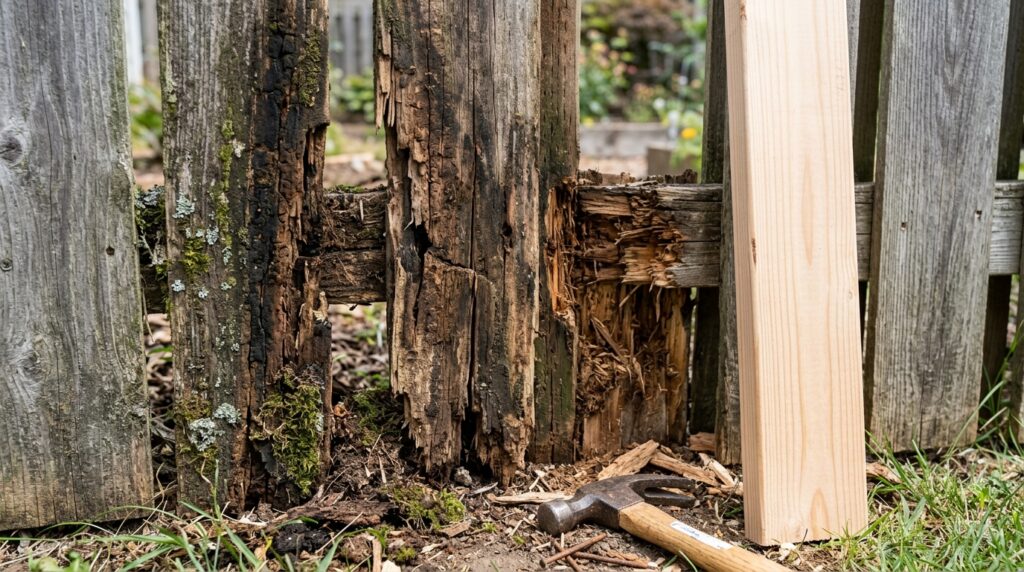
Wood Fence Rot Repair: When To Repair Or Replace Your Fence
A soft, discolored fence board may look like a minor cosmetic issue, but rot can spread to rails and weaken the posts that keep your fence standing. Effective wood fence rot repair starts by identifying the source of excess moisture and determining whether the damage is limited to a picket or involves a load-bearing post. Acting early can prevent a small repair from becoming a full fence replacement.
Replace decayed boards and short rail sections when the surrounding structure remains solid. Treat soft, cracked, loose, or leaning posts near ground level as a more serious problem. Proper drainage, post clearance, and routine inspections are essential for preventing moisture from returning. With the right repair approach, you can restore stability and extend the life of your fence.
Key Takeaways
- Wood fence rot is primarily a moisture-management problem. Correct soil and mulch contact, poor drainage, standing water, sprinkler exposure, and limited airflow before replacing damaged wood to prevent decay from returning.
- Replace rotted pickets or short rail sections when surrounding posts and framing remain solid. A soft, cracked, loose, or leaning post near ground level is a structural failure and is usually more reliably replaced than patched or reinforced.
- Choose full fence replacement when rot affects multiple posts, rails, or sections, or when the remaining wood is brittle and nearing the end of its service life. A repair-versus-replacement assessment helps identify the most durable and cost-effective option.
- Use treated, ground-contact-rated materials, seal exposed end grain, maintain clearance around the fence, and inspect at least once or twice a year—especially after heavy rain—to catch rot before it spreads.
Introduction To Wood Fence Rot Repair
Wood fence rot repair begins with understanding that decay is usually a moisture-management problem, not simply a sign that the fence is old. Persistent contact with soil or mulch, poor drainage, sprinklers, standing water, and limited airflow can keep wood damp long enough for decay to weaken pickets, rails, and structural posts. Early signs may include soft or discolored wood, crumbling areas, cracked boards, loose fasteners, or a fence section that has begun to lean. Addressing the moisture source is essential because replacing damaged wood without correcting the conditions that caused the rot can lead to another repair soon afterward.
A careful inspection helps determine whether repair is practical or whether replacement will provide a more durable result. Rot limited to individual pickets or a short rail section can often be resolved by replacing those components and improving drainage or clearance around the fence. A post that is soft near ground level, loose, cracked, or leaning is a more serious concern because it supports the fence. Filling the damaged area or attaching a support beside it may provide only a temporary fix. Consider the condition of connected posts, rails, and surrounding sections before deciding where the repair should stop.
Choosing wood fence rot repair based on the fence’s overall condition helps property owners spend money where it will last. A repair-versus-replacement assessment can identify isolated damage, reveal hidden structural problems, and clarify whether a partial fix or full fence installation makes better financial sense. When replacement is recommended, it may prevent repeated service calls and preserve the fence’s stability, appearance, and useful life. When repair is appropriate, addressing both the damaged components and the underlying moisture exposure creates a more reliable solution.
Identifying Rot In Fence Pickets Rails And Posts
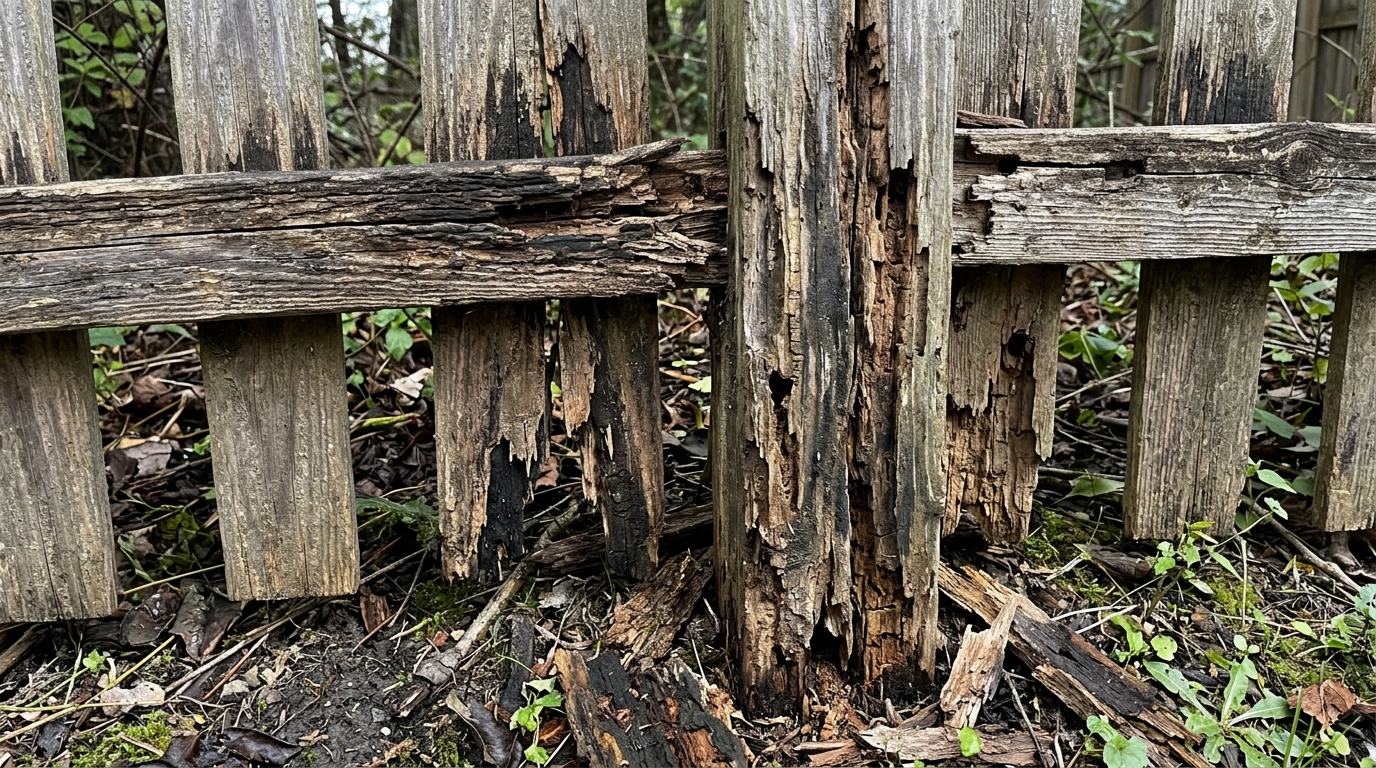
Inspect each picket and rail for wood that feels soft, spongy, or unusually easy to dent with a screwdriver. Discoloration, cracking, peeling surfaces, and visible fungal growth can indicate that moisture has moved beyond the outer layer. Look closely around fasteners as well because loose screws or nails may signal weakened wood rather than a simple hardware problem. Insects, small holes, sawdust, or galleries beneath the surface can also point to activity that has accelerated the damage.
Post rot deserves closer attention because posts carry the fence’s weight and resist wind and soil movement. Pay particular attention to the section at or just below ground level, where trapped moisture, soil contact, and poor drainage commonly cause hidden decay. A post that feels soft, has deep cracks, or allows the fence to move when pushed may no longer provide dependable support. Leaning sections, sagging rails, and wide gaps between posts are additional signs that the problem may involve structural failure rather than surface damage.
The extent and location of the rot help determine whether wood fence rot repair is practical or whether replacement is the safer long-term choice. Damaged pickets or a short rail section can often be replaced without disturbing the rest of the fence. A soft, loose, cracked, or leaning post near ground level is generally more reliable to replace than to fill or reinforce. An inspection should also identify moisture sources, such as soil or mulch touching the wood, so new damage does not return. A repair-versus-replacement assessment can clarify the most cost-effective option and reveal when a larger section or complete fence installation is warranted.
Choosing Repair Or Fence Replacement
Wood fence rot repair is often practical when decay is limited to a few pickets, a rail, or a short damaged section. Replacing individual pickets can restore the fence’s appearance without disturbing sound framing, while a rotted rail can usually be removed and replaced with properly treated lumber. A short section may be rebuilt when neighboring posts remain solid, plumb, and firmly set. Before repairing, address moisture sources such as soil or mulch touching the wood, poor drainage, and vegetation that prevents the fence from drying.
Replacing an entire fence run may provide better value when rot affects multiple sections, the boards are brittle or cracked throughout, or the rails and pickets have reached the end of their service life. A new run also makes sense when matching replacement materials is difficult or when widespread decay indicates that moisture problems will continue damaging older components. Repairing isolated pieces on a broadly weakened fence can create an uneven appearance and postpone a larger project without restoring dependable strength. An on-site assessment can compare the cost and expected service life of targeted repairs with a complete fence installation.
Load-bearing posts deserve particular attention because they support the rails, pickets, and wind loads across the fence. A post that is soft near ground level, loose, severely cracked, or leaning is usually safer and more reliable to replace than to fill, patch, or reinforce with another board. Those methods may hide decay or provide temporary support, but they do not restore sound wood below grade or correct an unstable footing. Replacing the post, improving drainage around its base, and setting the new support correctly can help prevent the same rot from returning.
Wood Fence Rot Repair Methods
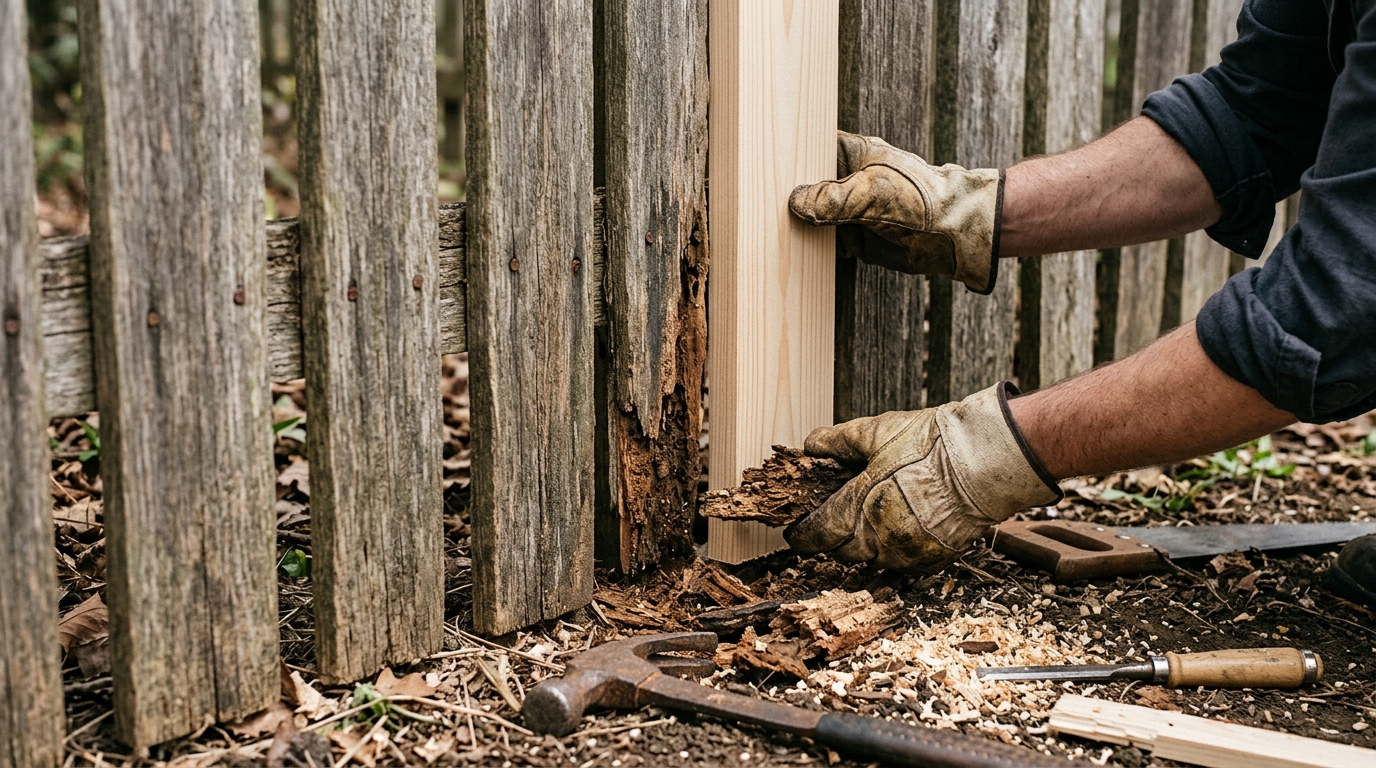
Wood fence rot repair begins with identifying how far decay has spread and correcting the moisture source. Remove soft, crumbling wood completely, then inspect nearby pickets, rails, and posts for hidden damage. Replace affected sections with properly treated, exterior-rated lumber that matches the original dimensions and wood species as closely as possible. Seal or paint all freshly cut ends, especially those near the ground, to reduce moisture absorption. Improve drainage by clearing soil and mulch from the fence line, correcting standing-water issues, and keeping sprinklers from repeatedly soaking the wood.
Minor rot in a few pickets or a short rail can often be repaired without disturbing the rest of the fence. A post that is soft near ground level, cracked, loose, or leaning is different because it supports the fence structure and is generally more reliable to replace than to fill or reinforce around the damaged area. Reset the new post in a properly prepared hole, keep it aligned with the existing fence, and use suitable concrete or drainage practices for local soil and weather conditions. Replacement boards should follow the existing spacing, height, profile, and finish so the repair blends with the surrounding design. Afterward, stain or seal the repaired area for more uniform protection and appearance.
Professional evaluation is appropriate when rot affects multiple posts, extends across long sections, or leaves the fence unstable. Difficult access, dense landscaping, sloped ground, and buried or damaged hardware can also make safe repair more complicated. A thorough repair-versus-replacement assessment can determine whether targeted work will restore the fence or whether extensive decay makes a new installation more dependable. Replacing only damaged sections may be cost-effective when the remaining structure is sound, while widespread structural rot can make continued patching a poor long-term investment. Addressing the problem promptly helps preserve usable fencing and prevents moisture damage from spreading to otherwise serviceable components.
Preventing Future Wood Fence Rot
Moisture control is the most effective way to prevent recurring wood fence rot. Keep soil, grass, and mulch below the bottom of the fence, and expose enough of each post to allow it to dry after rain. Correct low spots or drainage problems that leave water standing near the fence, and redirect sprinklers so they do not repeatedly wet posts, rails, or pickets. Trim vines, shrubs, and overhanging branches to improve airflow, and clear leaves and other debris that can trap moisture against the wood.
Protect vulnerable areas during wood fence rot repair by sealing exposed end grain with an exterior-rated wood preservative or sealer. When replacing posts or other structural components, use properly treated, ground-contact-rated materials designed for conditions where wood meets soil. Avoid burying untreated lumber or allowing new boards to rest directly on persistently damp ground. These steps can reduce moisture absorption, but they cannot restore wood that has already lost its structural strength.
Regular inspections can catch small problems before they require extensive fence replacement. Check for soft spots, darkened wood, cracked rails, loose fasteners, leaning sections, and posts that feel unstable near ground level, especially after wet seasons. Rot limited to a picket or short rail section may be repaired with a targeted replacement, while a post that is soft, loose, cracked, or leaning is often more reliably replaced than filled or reinforced. A professional repair-versus-replacement assessment can help determine whether a localized fix will restore the fence or whether larger-scale installation is the more practical long-term solution.
Conclusion For Wood Fence Rot Repair Decisions
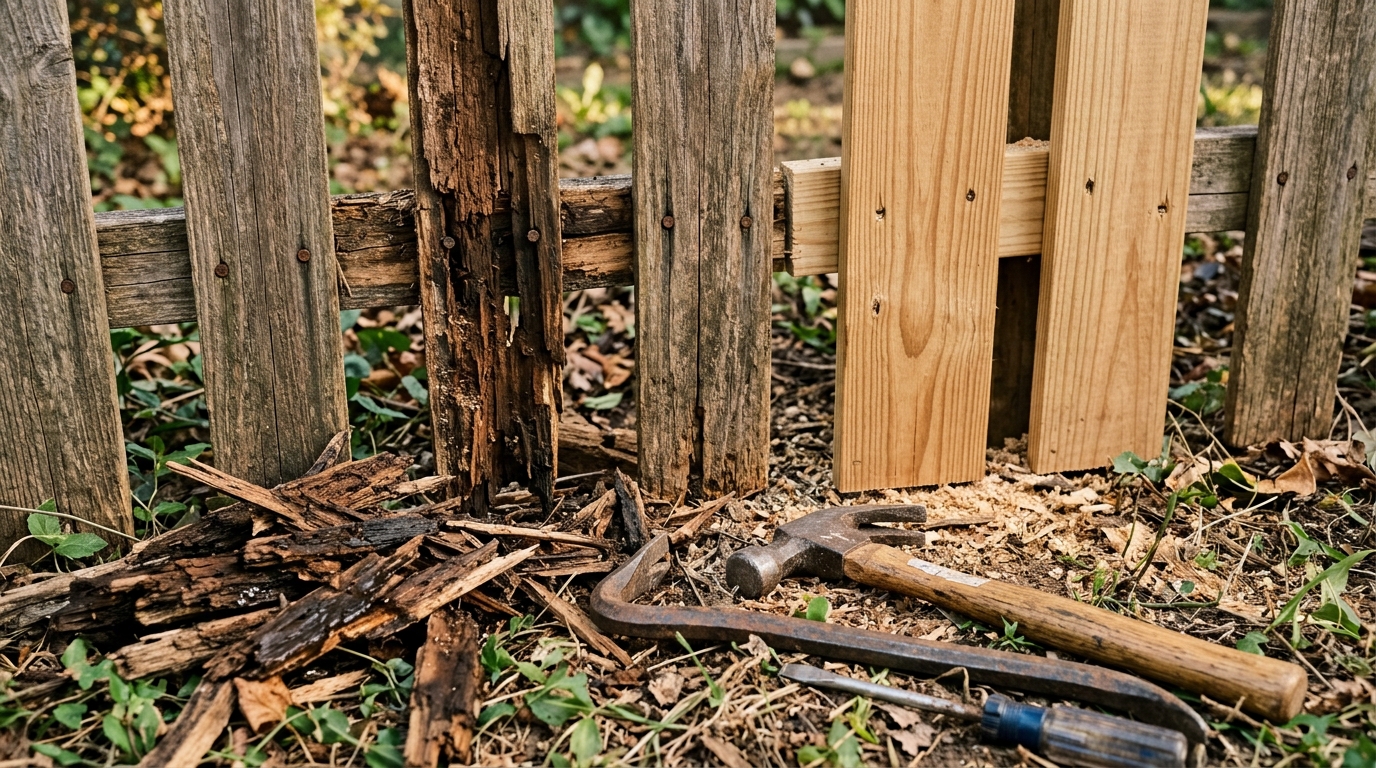
The right wood fence rot repair depends primarily on how far the decay has spread and which components are affected. Rot limited to a few pickets or a short rail section can often be addressed by replacing the damaged boards and correcting moisture sources such as soil contact, poor drainage, or trapped mulch. However, a post that is soft near ground level, cracked, loose, or leaning is a structural concern, and replacing the post is usually more dependable than filling or reinforcing the damaged area. Addressing the cause of the moisture can also help protect the surrounding wood from recurring decay.
A professional assessment is especially valuable when a fence post feels unstable or rot appears in multiple connected sections. Widespread decay may indicate that nearby posts, rails, or pickets have been exposed to the same moisture conditions, making isolated repairs a short-term solution. An experienced evaluation can identify which components can be saved, estimate the repair scope, and determine whether replacement would provide better long-term value. Scheduling an assessment early can help property owners avoid sudden fence failure and make a confident repair or replacement decision.
Repair Rotten Wood Fence Posts and Rails
Effective wood fence rot repair starts by identifying how far the decay has spread and what caused the moisture problem. Rotten pickets or a small section of rail can often be removed and replaced without disturbing the rest of the fence. However, a post that is soft near ground level, loose, cracked, or leaning is a structural concern, and replacing the post is typically more reliable than filling the damage or attaching a support beside it. A professional inspection can determine whether targeted repairs will restore the fence or whether replacement will provide better long-term value.
Preventing future rot is just as important as repairing existing damage. Keep soil, mulch, and vegetation away from the wood, improve drainage where water collects, and make sure replacement materials are properly treated and sealed. If decay appears in multiple posts, rails, or panels, the cost and appearance of repeated repairs may make a full fence replacement the more practical choice. A repair-versus-replacement assessment gives property owners a clear plan for restoring a safe, attractive, and durable wood fence.
Frequently Asked Questions
1. What are the early signs of wood fence rot?
Early signs include soft, discolored, cracked, or crumbling wood, along with loose fasteners and fence sections that begin to lean. Check especially around the bottoms of posts, rails, and boards near soil or mulch, where moisture commonly remains trapped.
2. What causes wood fence rot?
Wood fence rot is usually caused by prolonged moisture exposure rather than age alone. Soil or mulch contact, poor drainage, standing water, sprinkler spray, and limited airflow can keep the wood damp and allow decay to develop.
3. Can you repair a rotted fence board instead of replacing it?
Replace a fence board when decay has softened or weakened the wood because surface treatments will not restore its strength. Board replacement is usually practical when the surrounding rails and posts remain solid. Correct the moisture source before installing the new board.
4. How do you repair a rotted fence rail?
A short rail section can usually be replaced when the connected posts and remaining rail are structurally sound. Remove the decayed section, install properly sized treated wood, secure it with exterior-rated fasteners, and improve drainage or airflow to help prevent recurring rot.
5. When does a rotted fence post need to be replaced?
A post should be treated as a serious structural problem when it is soft near ground level, cracked, loose, or leaning. Because posts support the fence, filling the damaged area or attaching a brace beside it may provide only a temporary fix. Full post replacement is often the more durable solution.
6. Can you stop wood fence rot from coming back?
You can reduce the risk by correcting drainage, keeping soil and mulch below the wood, and maintaining clearance around the posts. Redirect sprinklers, remove standing water, improve airflow, and inspect the fence regularly for new soft spots or discoloration.
7. Should you repair a rotted fence or replace the entire fence?
Repair is appropriate when rot is limited to individual pickets or a short rail section and the posts and surrounding structure remain solid. Consider broader replacement when multiple posts are compromised, sections are leaning, or decay has spread throughout the structural components.
8. How often should you inspect a wood fence for rot?
Inspect your fence at least once or twice a year, and check it after periods of heavy rain or irrigation problems. Look closely at ground-level posts, board ends, rails, fasteners, and areas that stay shaded or damp so you can address small problems before they threaten the fence structure.