
Custom Gate Fabrication Process From Design To Installation
A well-built gate does more than define an entrance. It provides security, durability, and curb appeal for years to come. The custom gate fabrication process transforms site measurements, design goals, material choices, and operating requirements into a gate engineered for its specific location and use. From steel and aluminum to stainless steel and ornamental iron, every decision affects the gate’s strength, appearance, performance, and maintenance needs.
Precision matters at every stage, from cutting and welding to finishing, hardware installation, and final adjustments. Automated vehicular gates require additional attention to structural loads, operating cycles, controls, and safety testing to ensure reliable performance. Understanding how each step fits together helps property owners make informed choices and avoid costly installation or performance problems.
Key Takeaways
- Begin every custom gate project with a detailed site survey and engineered shop drawings that account for dimensions, slope, drainage, traffic flow, security, clearance, and automation requirements.
- Choose materials and hardware based on the gate’s size, weight, operating cycles, exposure, maintenance needs, and desired appearance; steel, aluminum, stainless steel, and ornamental iron each offer distinct advantages.
- Precision cutting, fitting, welding, surface preparation, and finishing are essential for maintaining alignment, structural strength, corrosion resistance, and long-term appearance.
- Professional installation and testing ensure proper alignment, reliable hardware and automation performance, effective entrapment protection, and safe operation under normal use, obstructions, and power loss.
Site Survey And Gate Engineering
A successful custom gate fabrication process begins with a detailed site survey rather than a standard-size template. The fabricator verifies the opening dimensions, evaluates existing posts and foundations, and checks ground slope, drainage, wind exposure, and available clearance. Traffic flow is reviewed for pedestrian paths, vehicle turning radii, queue space, and emergency access. Security requirements determine needs such as privacy, access control, anti-climb features, and impact resistance. These observations identify installation challenges early and ensure the gate is designed for the property’s actual conditions.
Once the site information is confirmed, the fabrication team develops shop drawings showing overall dimensions, elevations, framing, infill, attachment points, and structural details. The drawings establish whether a swing or slide configuration is most appropriate, accounting for available setback, grade changes, gate weight, operating cycles, and surrounding obstructions. Hardware specifications are selected to match the material, load, corrosion exposure, and expected frequency of use, including hinges, rollers, guides, stops, latches, and locks. This design stage gives the client a clear view of the proposed work and allows important details to be refined before materials are cut.
Automation is planned before fabrication begins rather than added later. Engineers coordinate operator capacity, power and control locations, safety edges, photo eyes, vehicle detection, manual release hardware, and access control connections with the gate’s structural design. For larger or high-wind installations, frame reinforcement, post sizing, foundations, and anchorage are evaluated to support reliable operation over time. Careful engineering reduces costly modifications during installation and produces a custom gate that fits the site, operates smoothly, and meets the project’s security and aesthetic goals.
Material Selection And Frame Fabrication
Material selection begins with the gate’s design, location, operating conditions, and long-term performance requirements. Steel provides substantial strength for large residential, commercial, and industrial gates, while aluminum offers a lighter solution that can reduce the load on hinges and automated operators. Stainless steel is often chosen for its clean appearance and strong corrosion resistance in coastal or high-moisture environments. Ornamental iron is selected when hand-finished details and traditional character are central to the design. Budget, wind exposure, gate size, operating cycle, and the desired finish are reviewed together so the material supports both the architectural vision and the gate’s daily demands.
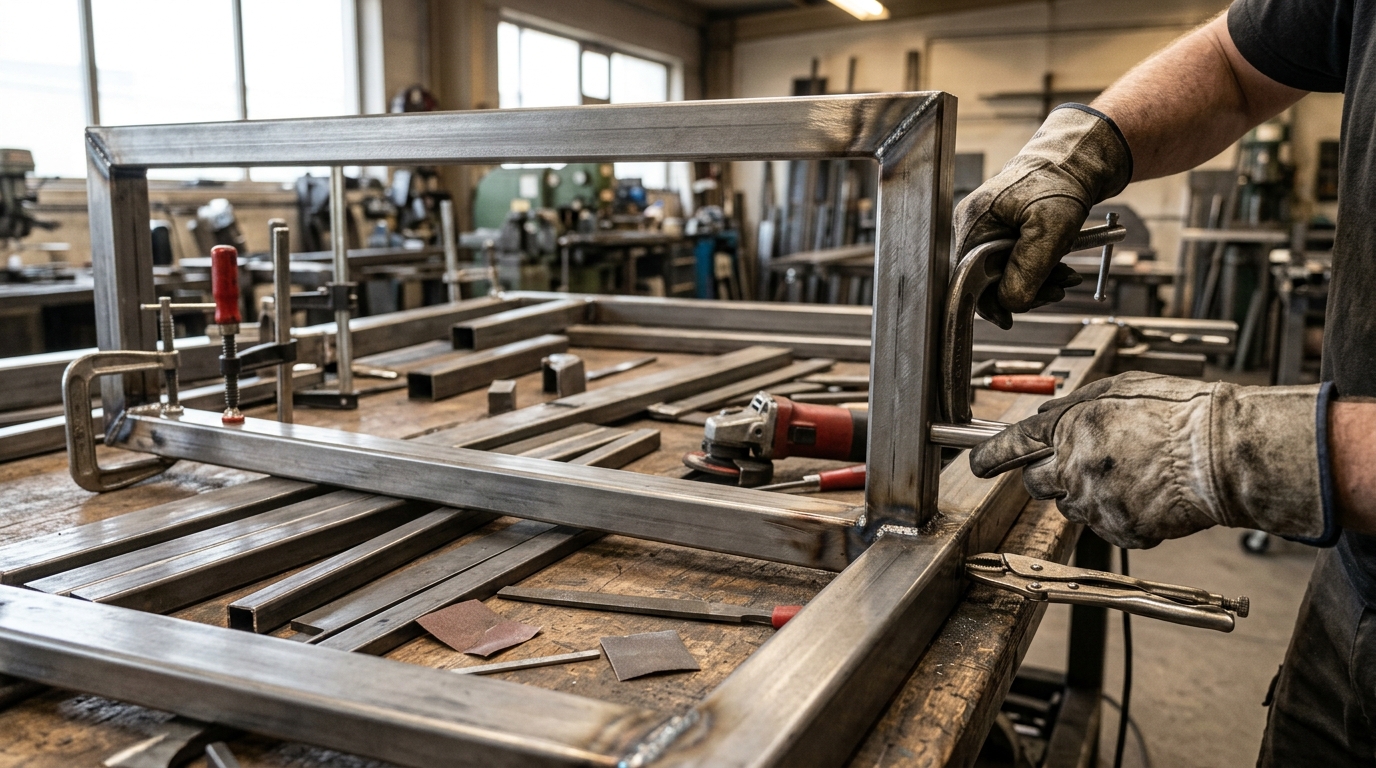
Once the material is approved, fabricators cut tubing, plate, bars, and decorative stock to precise dimensions using project-specific drawings and measurements. They drill holes for hinges, latches, hardware, and automation components, then bend or shape selected members to create curves, arches, scrolls, or other custom profiles. The frame is laid out on a level fabrication table, carefully squared, and fitted so clearances, reveal lines, and swing or sliding dimensions remain consistent. Decorative elements are prepared separately, allowing each infill, picket, panel, or ornamental feature to align with the overall design rather than relying on prefabricated patterns.
After fit-up, the frame and decorative components are joined by controlled welding or, where appropriate, mechanical assembly with bolts and specialized fasteners. Welds are placed to preserve alignment and minimize distortion, then cleaned, ground, and inspected for strength and appearance before finishing begins. For premium custom gates, this stage includes close coordination among the fabricator, designer, and property owner, with adjustments made to reflect approved details and site conditions. The result is a purpose-built gate that combines structural reliability with craftsmanship tailored to the property, rather than a standard unit modified after production.
Welding Finishing And Custom Details
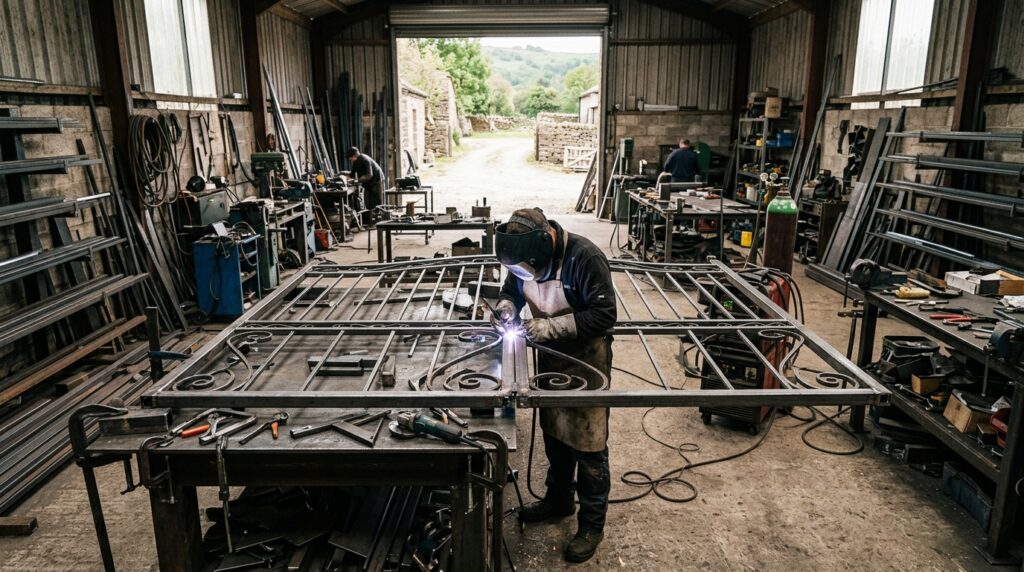
Skilled welders bring the custom gate fabrication process together by fitting each frame and infill component to precise shop drawings and site measurements. They use controlled weld sequences, temporary bracing, and carefully positioned clamps to maintain alignment and minimize heat-related distortion. Joints are inspected for consistent penetration, clean transitions, and the strength required for the gate’s size, weight, and operating demands. After welding, the frame may be straightened and adjusted before grinding removes spatter, sharp edges, and visible irregularities. Dimensional inspections verify that the gate is square and level, with correct clearances, hinge locations, and hardware preparation before it moves to finishing.
Surface preparation determines how well the selected finish performs over time, particularly on exterior gates exposed to moisture, sun, road salt, or frequent handling. Depending on the material and location, preparation can include degreasing, abrasive blasting, chemical cleaning, and the application of compatible primers. Powder coating provides a durable, uniform finish in a broad range of colors and textures, while hot-dip galvanizing offers robust corrosion protection for demanding environments. High-performance paint systems can deliver a specific architectural color or sheen, and layered systems may be selected when touch-up and field repair requirements are important. The correct finish is chosen based on the metal, exposure conditions, maintenance expectations, and the property’s design.
Premium custom work also allows the gate to include details that prefabricated products cannot provide. Welders and metal artisans can form distinctive scrollwork, forged accents, laser-cut panels, hand-finished textures, patinas, or tailored patterns that echo the building’s proportions and materials. Stainless steel, ornamental iron, aluminum, and structural steel each offer different visual and performance advantages that can be coordinated with adjacent railings, doors, fencing, and exterior hardware. Final quality checks review the finish, dimensions, weld visibility, drainage considerations, and operation before delivery or installation. This careful refinement supports a custom result that looks intentional, performs reliably, and justifies the investment in skilled fabrication.
Gate Installation Automation And Testing
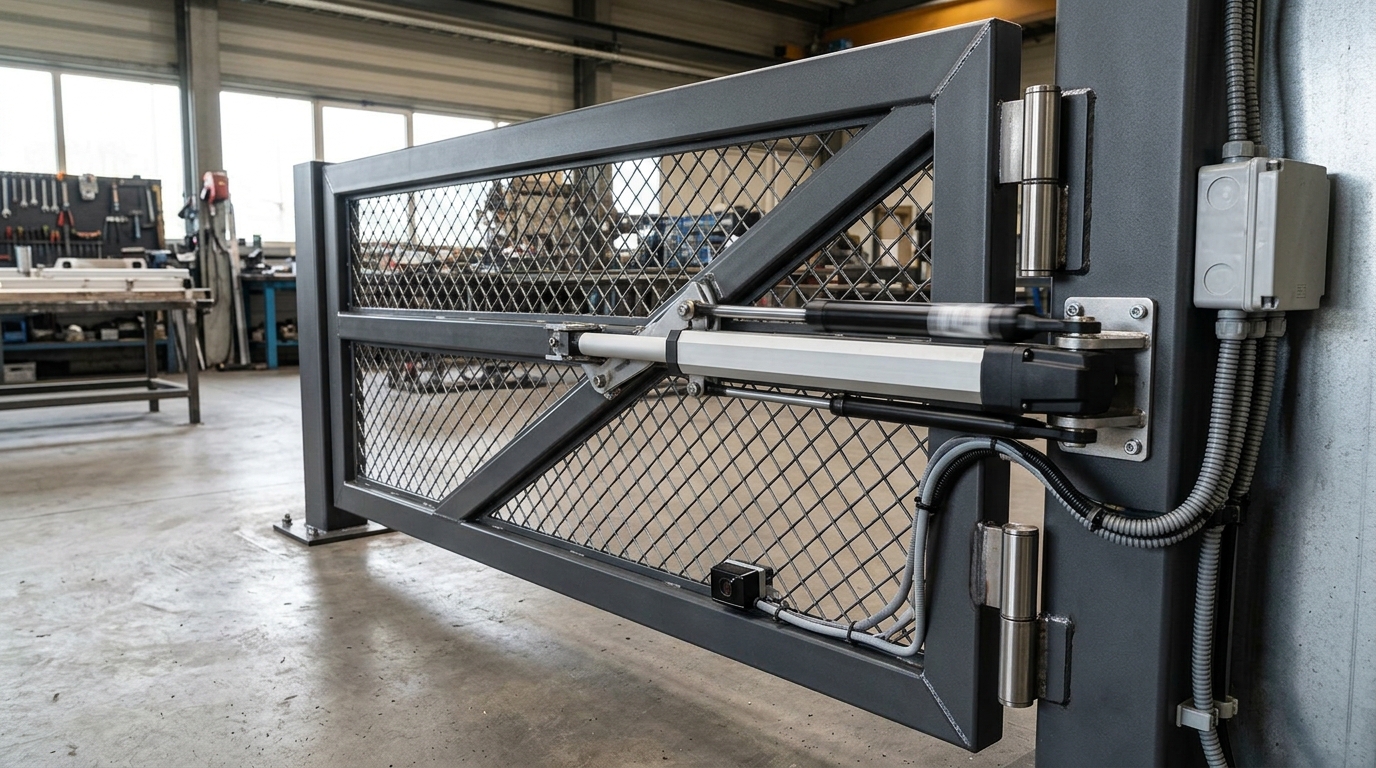
Installation begins with careful placement of the posts, hinges, rollers, tracks, and latches to suit the gate’s exact weight, geometry, and site conditions. For automated gates, technicians mount and configure the operator, access-control equipment, wiring, sensors, and entrapment protection according to the approved design and applicable safety requirements. Each component is fitted and adjusted on site rather than treated as a generic replacement part, preserving the intended appearance and performance of the custom gate. Foundation depth, post stability, surface drainage, and finished grade are checked before final hardware adjustments are made. This attention to the surrounding structure helps prevent premature settling, binding, corrosion, and water-related damage.
Final alignment ensures that swing gates open evenly through their full arc and sliding gates travel smoothly without dragging, racking, or contacting the ground. Technicians adjust hinges, rollers, tracks, stops, latches, and operator limits so the gate closes securely while maintaining the clearances established during design. Automated systems are tested through repeated operating cycles, including access devices, remote controls, keypads, safety loops, photo eyes, edge sensors, and manual release functions where applicable. Safety verification confirms that the gate responds correctly to obstructions, power loss, and sensor activation, with special attention to entrapment protection. Any fine-tuning is completed before the installation is considered ready for daily residential, commercial, or industrial use.
A premium custom gate installation concludes with a practical handover tailored to the property and its operating demands. The installer reviews normal operation, emergency release procedures, maintenance points, cleaning recommendations, and signs that may indicate misalignment or hardware wear. Property owners also receive guidance on access-control settings, user permissions, remote devices, and routine safety checks for automated equipment. Final documentation can include product information, control settings, warranty details, and recommended service intervals. This support gives owners confidence that their custom gate is properly fabricated, commissioned, and supported after installation.
Building a Successful Custom Gate Fabrication Process
A successful custom gate fabrication process begins with site-specific engineering that accounts for the property layout, opening dimensions, wind exposure, security needs, traffic patterns, and automation requirements. Material selection then supports the intended performance and appearance, whether that means structural steel for demanding applications, aluminum for reduced weight, stainless steel for corrosion resistance, or ornamental iron for a traditional architectural statement. Skilled fabricators transform those specifications into a precisely fitted frame and design through careful cutting, welding, assembly, straightening, and quality control at every stage. This attention to detail helps the finished gate operate reliably while complementing the surrounding property.
Durable surface preparation and finishing protect the gate from weather, wear, and corrosion, while professional installation ensures accurate alignment, dependable hardware operation, and proper safety testing. The result is more than a prefabricated product selected from limited sizes and styles. Premium custom gate fabrication delivers a distinctive entrance engineered for the site, built from carefully chosen materials, and supported by personal service from design through installation. For property owners seeking lasting value, this combination of craftsmanship, performance, and tailored design makes the investment worthwhile.
Frequently Asked Questions
1. What is included in the custom gate fabrication process?
The custom gate fabrication process converts your site conditions, design preferences, material selection, and operating requirements into a gate built for its specific location. It typically includes site surveying, engineering, shop drawings, material preparation, cutting, welding, finishing, hardware installation, and final adjustments.
2. Why is a site survey important before fabricating a custom gate?
A site survey verifies the opening dimensions, existing posts, foundations, ground slope, drainage, wind exposure, and available clearance. It also evaluates traffic flow, turning space, pedestrian access, emergency access, security needs, and installation challenges before fabrication begins.
3. How do you choose between a swing gate and a slide gate?
The choice depends on available setback, grade changes, gate weight, operating cycles, and nearby obstructions. Swing gates require adequate space to move through an arc, while slide gates need sufficient side clearance and a suitable track or cantilever system.
4. Which materials are available for custom gate fabrication?
Common options include steel, aluminum, stainless steel, and ornamental iron. Steel provides strength and impact resistance, aluminum reduces weight and corrosion concerns, stainless steel offers excellent corrosion resistance, and ornamental iron delivers a traditional decorative appearance with substantial durability.
5. What do shop drawings show for a custom gate?
Shop drawings define the gate’s overall dimensions, elevations, framing, infill, attachment points, hardware, and structural details. They allow you to review the design and confirm that the gate will fit the opening, meet performance requirements, and coordinate properly with posts, foundations, operators, and access-control equipment.
6. How are custom gates finished and protected from corrosion?
After fabrication, the gate is prepared and finished using a system suited to the selected material and site conditions. Options may include protective coatings, paint systems, or powder coating. Proper preparation and application improve durability, appearance, and resistance to moisture and wear.
7. What additional requirements apply to automated vehicular gates?
Automated vehicular gates must be engineered for structural loads, operating cycles, gate weight, operator capacity, and control-system compatibility. Safety devices, emergency release features, sensors, clearances, and operational testing are also required to support reliable and safe use.
8. How can you reduce problems during gate installation and operation?
Provide accurate site information, confirm the design through shop drawings, and select hardware and finishes based on the gate’s weight, exposure, traffic, and maintenance needs. Proper alignment, foundation preparation, hardware installation, safety testing, and final adjustments are essential for smooth operation and long-term performance.