
Estate Gate Installation Timeline: From Design To Commissioning
An estate gate installation can take one to three weeks for a simple manual gate, or 12 to 20 weeks or more for a large automated entrance involving new masonry, drainage, permits, and access control systems. The gate may be fitted on-site within a few days, but design approvals, fabrication, materials, and scheduling usually determine the overall project length. Understanding where delays occur helps you set a realistic completion date and avoid unexpected costs.
A standard automated gate commonly takes four to eight weeks from quotation to commissioning, while a highly customised design may require eight to 16 weeks. Ground conditions, cable runs, planning requirements, and the condition of existing posts can all affect the schedule. Careful planning keeps the installation moving and ensures every part of the entrance works as intended.
Key Takeaways
- Plan for the full project timeline—not just on-site fitting: simple manual gates may take 1–3 weeks, standard automated gates 4–8 weeks, custom automated entrances 8–16 weeks, and complex estate projects 12–20 weeks or more.
- Most delays occur during design approvals, permits, fabrication, procurement, and site preparation rather than installation itself. Physical fitting typically takes only 1–4 days once the gate, groundwork, power, and materials are ready.
- Resolve site requirements early, including foundations, masonry, drainage, cable routes, power supplies, access control, ground conditions, and existing post quality, because these dependencies can significantly extend the schedule.
- Use a written, phase-by-phase programme with clear approval deadlines and contingency for weather, supplier delays, design changes, and unexpected ground conditions.
Introduction To Estate Gate Timelines
An estate gate installation timeline coordinates the design, approvals, fabrication, site preparation, and final commissioning of a high-end residential entrance. A simple manual gate using sound existing posts may take approximately one to three weeks. A standard automated gate commonly requires four to eight weeks from quotation approval through commissioning, while a custom fabricated automated entrance often takes eight to 16 weeks. Larger estate projects involving new masonry, drainage, extended cable runs, access control, permits, or difficult ground conditions can require 12 to 20 weeks or more.
Physical installation is usually only one part of the schedule and may take one to three days for standard custom metalwork, or three to four days for a typical automated system. Most of the lead time involves confirming the design, securing approvals, ordering components, completing fabrication, preparing the site, and coordinating specialist trades. Weather, supplier availability, planning requirements, and changes made after design approval can also extend the programme. Building in contingency from the outset helps align gate completion with landscaping, driveway work, security systems, and the wider construction schedule.
Consultation Design And Approvals

The consultation, design, and approvals stage for an estate gate installation typically takes two to five weeks. It begins with a detailed site survey covering entrance measurements, levels, sightlines, existing structures, and the condition and gradient of the driveway. Your installer will also discuss gate styles, opening clearances, automation requirements, vehicle access, pedestrian entry, and access control options before preparing a quotation. A thorough assessment at this stage helps identify practical constraints that could otherwise delay fabrication or installation.
Once the initial proposal is issued, allow time for design revisions and approval. Bespoke estates may require adjustments to proportions, finishes, decorative details, swing or sliding operation, and integration with boundary walls or landscaping. Planning permission, listed-property consent, highway visibility requirements, or local regulations may also need to be checked before work is authorised. The timeline can extend if formal permits, architectural drawings, neighbour consultation, or approval from multiple decision-makers is required.
Early infrastructure decisions are important because they affect both the quotation and the wider estate gate installation timeline. Confirm whether new masonry columns, reinforced foundations, underground power supplies, drainage channels, photocell positions, intercoms, keypads, and communications cabling are included. Providing power and data routes before paving or masonry is completed usually avoids disruptive remedial work later. Once the design, specification, permissions, and quotation are approved, the project can move into fabrication, procurement, and installation scheduling.
Fabrication Procurement And Site Preparation
Fabrication and procurement commonly take three to 10 weeks for an estate gate, depending on the level of customisation, selected materials, automation equipment, and supplier availability. A straightforward manual gate may move through production quickly, while a large bespoke entrance with ornamental metalwork, integrated access control, or heavy-duty motors requires more design coordination and specialist components. Final measurements, finish selections, drawings, and approvals should be completed early because changes after fabrication begins can add time. For a custom automated gate, allowing eight to 16 weeks overall is often more realistic than planning around the installation days alone.
Site preparation can proceed during fabrication, but it may become the schedule’s critical path. New masonry piers or boundary walls must cure before the gate and hardware can be installed accurately, while trenching may be required for power, controls, intercoms, lighting, and safety equipment. Ground conditions such as rock, unstable soil, tree roots, or a high water table can slow excavation and require additional structural or drainage work. Difficult equipment access, restricted working hours, or the need to protect landscaped areas can also extend preparation.
A thorough pre-installation survey helps identify these issues before materials are ordered and creates a more reliable estate gate installation timeline. The project team should confirm power availability, cable routes, drainage falls, finished ground levels, opening clearances, and delivery access in advance. Where substantial masonry, long cable runs, permits, or challenging ground conditions are involved, site preparation can add several weeks and may place the overall project in the 12 to 20 week range. Once the groundwork, fabrication, and deliveries are complete, physical installation often takes only a few days, followed by automation testing, safety checks, and commissioning.
Installation Automation And Commissioning
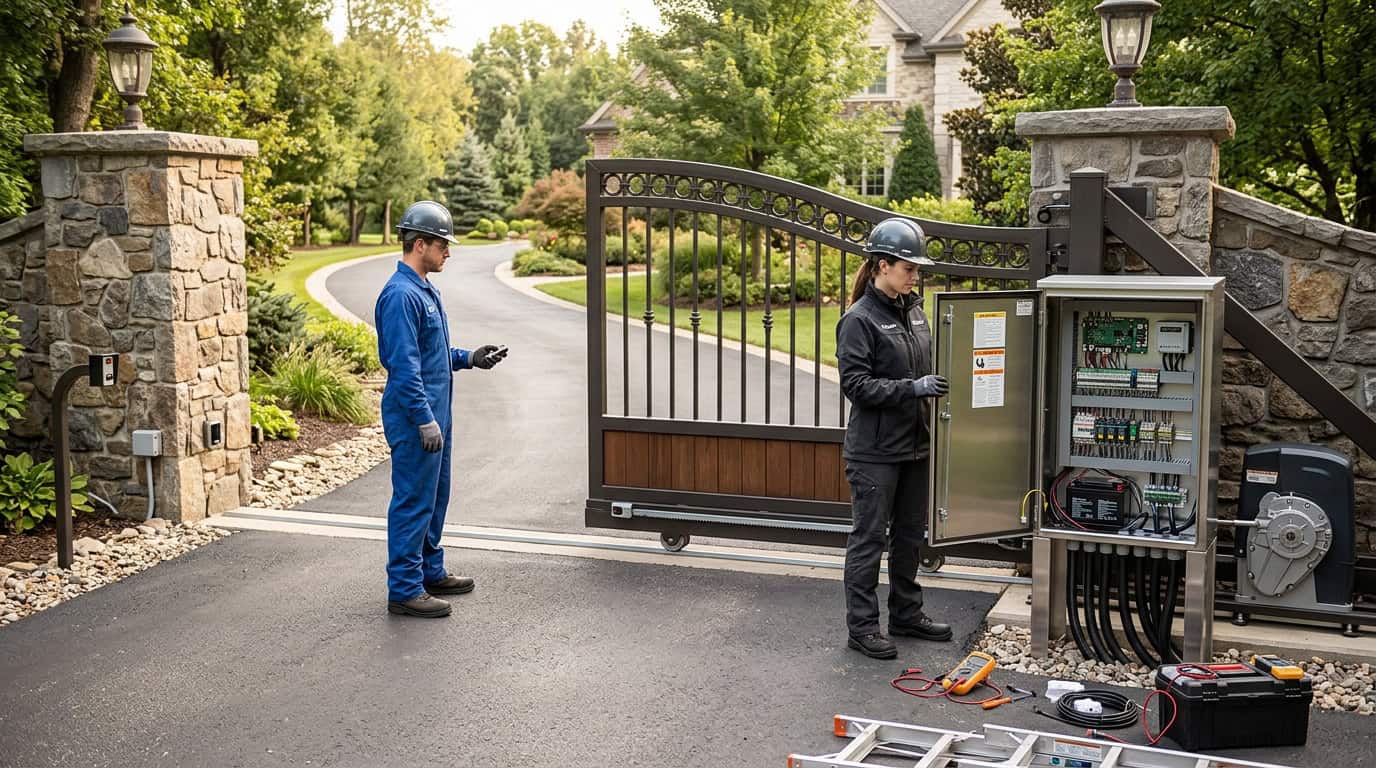
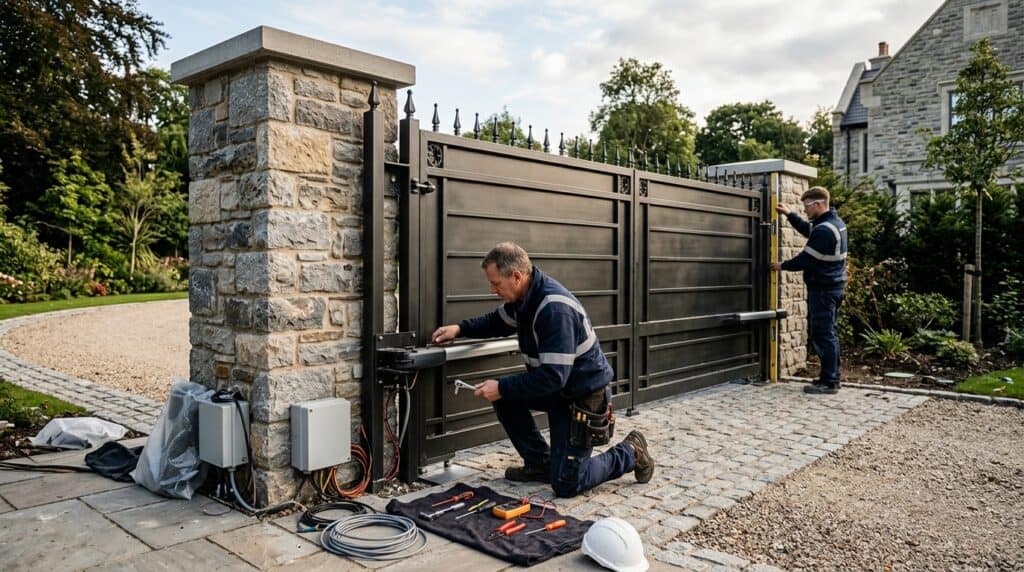
On-site installation for an automated estate gate typically takes one to four days, provided the groundworks, power supply, and fabrication are ready. The team first installs the posts or checks the existing supports, then hangs and aligns the gate leaves before fitting motors, hinges, stops, and control equipment. Careful alignment checks confirm that the gate opens smoothly, closes evenly, and maintains the required clearances. Cable routes, drainage points, and protective conduits are also inspected before the system is powered up.
Commissioning verifies that the gate responds reliably in every operating mode. Vehicle loops, photocells, safety edges, and other sensors are positioned and adjusted, while remote access features are connected to the agreed telephone, app, intercom, or property management system. The installer conducts safety-force testing to confirm that the gate stops or reverses when resistance or an obstruction is detected. Controls, remotes, keypads, and emergency release procedures are tested with the homeowner or estate manager.
Before handover, users receive practical training on normal operation, access permissions, manual release, and basic fault reporting. The final visit should include a review of safety settings, remote access, sensor performance, and any outstanding snagging items, followed by the handover of manuals, codes, warranties, and maintenance guidance. Larger estate entrances may require additional site visits for masonry, long cable runs, drainage, difficult ground conditions, specialist access control, or follow-up adjustments. Although physical installation may be completed within days, these dependencies should be included in the wider estate gate installation timeline agreed during planning.
Conclusion On Estate Gate Scheduling
A simple manual estate gate with sound existing posts may be completed within approximately one to three weeks, while a standard automated gate commonly takes four to eight weeks from quotation through commissioning. A fully custom fabricated automated gate generally requires eight to 16 weeks, particularly when it includes bespoke metalwork, access control, specialist finishes, or integrated lighting. Larger entrances involving new masonry, long cable runs, drainage work, permits, or difficult ground conditions can require 12 to 20 weeks or more. These ranges are estimates, and actual installation may take only one to several days once the site and materials are ready.
The estate gate installation timeline is driven mainly by design approval, fabrication, permits, material procurement, and site readiness rather than the time spent fitting the gate itself. Before fabrication begins, confirm a phase-by-phase schedule covering surveys, drawings, approvals, manufacturing, groundwork, installation, electrical commissioning, and final testing. Resolve power supplies, vehicle and pedestrian access, drainage, foundations, masonry, and access control equipment early, since late changes can create costly delays. Ask the installer which decisions and approvals must be completed by specific dates so the project can move smoothly from design to commissioning.
Allowing realistic time for each stage helps property owners coordinate landscaping, security, construction work, and household access around the installation. It is also sensible to build contingency into the schedule for permit processing, weather, fabrication revisions, or unexpected ground conditions. A written programme should identify responsibilities, dependencies, and the point at which the installer can release the design for manufacture. With these details agreed in advance, the overall timeline becomes more predictable and the finished estate entrance is less likely to be compromised by rushed site preparation.
Plan Your Estate Gate Installation Timeline
An estate gate installation timeline depends on the gate design, automation requirements, site conditions, and approval process. A simple manual gate using existing posts may take about one to three weeks, while a standard automated gate commonly requires four to eight weeks from quotation to commissioning. Custom fabricated automated gates often take eight to 16 weeks, particularly when detailed designs, specialist finishes, or bespoke hardware are involved. Larger entrances with new masonry, drainage, long cable runs, access control, permits, or difficult ground conditions may require 12 to 20 weeks or more.
Physical installation is usually much shorter than the full project schedule, often taking one to three days for straightforward work or three to four days for a typical automated system. Most of the time is spent confirming the design, obtaining approvals, fabricating the gate, sourcing equipment, preparing the site, and coordinating trades. To avoid delays, confirm access requirements, electrical routes, finishes, and masonry details early. Ask for a written programme that separates fabrication from on-site installation. Building in contingency is sensible, especially for large estates where weather, ground conditions, planning requirements, or specialist materials can affect the completion date.
Frequently Asked Questions
1. How long does an estate gate installation usually take?
A simple manual gate with sound existing posts can take approximately one to three weeks from approval to completion. A standard automated gate usually requires four to eight weeks, while a highly customised entrance or larger estate project may take eight to 16 weeks or more.
2. How long does the gate installation itself take on-site?
Physical installation typically takes one to three days for standard custom metalwork. An automated system may require around three to four days, especially when electrical work, safety equipment, access control, and commissioning are included.
3. What stages are included in an estate gate installation timeline?
The project normally includes design approval, site surveys, permits, material ordering, fabrication, ground preparation, installation, electrical and control-system work, testing, and final commissioning. On-site installation is only one stage, and fabrication, approvals, and scheduling often account for most of the overall lead time.
4. What factors can delay an estate gate installation?
Planning requirements, supplier availability, weather, difficult ground conditions, drainage work, and extended cable runs can all affect the schedule. Existing posts may also need repair or replacement, while coordinating masonry, electrical, landscaping, or security contractors can add further time.
5. How long does a custom automated estate gate take to fabricate and install?
A highly customised automated entrance commonly takes eight to 16 weeks from design approval through commissioning. Larger projects involving new masonry, complex finishes, bespoke fabrication, access control, or extensive groundwork may require 12 to 20 weeks or more.
6. Do planning permission and permits affect the installation schedule?
Planning permission, building requirements, electrical regulations, and local access conditions can extend the project before fabrication or construction begins. Confirming these requirements at the start helps prevent redesigns, approval delays, and unexpected changes to the completion date.
7. Can you speed up an estate gate installation project?
You can reduce delays by confirming the design early, completing a detailed site survey, checking planning requirements, approving drawings promptly, and ordering long-lead components in advance. Coordinating the gate installer with electricians, builders, drainage contractors, and security specialists also helps keep the work on schedule.
8. Why does an existing gate or post condition matter to the timeline?
Sound existing posts can allow a straightforward replacement and keep the project close to the shorter end of the schedule. Damaged, unstable, or poorly aligned posts may require demolition, new foundations, masonry repairs, or structural reinforcement before the gate can be installed and commissioned.