
Fences & gates
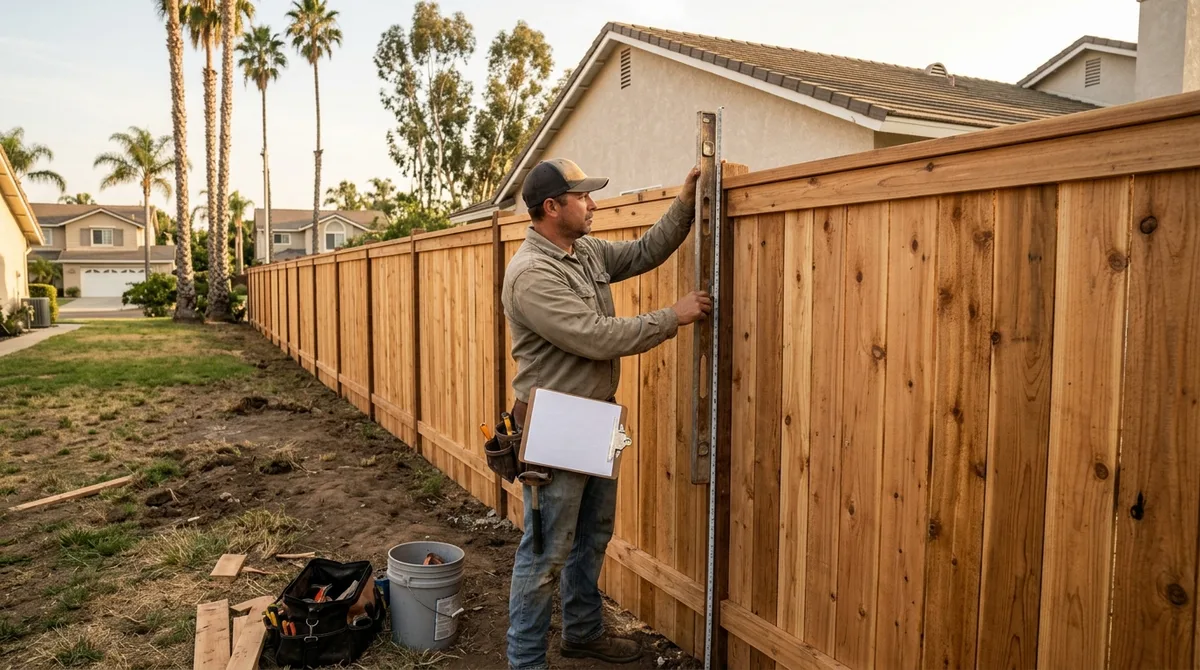
Fence permit requirements in Greater Los Angeles depend on the property’s jurisdiction, fence construction and height, and location on the lot. A building-permit exemption does not automatically satisfy zoning or planning rules. In the City of Los Angeles, a building permit is required for masonry or concrete fences over 3.5 feet high, other fences over 10 feet high, and swimming-pool barriers under the 2026 Los Angeles Building Code guidance.
Rules differ by city. West Hollywood exempts fences and walls no more than 6 feet high from a Building and Safety permit, but requires Planning Division approval before construction. Confirm the requirements for your specific address before ordering materials. All County Fence and Gate, Inc. can handle LADBS permit submissions and HOA design review. Site visits are free within the service area and take about 40 minutes.
Key Takeaways
- Confirm the parcel’s governing city or county before buying materials, because an address using a city name may still be in unincorporated Los Angeles County; in the City of Los Angeles, building permits are required for masonry or concrete fences over 3.5 feet, other fences over 10 feet, and swimming-pool barriers.
- Fence height limits depend on yard location and jurisdiction: for residential or agricultural property in unincorporated Los Angeles County, maximums are 42 inches in front-yard setbacks and 6 feet in interior side and rear yards; Santa Monica generally limits fences and walls to 42 inches in front setbacks and 8 feet in side and rear setbacks, subject to district-specific rules.
- A building-permit exemption does not waive zoning or planning requirements: West Hollywood requires Planning Division approval before construction even for fences and walls no more than 6 feet high, and HOA review is a separate process from public-agency approval.
- Describe the full project to the permitting agency, including replacement or repair work, gates, openers, pool barriers, and retaining walls, and ask which permits, plans, fees, and inspections apply; requirements can differ for each component.
- Before installation, confirm property lines and applicable easements or visibility rules, prepare any required site and elevation plans, contact the utility-locate service before digging, and wait for all required agency and HOA approvals before ordering custom materials or starting work.
Do I Need a Fence Permit in Greater Los Angeles?
Whether you need a fence permit in Greater Los Angeles depends on the property’s jurisdiction, fence construction and height, location on the lot, and applicable zoning. Check which city or county governs the parcel before choosing materials. An address that uses a city name can still be in unincorporated Los Angeles County. The County’s jurisdiction guidance and lookup tool can help identify the responsible agency.
In the City of Los Angeles, a building permit is required for masonry or concrete fences over 3.5 feet high, other fences over 10 feet high, and swimming-pool barriers. A limited building-permit exemption may apply to a fence wall that combines masonry or concrete with other construction. The wall must be no more than 6 feet tall; its masonry or concrete pilasters must be no more than 6 feet tall and 16 inches wide, with at least 6 feet between pilasters; and the masonry or concrete between them must be no more than 3.5 feet high.
A building-permit exemption does not automatically satisfy zoning, planning, or other requirements. For example, Santa Monica exempts certain exterior freestanding fences and walls no more than 6 feet high from a building permit, but the exemption does not authorize work that violates zoning or other applicable laws.
The application process also differs by city. Beverly Hills classifies a new fence or wall as site work and requires separate permits and applications for separate structures. Confirm the rules for the specific parcel with its governing agency before purchasing or installing materials.
Which Fence Heights and Locations Matter?
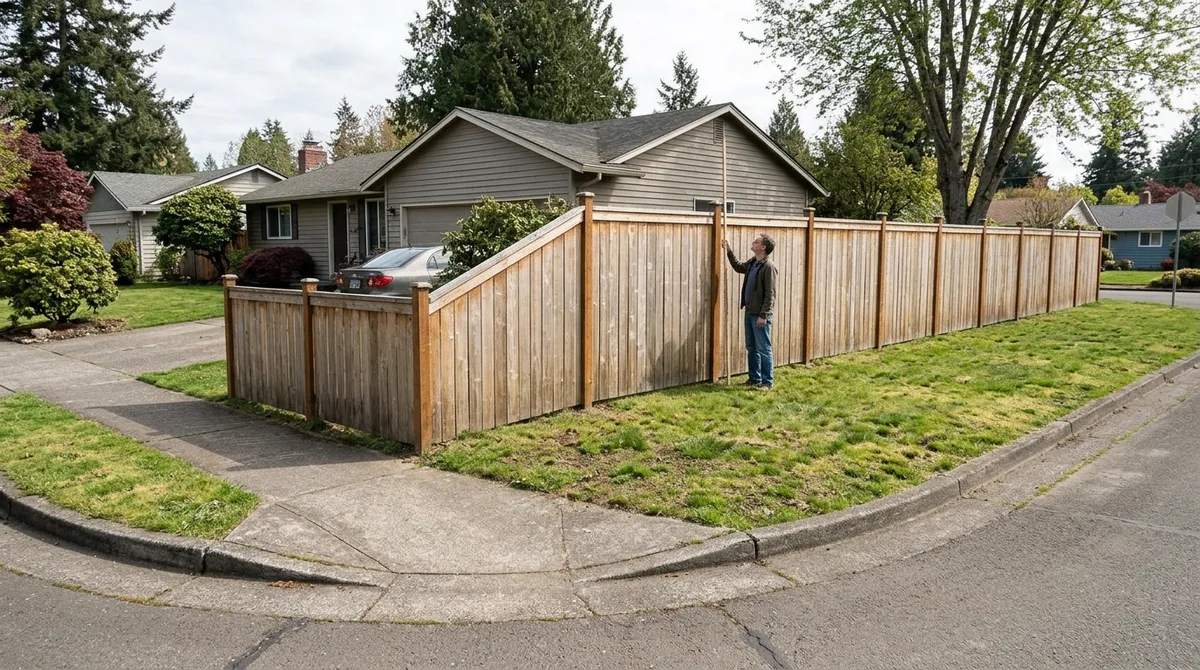
Fence height limits depend on the yard location and the rules of the city or county governing the parcel. A fence that is exempt from a building permit may still need to meet zoning limits or receive planning approval. In Santa Monica, exterior freestanding fences and walls no more than 6 feet high are exempt from a building permit, but zoning and other applicable rules still apply. The Santa Monica Municipal Code section 9.21.050 limits fences and walls to 42 inches in front setbacks and 8 feet in side and rear setbacks, subject to district-specific rules and height-modification procedures. For residential or agricultural property in unincorporated Los Angeles County, the County lists maximum heights of 42 inches in a front-yard setback and 6 feet in interior side and rear yards, with possible additional limits in overlays and special areas, as explained by the Los Angeles County Department of Regional Planning. The fence’s position relative to the property line matters, as do easements and public rights-of-way. At a corner, a fence may also affect visibility for drivers and pedestrians. Ask the relevant agency whether a sight triangle applies and what limits it sets. Do not assume a setback or visibility measurement from a nearby city applies to your parcel. Zoning overlays, historic-district review, and design or material rules can affect approval even when a building permit is not required. For properties subject to Chapter 1A of the Los Angeles Municipal Code, a Class 1 Conditional Use Permit may be required for certain side- or rear-yard fences, walls, or hedges over 8 feet high, or more than 2 feet above a minimum height already greater than 8 feet, when adjacent to a nonindustrial, nonpublic-use lot.
Do Replacements, Repairs, Gates, or Pool Barriers Need Permits?
Permit requirements for new construction, replacement, and major repairs can differ by jurisdiction and project scope. Do not assume approval for an existing fence covers new work. Describe the exact work to the permitting agency before scheduling installation, including which sections will be removed, repaired, or replaced and how the new construction will differ.
In the City of Los Angeles, swimming-pool barriers require a building permit. Pool-barrier projects may also have safety requirements beyond the permit question, so confirm current requirements for the parcel and proposed work with the agency serving it.
A fence permit may not cover a driveway gate, pedestrian gate, automated opener, keypad, intercom, or another structure. Ask the agency whether each component needs a separate review or application. For example, replacing a fence while adding a powered driveway gate may involve more than approval for the fence itself.
Confirm approval requirements before ordering custom materials or beginning work, especially when a project combines fencing with a pool barrier, gate, retaining wall, or other site improvement. Materials and construction details matter: a wood fence, a metal gate, and a retaining wall are different parts of the project, and the agency needs enough detail to assess the proposed scope. This can help prevent planning an installation around materials or work that have not received the required review.
What Plans and Reviews Might an Application Need?
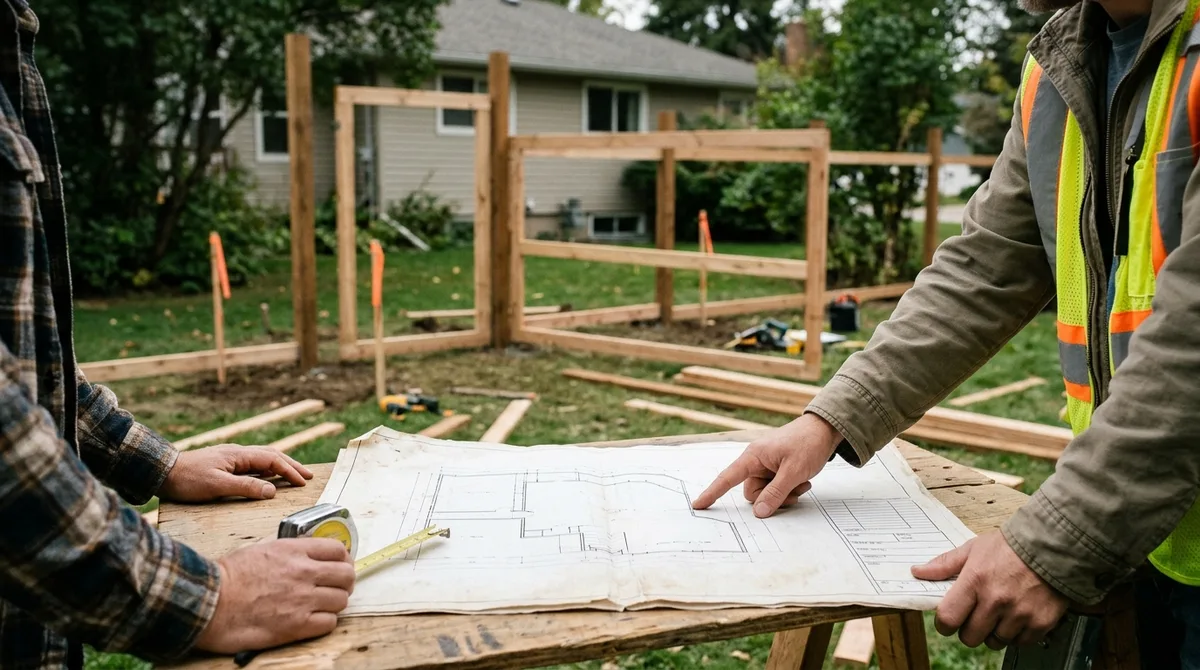
An application may require a site plan, construction details, supporting property information, fees, review, and inspections. The exact checklist depends on the jurisdiction and approval type. Prepare a plan showing the proposed fence location and dimensions, materials, gates, and nearby site features such as buildings, driveways, or retaining walls. A property survey may help establish boundary locations, but the permitting agency can confirm which documents its application requires.
For qualifying over-height fence applications under Los Angeles City Planning’s Chapter 1 process, required materials include a plot plan showing nearby structures within 50 feet and elevation plans that dimension fence sections, gates, lighting, materials, and colors. The City Planning application materials describe those plan requirements.
In Beverly Hills, a new fence or wall is classified as site work, and separate structures require separate permits and applications. Fees and review timelines depend on the jurisdiction, project scope, and review type. After staff processes a Beverly Hills online application, the applicant receives a CitySmart email with a plan-review or permit-fee breakdown and an online payment link, as described on the City’s permit application page.
Ask the permitting agency whether inspections apply and at what stage of the work. Inspection steps can vary by permit and project, so confirm them for the specific application rather than assuming a standard schedule. When a project includes a fence, gate, or other separate structure, clarify which approved plans and permits each inspection will cover.
How Should You Prepare the Property and Application?
Prepare by confirming the fence line, checking public and private restrictions, coordinating reviews, and locating utilities before digging.
- Check recorded property information or obtain a survey if the proposed fence line is uncertain. The legal property boundary may differ from an assumed boundary or the location of an existing fence.
- Ask the agency serving the property whether easements, rights-of-way, corner visibility rules, zoning overlays, or historic-district review affect the proposed fence placement or design.
- Check the homeowners association’s design-review process separately from municipal or county requirements. HOA approval does not replace public-agency approval, and public-agency approval does not replace HOA approval.
- Contact the utility-locate service before digging post holes so underground utility lines can be identified and marked. Plan post locations around any marked lines and follow the utility-locate instructions.
- Keep written records of agency and HOA decisions, including approved plans and any conditions. Wait until all required approvals are in place before installation begins.
What Are the Risks of Building Without Approval?
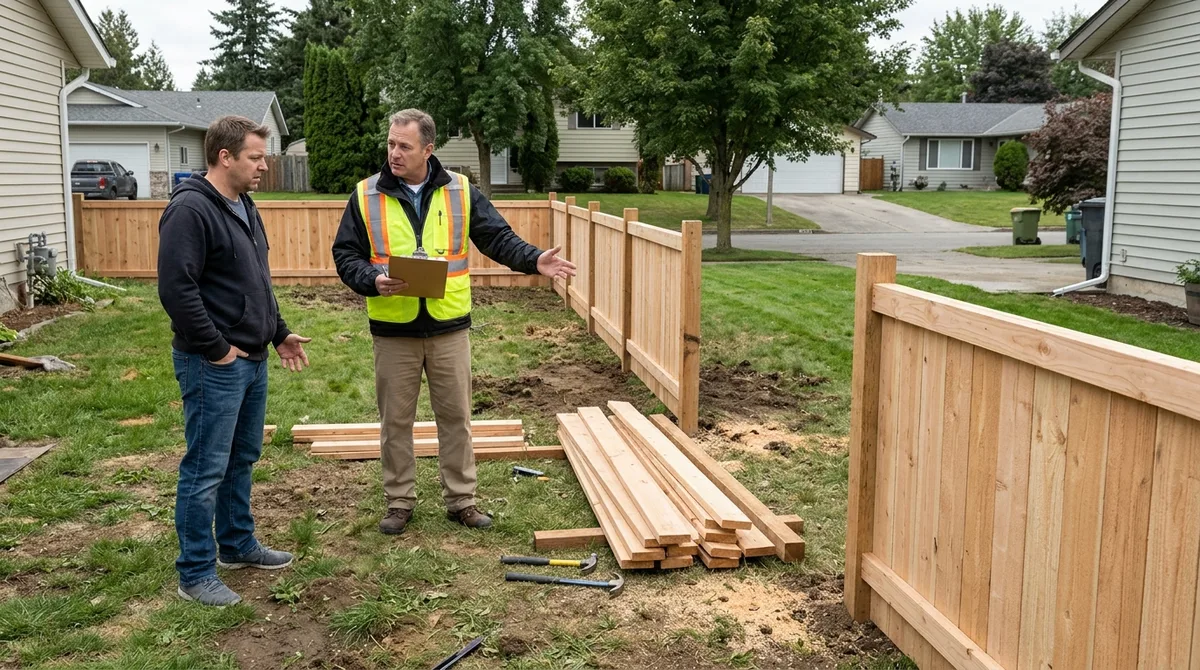
Building without every required approval can leave you with a fence that needs redesign or rework and delay project completion. A building-permit exemption does not confirm that the design meets zoning, height, placement, or other applicable rules. Separate planning or HOA review may still be required, and a fence that passes one review may not satisfy another. Discovering a missing approval after purchasing materials can mean changing the fence’s dimensions, location, or materials to meet applicable requirements. If work is already complete, corrections may involve removing or rebuilding parts of the fence. Confirming all approvals before ordering custom components or starting construction can help avoid preventable changes. Keep permit documents, approved plans, and written HOA or planning decisions with the project records, including any conditions attached to an approval. Ask the relevant agency which inspections apply and confirm that required inspections are complete before treating the work as finished.
How Can a Fence Contractor Help With Permits?
A contractor familiar with the project location can help identify the relevant agency, prepare project details, and coordinate permit submissions and HOA design review. You should still confirm the approvals required for your property. All County Fence and Gate, Inc. is a licensed, bonded, and insured contractor serving Greater Los Angeles, with CSLB license number 952680. The company handles LADBS permit submissions and HOA design review.
Wood options include Ipe, redwood, and cedar. Gate types include slide, swing, and cantilever. Access options include keypads and intercoms. Metalwork is fabricated in-house.
Combining several kinds of work may mean the application needs to describe each part clearly. For example, a plan for a new fence with an automated driveway gate and a retaining wall should identify those separate elements so the agency can assess the proposed scope. The agency, not the contractor, decides whether to approve the work and what conditions apply. Check requirements with the agency serving the specific property before ordering materials.
Plan the Approval Before the Installation
Before ordering materials, send the agency serving your address a clear description of the proposed fence, gates, and any connected work, and ask for its application checklist. Then contact All County Fence and Gate, Inc. at 818-720-3316 with the same project scope. The company’s shop is at 18375 Ventura Blvd, #453, Tarzana, CA 91356, and listed hours are Monday through Saturday, 7:00–18:00.
For a project involving custom metalwork, ask how fabrication timing fits the approval schedule. All County Fence and Gate fabricates metalwork in-house and installs only fences and gates it has built. Coastal projects use a hot-dip galvanised substrate under powder coat, and Santa Monica jobs use stainless fixings. Powered gates are tested at handover for UL 325 entrapment safety and ASTM F2200 compliance.
Build review time into your installation plan. Typical timelines stated for Bel Air projects are six to ten weeks; Encino projects are typically six to eight weeks, with schedules varying by job. Each job has a written schedule, and the company handles LADBS permit submissions and HOA design review. Ask for a site visit within the service area so the proposed layout and project scope can be assessed before you commit to custom materials or an installation date.
Frequently Asked Questions
1. Can an HOA require a different fence design from the one the city permits?
Yes. An HOA may require changes under its own design rules even when the city permits the fence. You need to satisfy both reviews before construction. Approval from one does not replace approval from the other.
2. What should you do if the property line is unclear after reviewing a survey?
Pause the fence layout and ask a land surveyor to clarify or mark the boundary before planning post locations. You can also ask the permitting agency whether it requires specific boundary documentation.
3. Can you apply for fence approval before choosing the final material?
You can ask the agency whether it will review preliminary plans, but acceptance depends on the application and jurisdiction. Some applications require plans that specify fence materials and colors, so confirm what details are needed before submitting or ordering materials.
4. Can fence-permit and HOA design reviews happen at the same time?
Fence-permit and HOA design reviews are separate processes, and one approval does not substitute for the other. Ask both reviewers whether you can submit while the other review is pending and whether either requires changes before approving the plans.