
Fences & gates
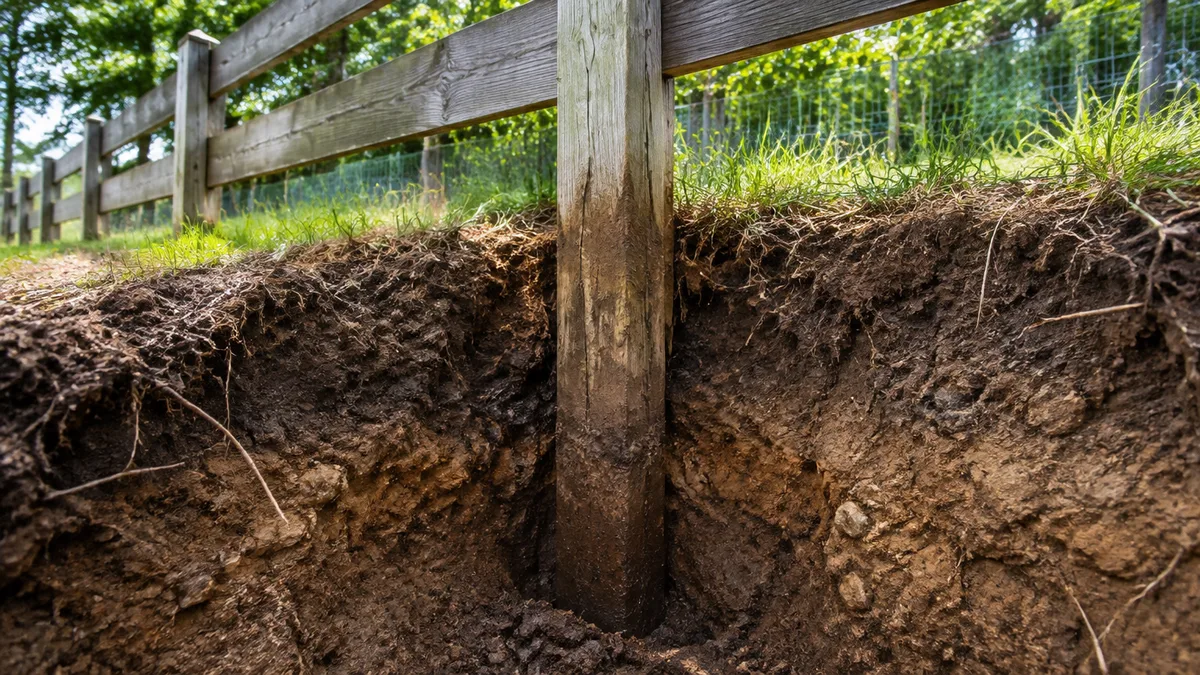
Fence post depth has no universal setting. Some wood line-post guidance calls for at least 24 inches, while soil-specific specifications range from 18 inches in rocky soil to 30 inches in sandy soil. For fences up to 6 feet high, the City of Miami’s standard wood-fence detail specifies a 30-inch concrete footing with at least 24 inches of post embedment.
Fence post depth has no universal setting. Some wood line-post guidance calls for at least 24 inches, while soil-specific specifications range from 18 inches in rocky soil to 30 inches in sandy soil. For fences up to 6 feet high, the City of Miami’s standard wood-fence detail specifies a 30-inch concrete footing with at least 24 inches of post embedment.
Key Takeaways
- Fence-post depth has no universal setting; a rough depth estimate is only a starting point, and local requirements, soil, drainage, frost, wind exposure, fence design, and each post’s role determine the appropriate depth.
- Soil and post type can change specified depths: one NRCS specification lists wood line posts at 18 inches in rocky soil, 30 inches in sandy soil, and 24 inches in other soil, while another lists wood line posts at 24 inches and brace or anchor posts at 36 inches.
- Fence height alone does not determine post depth: for wood fences up to 6 feet high, Miami specifies a 30-inch-deep concrete footing with at least 24 inches of post embedded, while Boulder requires posts in concrete at least 24 inches below grade, so check the rules for your location.
- Gate, corner, end, and brace posts may need more substantial settings than line posts, so we recommend planning the full fence and gate layout, soil conditions, and nearby driveway or landscape work with an installation professional.
How Deep Should a Fence Post Go?
A fence post should be set to a depth suited to the fence type, the post’s role, soil, frost conditions, wind exposure, and local rules. No single depth fits every fence. A line post supports the fence run, while a brace or anchor post helps resist tension from the fence.
A rough depth estimate can be a preliminary guide, but it is not a universal requirement or a substitute for checking local rules and site conditions. Soil that offers less resistance, exposure to strong wind, or a post carrying greater structural loads may call for a different design.
The USDA Natural Resources Conservation Service’s Pacific Islands Area specification lists minimum buried depths of 24 inches for wood line posts, 36 inches for wood brace or anchor posts, and 18 inches for studded T-posts. These differences reflect each post’s material and role, not one depth that applies to every fence.
A separate NRCS fence specification hosted by the North Carolina Department of Environmental Quality lists minimum depths for wood line posts of 18 inches in rocky soil, 30 inches in sandy soil, and 24 inches in other soil. This shows how soil conditions can change the specified depth, even for the same general post type.
These figures come from separate specifications, not a shared national rule, and should not be treated as interchangeable local requirements. When planning a fence, identify the applicable local standard and ask an installation professional how the site’s soil, wind exposure, and post locations affect the design.
How Does Fence Height Change Depth?
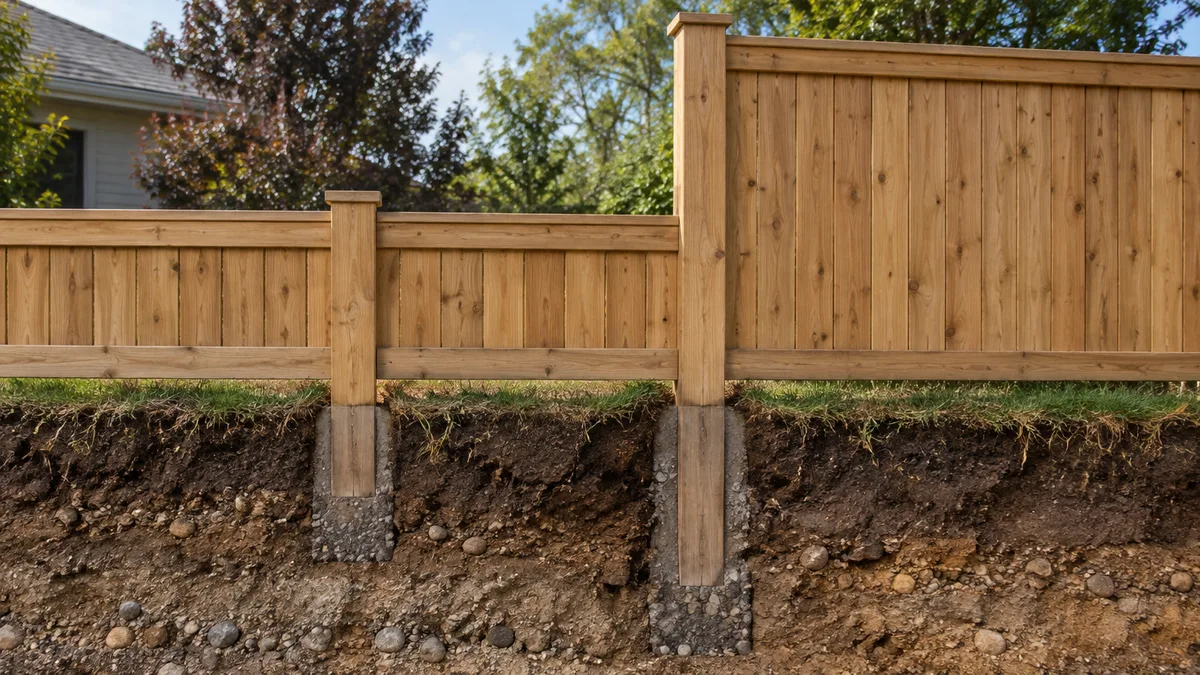
Fence height can increase the leverage a fence section places on its posts, but height alone does not determine the right setting depth. Taller panels and sections exposed to more wind can push or pull harder on posts. The fence’s design, material, post spacing, and site conditions also matter.
For a fence up to 6 feet high, the City of Miami Building Department’s standard wood-fence detail calls for a concrete footing at least 10 inches in diameter and 30 inches deep, with at least 24 inches of post embedded in the footing. The City of Boulder takes a different approach in its fence and retaining-wall permit guide, requiring posts set in concrete at least 24 inches below grade. These local examples are not interchangeable specifications, so check the rule that applies to your project.
Wood, wrought iron, vinyl, and chain-link fences can use different post designs and installation methods. A tall, relatively solid section may catch more wind than an open design, while the post material and connection details affect how forces transfer into the ground. A depth suited to one fence system should not automatically be applied to another.
For chain-link fences, ASTM International’s ASTM F567-23, “Standard Practice for Installation of Chain-Link Fence,” covers installation procedures that include site preparation, post location, and post setting. This standard provides a chain-link-specific reference. It does not mean every material or site follows the same post-depth detail.
How Do Soil And Frost Affect Depth?
Soil strength, drainage, and local frost conditions affect post placement because they influence how well the ground resists movement and supports a footing. Firm, well-drained soil may hold a post differently from loose or poorly draining soil, which may call for a different installation plan. For example, a USDA Natural Resources Conservation Service specification hosted by the North Carolina Department of Environmental Quality gives different wood line-post depths for rocky and sandy soil: 18 inches in rocky soil and 30 inches in sandy soil. This contrast shows why soil type matters, but it is not a universal prescription for every site.
Water in soil can freeze and contribute to frost movement. The U.S. Department of Housing and Urban Development defines frost depth as the depth to which soil water freezes and notes that local building codes generally specify how deep foundations must extend. When freezing soil shifts around a post or footing, it can push upward. Repeated movement can loosen the setting.
King County, Washington, illustrates how frost guidance can vary by location: its frost-line depth is 12 inches for sites up to 1,000 feet elevation, 18 inches above 1,000 and up to 2,000 feet, and 24 inches above 2,000 feet, subject to site analysis. These values are an example of location-specific rules, not a depth rule for a Los Angeles-area property. Check the requirements that apply to your project location.
Preventing frost heave means considering local frost requirements, drainage, and suitable footing design together. A footing that meets a depth requirement may still need a plan for water that collects around it. Slope can direct runoff toward fence lines, while exposed locations may place greater demands on posts and their settings. Soil can also vary across a property, so a firm area near the driveway may not reflect conditions along a sloped or wetter section of the fence line. Identify these changes during planning instead of assuming one setting will suit the entire run.
When Do Gate And Corner Posts Need More Depth?
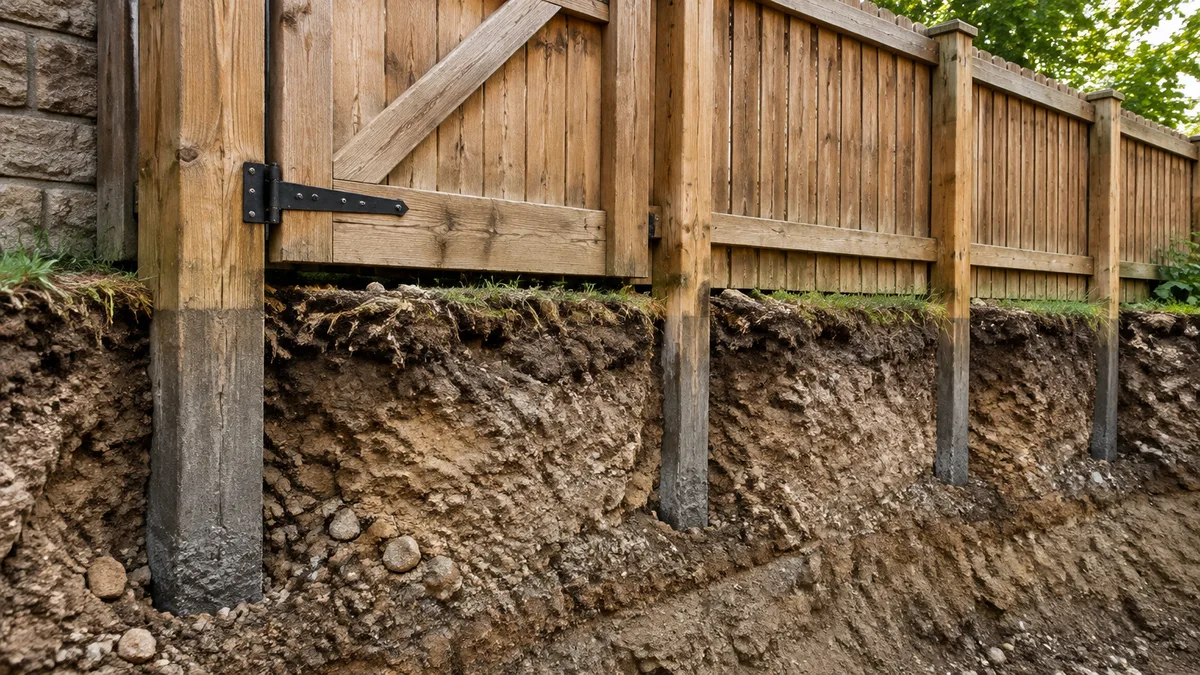
Gate, corner, end, and brace posts may need deeper or more substantial settings than line posts because they carry forces that ordinary posts along a straight run do not. Line posts support the fence between its endpoints. End posts terminate a run, corner posts anchor a change in direction, and brace posts help resist fence tension.
The USDA Natural Resources Conservation Service’s Pacific Islands Area specification provides a concrete comparison: wood brace or anchor posts have a 36-inch minimum buried depth, while wood line posts have a 24-inch minimum. These figures illustrate how a post’s structural role can affect its setting. They are not universal requirements for every fence.
Gate posts also support the gate’s weight and take repeated forces as it opens and closes. Wind exposure can add strain, particularly where a fence turns, changes direction, or meets a gate opening. A tall or relatively solid section near a corner or gate may place different demands on its support posts than a straight, open run.
Automated electric gates require coordinated planning for the gate system and nearby construction. Post placement needs to work with the gate’s movement, the driveway, and any planned hardscaping or retaining walls. Identify gate locations, fence ends, corners, and transitions before laying out holes so the installation plan accounts for their different structural roles.
How Wide Should The Hole Be, And How Should It Be Set?
Hole diameter and footing design should match the post, fence system, soil, drainage needs, and applicable local detail. The right setting method depends on the post type and site. The City of Miami’s standard wood-fence detail specifies a concrete footing at least 10 inches in diameter, but that dimension is not a universal rule for every fence.
An auger removes soil to create a hole for a post and footing. A post driver pushes suitable posts directly into the ground without first excavating a full-size hole. Augers can suit systems designed for footings, while driven posts require a post that can be driven and ground conditions that allow it. Roots, rocks, slope, and changes in soil can affect which approach is practical along a fence line.
Concrete-set posts sit in a formed footing that helps anchor the post. Driven posts rely on the surrounding ground to hold them in place. Neither method is automatically better. The post material and design, soil conditions, fence loads, and local requirements all matter. A method suited to one section may not suit another.
Gravel, excavated soil, and concrete are not interchangeable backfill choices. Gravel may be considered where drainage is a concern, while soil backfill may suit a system designed for a driven post or a hole set without concrete. Choose a method based on how water moves through the soil and the fence system’s installation requirements, rather than following a one-method-fits-all recipe.
The USDA Natural Resources Conservation Service’s Fence (Code 382) Conservation Practice Standard provides construction guidance, including guidance on setting posts in concrete. Its construction specification says not to apply stress to concrete-set posts for at least 24 hours after the concrete develops a firm set. This waiting period matters when planning the next installation steps, especially around gates that place repeated loads on their support posts.
What Should You Discuss Before Installation?
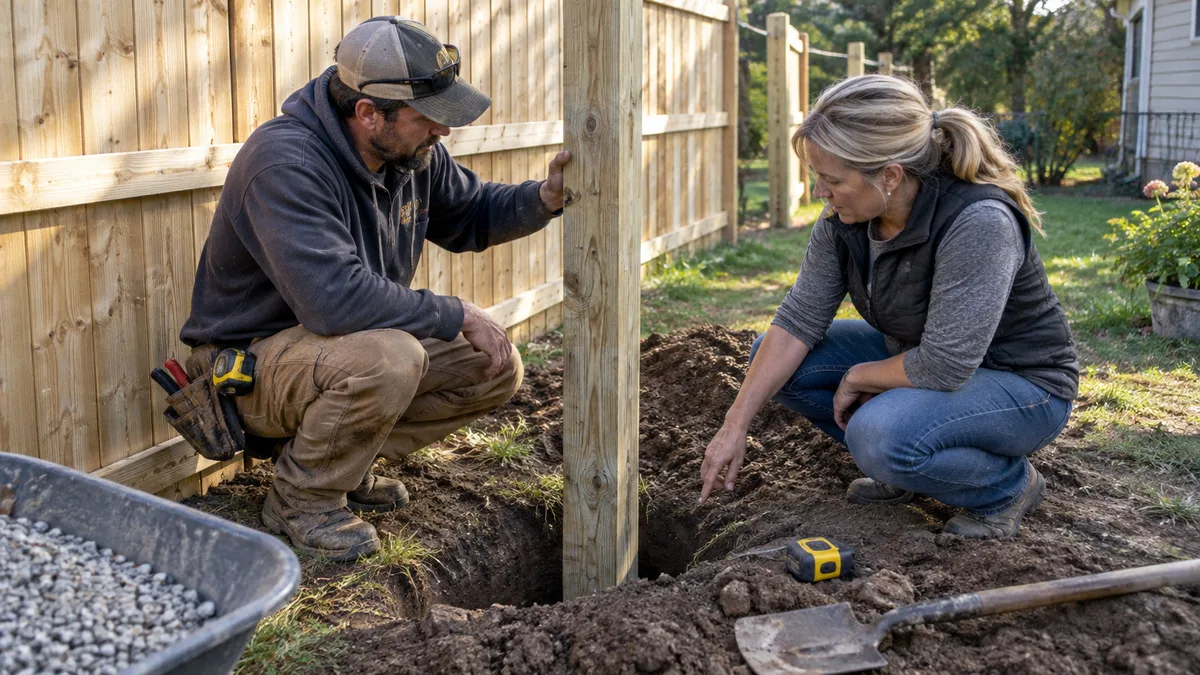
Before installation, review local permit or code requirements, site conditions, fence design, and the complete layout with an installation professional. This checklist can help keep the discussion practical:
- What soil, drainage, frost exposure, and wind exposure affect the fence line?
- How do fence height and material affect post placement?
- Where will corners, ends, and gates sit in relation to the property and driveway?
- How do the proposed post depth, hole diameter, footing or driving method, and backfill suit the specific site?
We are a licensed contractor serving the greater Los Angeles area. We install custom wood, wrought iron, vinyl, and chain-link fences, along with automated electric gates. We can also consider fence and gate placement alongside driveways, hardscaping, pool remodeling, decks, patios, and retaining walls as part of broader property planning. A useful depth recommendation accounts for the complete installation, including the fence system, post locations, site conditions, and nearby property work, rather than relying on a standard measurement alone.
Plan The Post Setting With The Whole Fence
Before requesting a post-setting plan, sketch the proposed fence line and mark each gate opening, corner, end point, slope change, and area where water collects. Add the driveway edge and any planned patio, retaining wall, deck, or pool-remodeling work. Note where the ground level may change so post locations can be coordinated with the finished layout.
For each fence section, identify the material and intended height, then ask the installer to explain how the post’s role, soil conditions, and applicable local requirements affect its setting. Ask separately about gate posts and automated gate equipment, since the opening and driveway need to work together. If the ground changes along the run, ask whether one setting detail suits the whole fence or whether sections need different approaches.
We install custom wood, wrought iron, vinyl, and chain-link fences, as well as automated electric gates. We also handle hardscaping, pool remodeling, decks, patios, retaining walls, and driveway construction. Share your sketch and project priorities with us so we can discuss post placement in relation to your complete property plan.
Frequently Asked Questions
1. Can fence post depth change along a sloped yard?
Yes, post placement can vary along a sloped yard when ground conditions, drainage, or the finished fence layout change. Ask the installer to assess each section rather than assume one setting will suit the entire slope.
2. Can an existing leaning fence post be stabilized by digging it deeper?
Digging deeper may help a leaning fence post, but it will not fix every cause of movement. The post, soil, and footing should be assessed first so the repair addresses the problem. It may call for resetting or replacing the post.
3. Should underground utilities be located before digging fence post holes?
Yes, arrange to have underground utilities located before digging fence post holes. Share the planned fence line and gate locations so the layout can be reviewed against marked utility routes.
4. Does a vinyl fence need concrete around its posts?
A vinyl fence does not have one universal concrete-setting requirement. The right method depends on the fence system, soil and drainage, post design, and local requirements. Check the manufacturer’s installation instructions and discuss the site with an installer.
How deep should posts be for a tall fence?
There is no single depth for posts supporting a tall fence. Height, wind exposure, soil, frost conditions, post role, and local requirements all affect the setting, so ask an installation professional to determine the depth for the specific fence and site.