
Fences & gates
Preventing a wooden gate from sagging starts with a square, reinforced frame, a sound hinge post, and enough clearance for the ground beneath its swing. A gate that drops may have a frame racked out of square, loose hinge fasteners, or a hinge post that is shifting or rotting. Adding a brace or replacing the hinges will not correct movement at the post.
Bracing direction depends on the hardware: Ameristar’s wood-gate kit fits panels up to 6 feet high by 5 feet wide and runs from mid-height on the latch side to the top back rail on the hinge side. Regional 2026 estimates range from $120–$220 for a straightforward Los Angeles hinge reset to $200–$600 for repair or re-hanging in Washington. Ask whether the quote includes resetting the post or rebuilding the frame.
Key Takeaways
- Prevent wooden gate sagging by identifying whether the frame has racked out of square, hinge fasteners have failed, or the hinge post is leaning or rotting, because bracing or replacing hinges will not correct a moving post.
- Use the brace direction specified for the hardware: a wooden compression brace runs from the bottom hinge corner to the top latch corner, a tension cable runs from the top hinge corner to the bottom latch corner, and the wood-gate kit for panels up to 6 feet high by 5 feet wide runs from mid-height on the latch side to the top back rail on the hinge side.
- A gate caster can support a latch end only when the frame, hinges, and post are sound, and the caster must roll through the full swing path without changing the gate’s level or latch alignment, especially on uneven ground.
- Regional 2026 estimates range from $120–$220 for a straightforward Los Angeles hinge reset, typically 60–90 minutes on a flat lot or 90–150 minutes on a hillside, to $200–$600 for repair or re-hanging in Washington; ask whether the quote includes resetting the post or rebuilding the frame.
- After repair or installation, operate the gate through its full travel and confirm that the panel stays level, clears the ground, moves freely, and meets the latch without being lifted by hand.
How Do You Prevent Wooden Gate Sagging?
Prevent wooden gate sagging by building and installing a square, reinforced gate on a sound hinge post, choosing hardware suited to the gate, and allowing clearance for the ground beneath its swing. A carefully built frame can still fail if its post moves, while a sturdy post cannot keep an out-of-square frame from dropping at the latch.
Three problems commonly cause sagging: the frame has racked out of square, hinge fasteners have loosened or failed, or the hinge post is leaning or rotting. These problems can look alike from across a yard, but they require different fixes. A new brace will not correct a post that shifts under the gate’s weight, and new hinges will not square a distorted frame.
Watch for early changes in how the gate hangs and closes. The latch end may sit lower than before, the gate may rub the ground, the panel may no longer sit level, or the latch may miss its receiver. Scraping is more than an annoyance: dragging can wear or damage the gate bottom and adds stress to the hinges and fasteners each time the gate moves.
Check the whole assembly before choosing a repair. Examine the frame, hinge connections, and post where it meets the ground. Note which parts move when the gate opens and closes. Also consider the swing path. A gate that clears level ground may scrape where paving, a driveway, or a change in grade rises into its arc. Repairing only the visible symptom can leave the underlying movement untouched, so first determine whether the frame, fasteners, post, or ground clearance is causing the problem.
Which Part Of The Gate Is Moving?
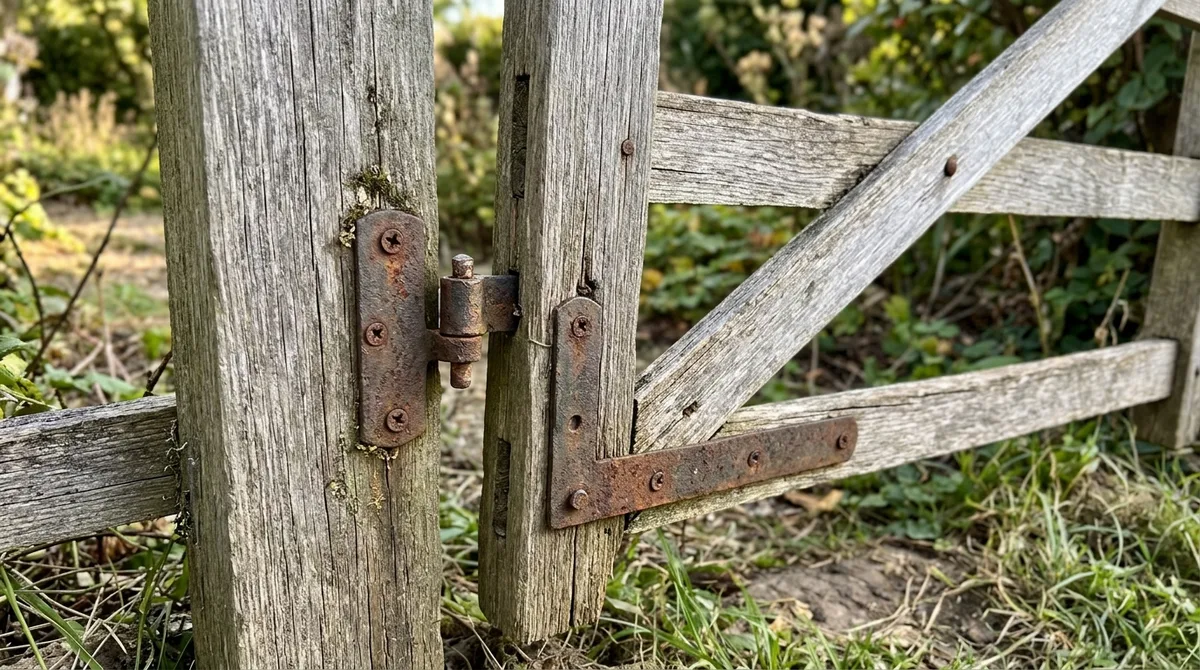
Identify which part of a wooden gate is moving by checking the frame, hinge connections, and hinge post separately, then comparing those findings with the gate’s level and latch fit. Start with the gate closed and examine the assembly before adjusting the latch. A dropped latch end is a symptom, not proof of a latch problem.
- Check whether the frame is square by comparing its diagonal corner-to-corner measurements and looking for shifted corners, loose joints, or rails that have pulled out of position. Unequal diagonals or visible movement at a joint points to frame distortion, not simply a latch that needs repositioning.
- Inspect each hinge and its fasteners for screws that turn in their holes, pulled-out attachment points, or hardware that moves against the frame or post. A hinge plate can look secure while being attached to weakened wood, so check the wood around every fastener.
- Check the hinge post for lean and inspect the wood at ground level for softness, cracking, or decay. If the post shifts or the wood has deteriorated where it meets the ground, a brace or replacement hinges alone will not stabilize the gate.
- Use a level to check the gate panel, and observe whether the latch end drops or the bottom edge drags as the gate swings. Note whether the latch lines up when the panel is supported in its proper position. A poor fit may result from movement elsewhere in the assembly.
Match the repair to the part that moved: rebuild or square a distorted frame, restore a failed hinge attachment, or address a leaning or deteriorated post. Adjusting the latch to meet a sagging panel may temporarily hide the misalignment, but it leaves the cause in place and can make proper closure harder after the gate moves again.
How Should A Wooden Gate Be Braced?
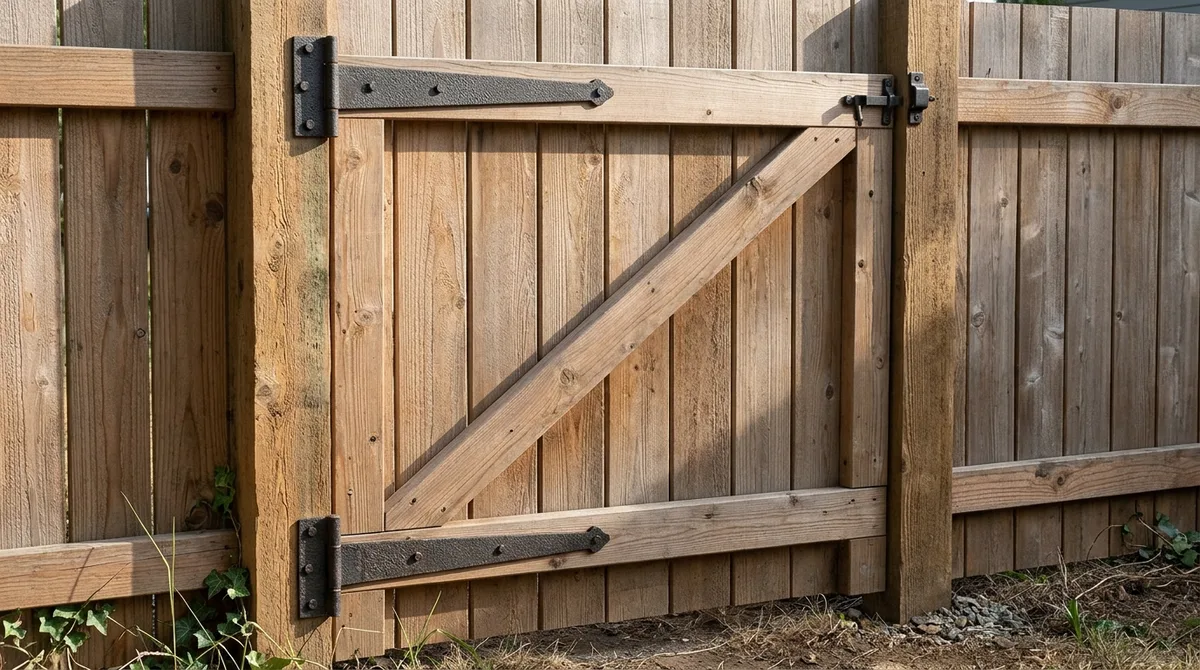
Corner reinforcement and diagonal bracing help a wooden gate resist racking by tying its rails and stiles together, making the rectangular frame less likely to deform out of square. Reinforced corner joints strengthen the points where the frame members meet, while a diagonal brace transfers force across the panel. The brace needs a secure connection to the structural frame. Reinforcing loose trim will not keep the gate square.
Brace direction depends on the brace type. A wooden compression brace runs from the bottom hinge corner to the top latch corner. A tension cable runs from the top hinge corner to the bottom latch corner. Reversing these directions can make the brace work differently from its intended design, so follow the instructions for the specific brace or hardware kit.
For a wood-gate sag-prevention kit designed for panels up to 6 feet high by 5 feet wide, the specified cable runs from mid-height on the latch side to the top back rail on the hinge side. This layout differs from the directions for a wooden compression brace or tension cable. Follow the kit’s installation instructions rather than a general bracing pattern.
A correctly installed brace may help restore alignment when the frame has racked, but it cannot stabilize a hinge post that is leaning or rotted. A moving or deteriorated post needs its own repair or replacement. Attaching stronger bracing to a failing post leaves the cause of movement in place.
For horse gates, diagonal braces can create narrow openings that may trap an animal’s legs, feet, or head. University of Georgia Extension’s fencing guidance warns about this hazard. Choose a brace layout that avoids creating a trap space for animals using the gate.
Do Gate Casters Prevent Sagging?
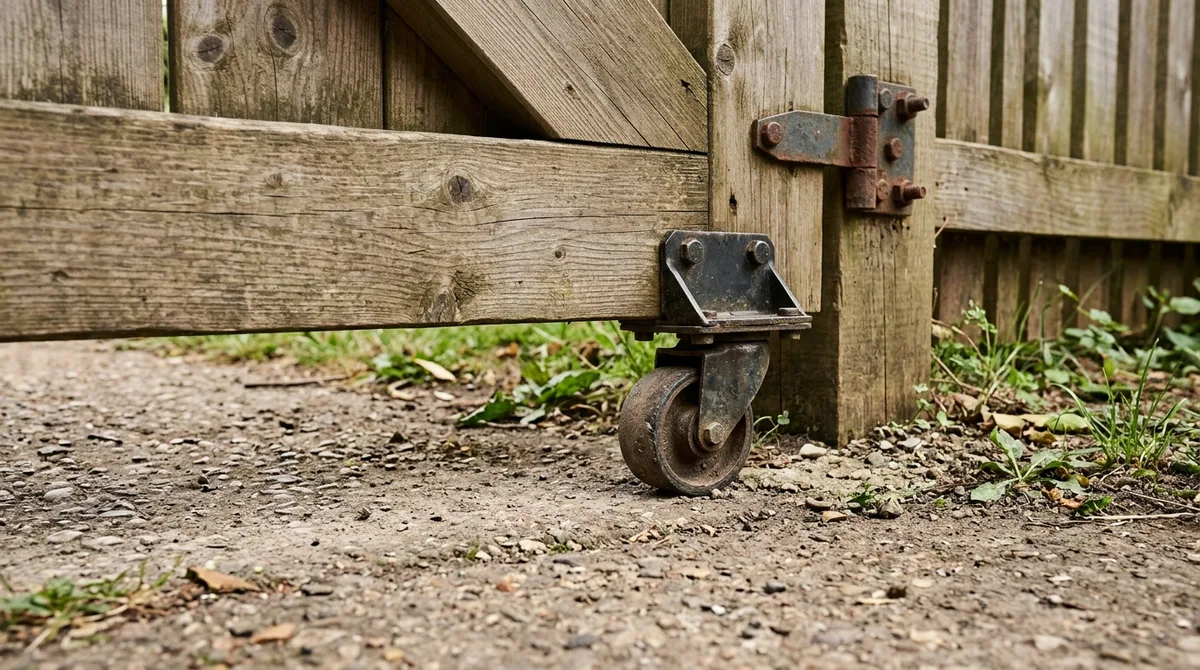
A gate caster can support the latch end of a wooden gate, but it cannot replace a sound frame, secure hinges, or a stable hinge post. It may help when the rest of the assembly is sound and the wheel can carry part of the latch-end load without forcing the panel out of alignment. If the frame, hinges, or post are failing, a caster may make the gate easier to move while leaving the cause of the sag in place.
Choose the caster position in relation to the hinge side and the gate’s full swing path. There is no single position that suits every gate. The wheel should support the latch end while following the gate’s arc. Check its movement from closed to fully open. It should roll freely without catching, lifting the gate awkwardly, or pushing the latch out of line.
Uneven ground needs special attention. Check the route beneath the wheel, including driveway slopes, paving edges, and dips. A wheel that rolls smoothly in one spot may bind or lose contact elsewhere in the swing. A caster does not correct a change in grade or provide clearance for a gate that scrapes along its bottom edge, so assess the travel path and clearance before relying on a wheel.
After installing or adjusting a caster, move the gate through its full travel, then check the panel’s level and the latch’s fit with the gate closed. Confirm that the wheel does not make the latch end rise or fall and that the gate no longer drags. If the gate still binds or the latch alignment changes during movement, reassess the caster position and the gate assembly.
What Should A Proper Gate Quote Include?
A proper gate quote should identify the failed part, specify the repair or rebuilding included, and account for site conditions that affect the work. It should state whether the scope addresses the frame, hinge fasteners, hinge post, or more than one failure point, rather than describing the job only as a hinge adjustment.
In Los Angeles, broad planning estimates for a straightforward hinge reset are $120–$220 and 60–90 minutes on a flat lot. Hillside work may take 90–150 minutes. These estimates are not a substitute for a site-specific scope: access, slope, and the condition of the gate assembly can change the work required. Ask the quote to state clearly whether it includes resetting the post or rebuilding the gate frame, since either can add work beyond a basic hinge reset.
A useful quote separates the diagnosis from the proposed fix. For example, it should indicate whether the frame can be squared and reinforced, whether hinge fasteners need to be restored in sound wood, or whether a leaning or deteriorated post needs attention. If the estimate covers only hardware adjustment, it should not leave you assuming that frame or post work is included.
The plan should also account for the gate’s surroundings. A gate opening onto a sloped driveway or paving may need its swing and clearance considered alongside the repair, while nearby landscape construction can affect how the entrance functions. All County Fence and Gate, Inc. is a licensed contractor installing custom wood, wrought iron, vinyl, and chain link fencing and automated electric gate systems throughout greater Los Angeles. The company also provides hardscaping, pool remodeling, decks, patios, and retaining walls, allowing a custom plan to consider gate work in the context of the broader driveway and outdoor setting.
Prevent Repeat Sagging On Difficult Sites
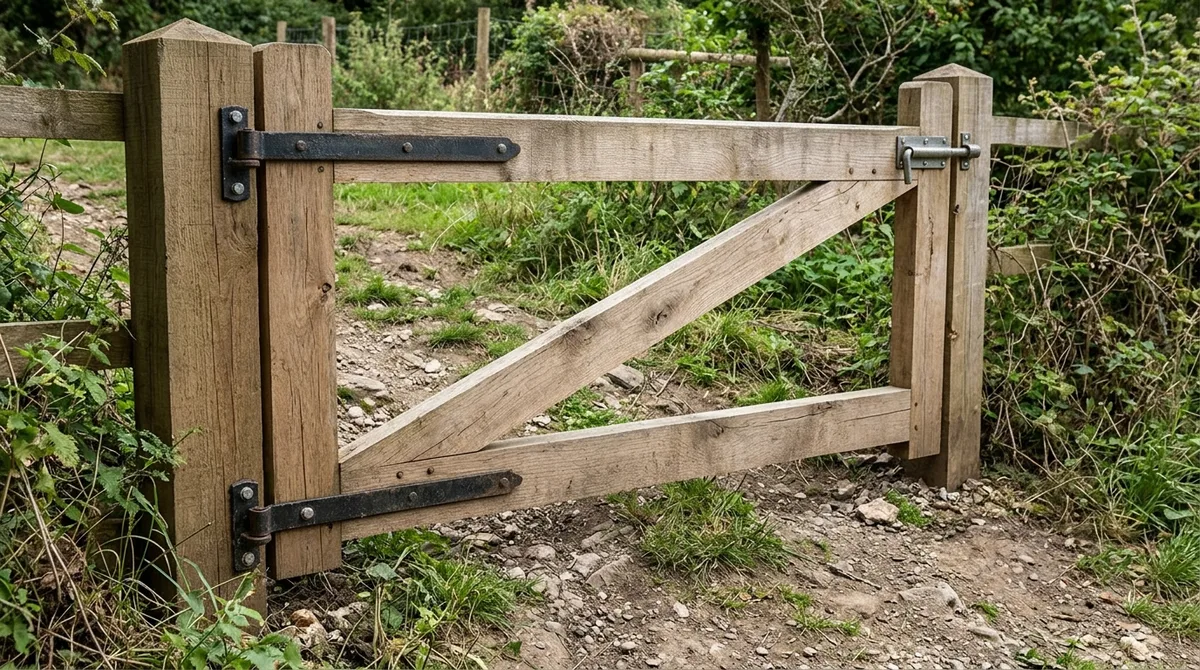
Before work begins, ask the installer to specify how the design will address:
- Hinge-post stability and frame reinforcement.
- Hinge attachment and gate clearance.
- Latch alignment after the gate is installed.
On uneven ground, ask the installer to explain the gate’s full swing path and how the design will prevent the panel from dragging as the grade or paving changes. A brace or caster should suit the site, not substitute for a plan that fits the gate and ground.
For an automated gate, coordinate the gate design with its automation system and the surrounding driveway layout. At handoff, operate the gate through its full travel. It should move freely, stay level, and meet the latch without being lifted by hand.
Choose A Fix That Addresses The Cause
Before approving another hinge adjustment, ask for an on-site assessment that identifies the moving component and names the repair in writing. If the hinge post shifts or shows decay at ground level, request a separate scope for stabilizing or replacing the post. If the post is sound but the frame has racked, ask whether rebuilding or squaring the frame is included.
Ask the contractor to distinguish post work from frame work in the estimate and explain how the repair will preserve the gate’s swing and latch alignment. Post depth, inspections, and permit requirements depend on location. For example, Miami-Dade County’s fence requirements include a post-hole foundation inspection before posts are set for non-masonry fence permits. Check the rules that apply to your property rather than adopting another jurisdiction’s specifications.
If your property includes horse fencing, post design may require different considerations: Penn State Extension’s horse-fencing guidance says gate posts are often larger and set deeper than line posts in those applications. Do not treat those dimensions as a universal residential-gate standard.
For a gate or driveway in greater Los Angeles, contact All County Fence and Gate, Inc. to discuss a custom repair plan that accounts for the fence, gate automation, and surrounding outdoor construction.
Frequently Asked Questions
1. Can a sagging wooden gate be repaired without replacing the whole gate?
A sagging wooden gate can often be repaired without replacing the whole gate if its frame and boards are still sound. The repair may involve squaring and reinforcing the frame, restoring the hinge fasteners, or stabilizing the hinge post. Replace the gate if the wood or joints are too damaged to hold a lasting repair.
2. How do I choose a hinge for a heavy wooden gate?
Choose hinges rated for the gate’s weight and size, and make sure their fasteners attach securely to sound wood in both the gate and post. Consider the gate’s swing direction and how often it will be used when selecting hardware. A higher-capacity hinge will not compensate for a weak or moving hinge post.
3. Can a gate caster work on gravel or soft ground?
A gate caster may struggle on loose gravel or soft ground because the wheel can sink, catch, or roll unevenly. Check the entire swing path and use a wheel suited to the surface. A firm, smooth route generally supports more consistent movement. If the caster binds or changes the gate’s level, it may worsen latch alignment.
4. How can I tell whether a hinge post is rotting below the soil line?
A hinge post that leans, shifts when the gate moves, or feels soft or cracked near the ground may have decay extending below the soil line. Surface checks cannot always reveal how far rot has spread, so a post that moves or shows deterioration may need closer inspection at its base. Bracing the gate will not solve a post that has lost sound wood.
5. Will adding a diagonal brace make a wooden gate harder to automate?
A properly fitted diagonal brace should not inherently prevent a wooden gate from being automated, but added weight or a change in alignment can affect gate movement. The gate should swing freely and stay aligned before an operator is installed or adjusted. Have the brace and automation planned together if the gate is already automated or will be automated later.