
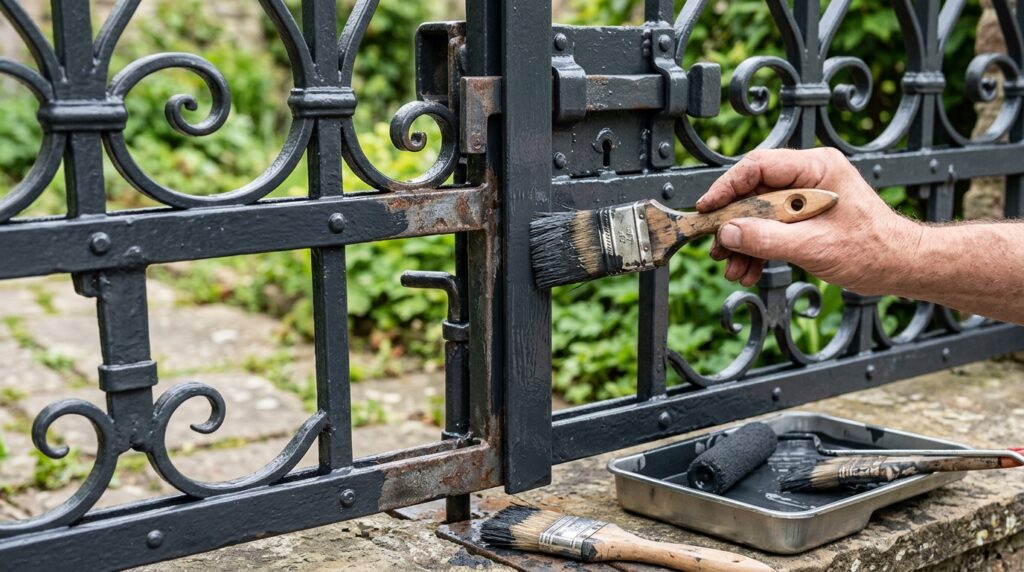
How to Prevent Rust and Corrosion on a Metal Gate
Effective rust prevention for a metal gate starts with understanding where corrosion begins: trapped moisture inside hollow tubing, damaged welds, sharp edges, hinges, and lower sections exposed to dirt and standing water. For a new outdoor steel gate, I generally recommend hot-dip galvanizing, often paired with a compatible paint or powder coating for added protection. This duplex system creates a durable barrier against water, oxygen, and salt.
For an existing gate, another coat of paint will not resolve rust that remains beneath the surface. I begin by removing corrosion, cleaning and preparing the steel, sealing moisture traps, and repairing chips or worn areas before applying a compatible coating. These details may seem minor, but they often determine whether a gate stays protected for years or begins flaking again after one season.
Key Takeaways
- Rust prevention starts by eliminating moisture traps at hollow tubing, welds, cut edges, hinges, overlapping joints, and ground-level sections where dirt and standing water accumulate.
- For new outdoor steel gates, hot-dip galvanizing provides a durable corrosion-resistant foundation; a compatible paint or powder-coat topcoat creates a duplex system for added protection and appearance.
- Existing gates require thorough rust and coating removal, cleaning, drying, surface repair, and compatible priming before refinishing—another coat of paint will not stop corrosion beneath the surface.
- Regular washing, inspections, prompt touch-ups, proper drainage, and appropriate sealing or venting of hollow sections significantly extend a metal gate’s service life.
Introduction To Rust Prevention Metal Gates
Outdoor metal gates rust when steel comes into contact with water and oxygen, especially when road salt, pollutants, dirt, or trapped moisture are present. I pay close attention to hollow tubing, welds, sharp corners, drilled holes, and cut edges because these areas often have thinner or damaged coatings. Hinges, latches, and sections near the ground are also vulnerable because they experience repeated contact, standing water, and accumulated debris. Crevices between overlapping pieces can hold moisture long after the surrounding surface appears dry. Understanding these weak points is the first step toward choosing an effective rust prevention system for a metal gate.
For a new outdoor steel gate, hot-dip galvanizing is one of the most durable general-purpose options because it applies a protective zinc coating to the steel. A compatible paint or powder coating can be added over the galvanized surface to create a duplex system that improves appearance and adds another barrier against corrosion. I also consider practical installation details, such as sealing or properly draining hollow sections, avoiding moisture traps, and protecting exposed welds and cut edges. These measures help prevent water from collecting inside the gate or beneath its finish. The best specification depends on the gate’s location, exposure to salt and weather, design, and expected use.
Existing gates can often gain years of service through careful preparation and consistent maintenance instead of simply receiving another coat of paint. I recommend removing loose rust and failing coatings, cleaning the steel thoroughly, treating remaining corrosion as appropriate, and applying a primer and finish designed for exterior metal. Small scratches and chips should be repaired promptly, while hinges and latch areas should be checked for wear, dirt, and water retention. Regular washing can remove salt and pollutants, and inspecting the lower sections after wet seasons helps identify problems before they spread. With the right materials, installation details, and maintenance routine, a well-maintained metal gate can remain strong, attractive, and functional for many years.
Common Rust Traps On Metal Gates
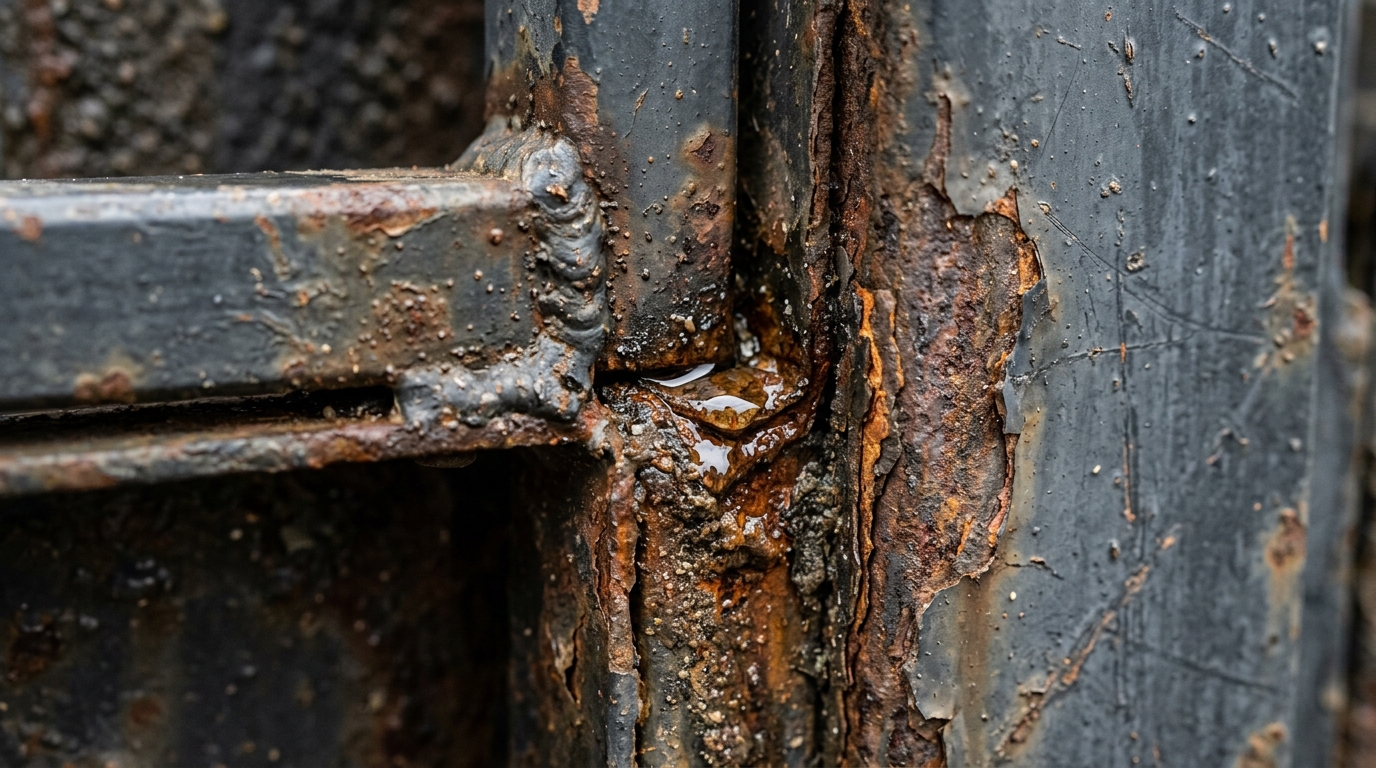
Rust begins when steel is exposed to both moisture and oxygen, and metal gates often contain several places where these conditions persist. When I inspect a gate, I pay close attention to unsealed hollow tubing, welds, sharp corners, drilled holes, overlapping joints, and narrow crevices. Hollow sections can collect condensation from the inside, while welds and cut edges often have thinner or damaged coatings. Hinges and latch areas are also vulnerable because movement wears away protective finishes and creates small spaces where water and dirt can remain.
Ground-level sections deserve extra attention because splashed water, mud, leaves, and lawn chemicals can remain against the steel for long periods. Coastal salt spray and road salt make corrosion worse by helping water conduct electrical currents across the metal, while dirt holds moisture against the surface. Standing water around posts, hinges, or frame joints can cause rust to spread beneath an otherwise intact coating. Even a small drilled hole or coating chip may become an entry point if it is not sealed and repaired promptly.
Effective rust prevention for a metal gate starts with eliminating moisture traps and protecting vulnerable edges before corrosion takes hold. For a new steel gate, hot-dip galvanizing provides durable protection, while a compatible paint or powder topcoat can add a duplex barrier system. With an existing gate, I focus first on removing rust, cleaning contaminants, preparing the surface thoroughly, and addressing unsealed tubing, crevices, and drainage problems before applying a new coating. Regularly checking ground-level areas, hinges, and latch points helps identify coating damage early, when a targeted repair is far easier than replacing corroded steel.
Hot Dip Galvanizing And Duplex Coatings
For a new outdoor steel gate, I generally regard hot-dip galvanizing as the strongest general-purpose foundation for rust prevention. The gate is immersed in molten zinc, creating a bonded coating that protects the steel as a barrier and can provide sacrificial protection if minor scratches expose the surface. This process covers many edges, weld areas, and hard-to-reach surfaces more reliably than paint applied to untreated steel, provided the gate is designed with suitable drainage and vent holes. Paint and powder coating can still perform well, but their durability depends heavily on thorough surface preparation, coating thickness, and prompt repair of chips or scratches.
A compatible topcoat over galvanized steel is known as a duplex coating system. It combines corrosion protection with greater flexibility in color and finish. The zinc layer protects the underlying steel, while the paint or powder coating shields the zinc from weathering and adds another barrier against moisture, salts, and pollutants. Because not every coating bonds properly to fresh galvanized surfaces, the zinc should be cleaned, prepared, and paired with a primer or topcoat designed for galvanized metal. When specified correctly, a duplex system can be especially useful for gates near roads, coastal areas, swimming pools, or other demanding environments.
I also consider the gate’s design and maintenance needs rather than treating the coating as the only rust prevention measure. Sealed hollow sections can trap condensation, while unsealed cut ends, overlapping joints, hinges, and ground-level areas can collect water and dirt. For a long-lasting result, I look for clean welds, rounded sharp edges, effective drainage, and accessible areas for inspection and touch-up. This combination of sound fabrication, hot-dip galvanizing, and, where appropriate, a compatible topcoat gives a new metal gate durable protection without relying on paint alone.
Preparing Existing Gates For Rust Repair
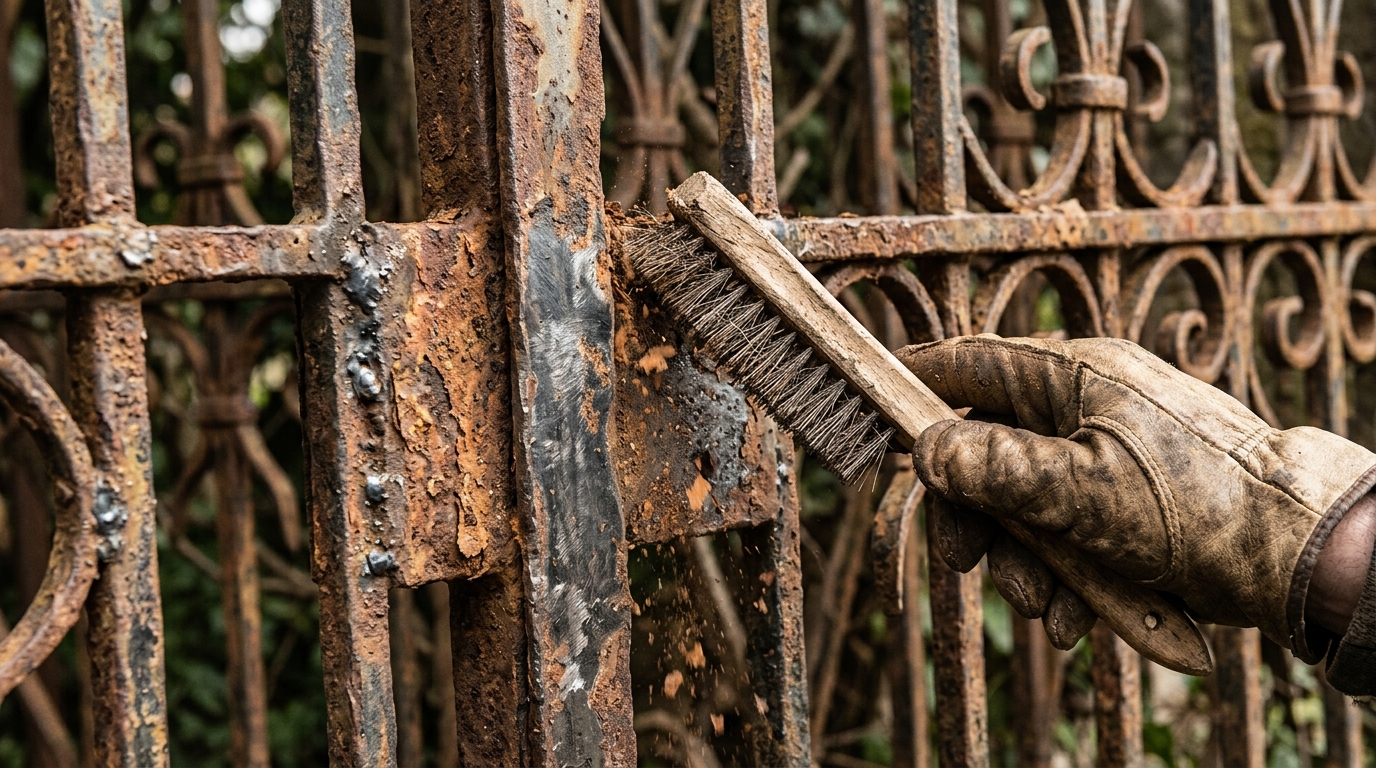
Proper preparation is the foundation of reliable rust prevention for a metal gate because new paint cannot stop corrosion that remains underneath. I begin by removing loose rust, flaking coating, and mill scale with a wire brush, scraper, sanding tools, or abrasive blasting, depending on the gate’s condition. The surface then needs thorough cleaning to remove dust, grease, salts, and other contaminants that can interfere with primer adhesion. After rinsing, I allow the steel to dry completely, paying close attention to seams, hinges, tubing, and shaded areas where moisture may linger.
Rust repair should also address the metal itself, not just its appearance. Damaged welds, sharp edges, deep pitting, and cut ends can leave thin spots where coatings fail first, so these areas may need grinding, smoothing, or professional weld repair before refinishing. Hollow sections should be checked for condensation, blocked drain holes, and unsealed openings that allow water to collect inside. I also inspect overlapping pieces, hinge plates, and ground-level sections for dirt and standing water, then improve drainage or seal suitable joints without trapping moisture inside the gate.
The primer and finish must be compatible with both the prepared metal and each other. For example, a corrosion-resistant metal primer should be applied according to its product requirements, followed by a compatible exterior coating designed for steel and the local exposure conditions. I avoid applying paint over damp steel, active rust, or an unknown coating without testing because incompatible products can blister, soften, or peel. Taking these steps may require more time than adding another coat, but it gives the finish a sound surface and makes ongoing maintenance much more effective.
Metal Gate Maintenance And Design Details
I begin rust prevention for a metal gate with regular inspections, especially around welds, hinges, latch areas, sharp corners, and the bottom rail. I look for bubbling paint, discoloration, scratches, loose fasteners, and small areas where bare steel is exposed. Washing the gate with clean water and a mild detergent removes salt, dirt, and other contaminants that can hold moisture against the surface. After the gate dries completely, I clean and prime scratches before applying a compatible touch-up coating instead of painting over active rust. I also lubricate hinges and latch hardware with a product suited to outdoor use so friction and wear do not damage the protective finish.
Good design reduces the moisture traps that make corrosion difficult to control. I recommend improving drainage around the gate, keeping the bottom edge above standing water, and avoiding direct contact with wet soil or constantly damp paving. Hollow steel sections should be sealed appropriately, with designed drain and vent openings where needed, so condensation does not remain trapped inside the tubing. For new outdoor steel gates, hot-dip galvanizing provides durable corrosion protection, while a compatible paint or powder topcoat can add color and extra protection in a duplex system. On existing gates, careful surface preparation and prompt repair of damaged coatings are usually more important than simply adding another coat.
Because every property has different exposure and usage patterns, I tailor rust prevention recommendations to the gate’s material, location, drainage, coastal or urban conditions, and frequency of use. A gate near road salt, sprinklers, or the shoreline may need more frequent washing and inspections than one in a sheltered setting. I document practical improvements with before-and-after photos, and client feedback helps show how repairs, drainage changes, and coating work perform over time. This personal approach keeps maintenance focused on the areas most likely to rust and helps extend the gate’s useful life.
Conclusion For Long Lasting Metal Gates
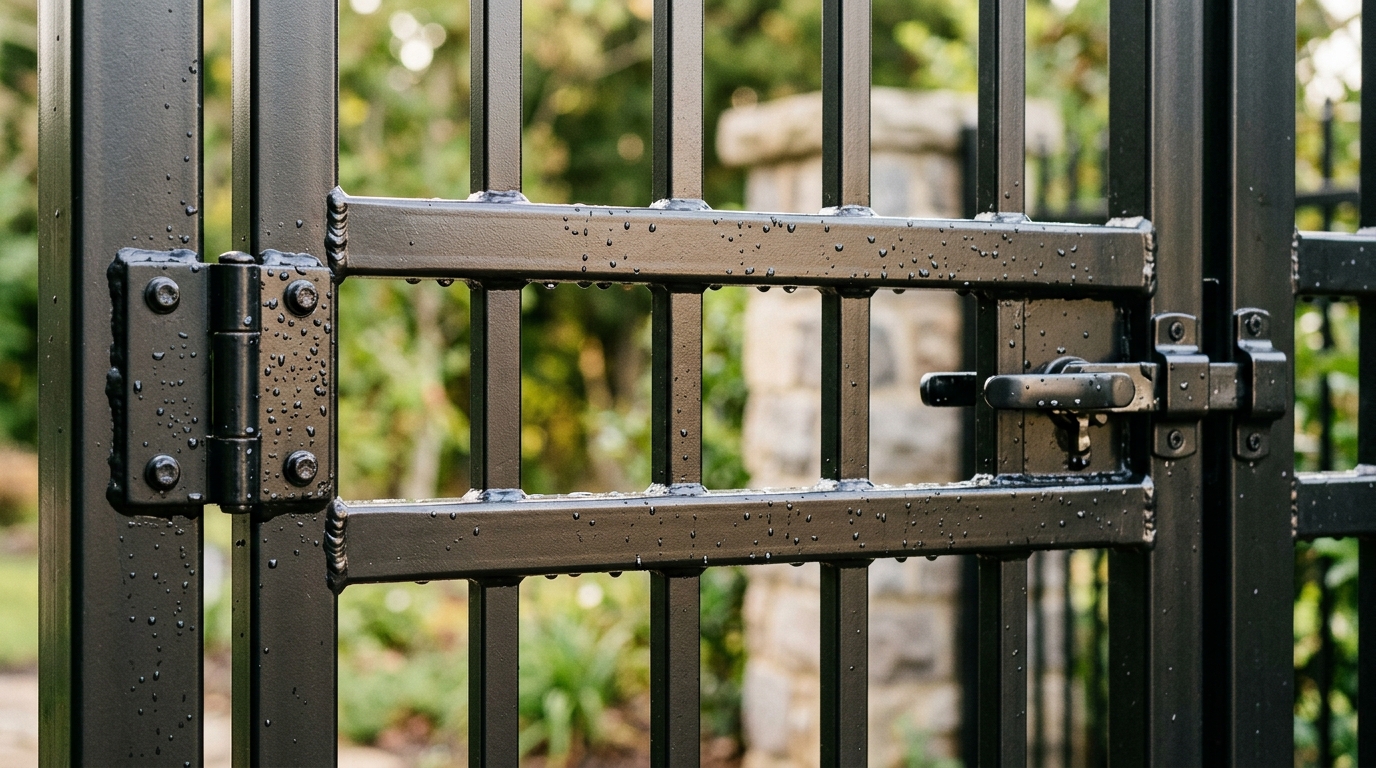
For a new outdoor metal gate, I consider hot-dip galvanizing one of the most dependable foundations for long-term rust prevention. This process coats the steel with a durable layer of zinc that protects exposed surfaces and helps shield areas that are difficult to paint evenly. In demanding environments, a compatible paint or powder-coat topcoat can create a duplex system, adding another barrier against moisture, salt, and pollutants. The coating specification should account for welds, cut edges, hinges, fasteners, and other areas where corrosion often begins. Choosing the right system at the start can reduce maintenance and significantly extend the gate’s service life.
Existing gates can also last much longer when preparation and maintenance are handled carefully. I recommend thoroughly removing rust and failed coating, preparing the steel to a sound surface, and applying products that are compatible with the remaining coating. Moisture traps, including unsealed hollow tubing, overlapping steel, clogged drainage points, and soil or debris near the base, should be corrected rather than covered up. Any scratches, chips, or damaged areas should be repaired promptly before water reaches the underlying steel. Because local weather, salt exposure, gate materials, and maintenance routines vary, I recommend a custom gate assessment to identify the most practical rust prevention plan for your property.
Choose a Rust-Resistant Gate System
Protecting a metal gate from rust starts with choosing the right system for its environment. For a new outdoor steel gate, I generally consider hot-dip galvanizing the strongest general-purpose foundation because it coats the steel with a durable layer of zinc, including many edges and hard-to-reach areas. A compatible paint or powder coating can then create a duplex system that adds color, extra barrier protection, and improved resistance to weathering. This approach is especially valuable in coastal, humid, or high-salt areas where corrosion develops more quickly.
For an existing gate, careful preparation is more important than simply adding another coat of paint. I remove loose rust and failing coatings, clean and dry the surface thoroughly, address crevices and moisture traps, and use a compatible primer and topcoat designed for exterior metal. Hollow tubing should be sealed or properly drained, while welds, cut edges, hinges, latch points, and ground-level sections deserve regular inspection because they are common trouble spots. With prompt touch-ups, good drainage, and periodic maintenance, a metal gate can remain attractive, functional, and well protected for many years.