Fence Installation
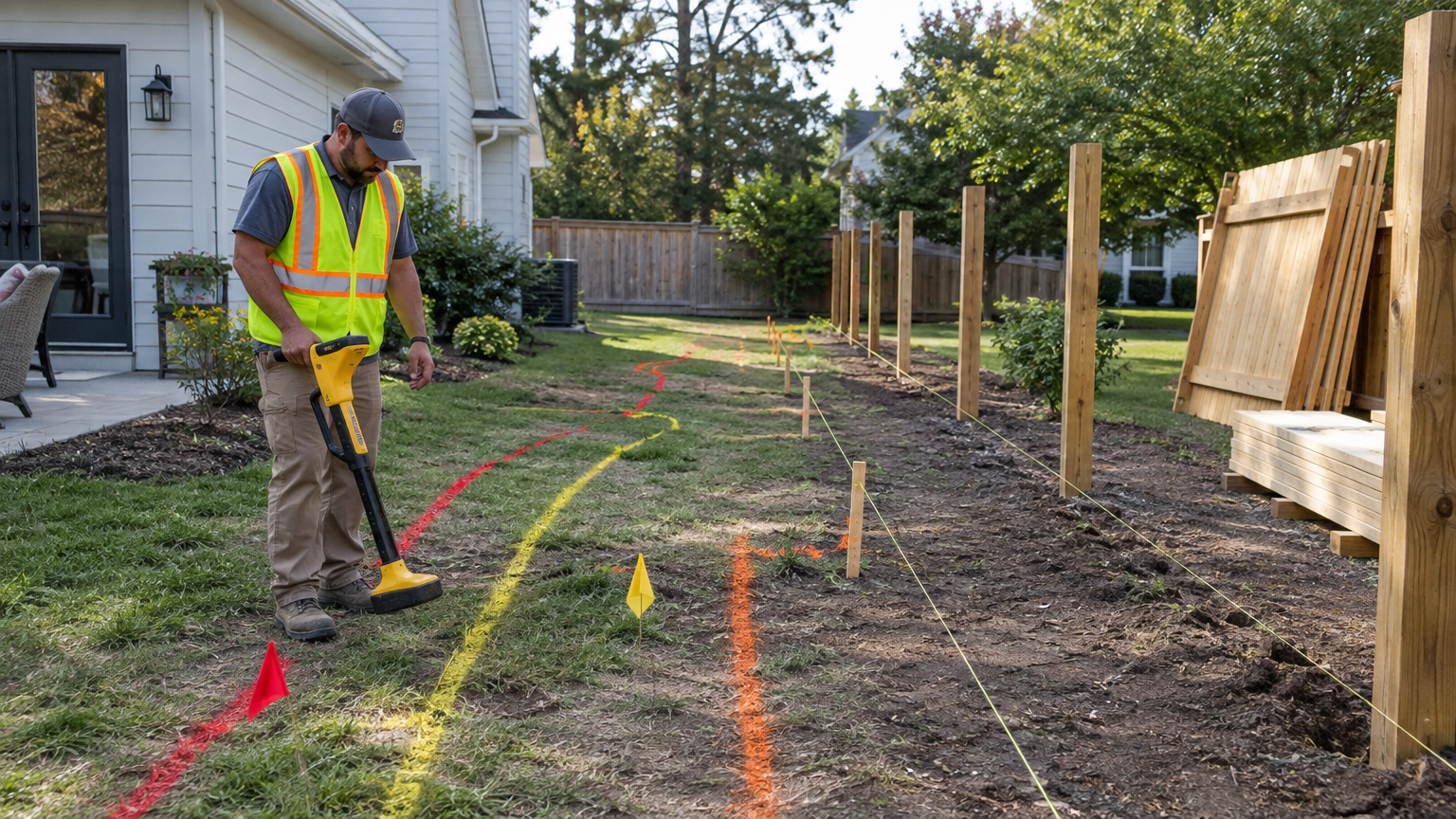
Utility marking before fencing starts with contacting the appropriate 811 center before digging post holes or doing other excavation, so participating utility owners can mark their underground facilities. Those marks help you plan the fence route, but may not show customer-owned irrigation or other private lines, which could need a separate locate.
Careful planning matters: the Common Ground Alliance’s 2024 damage-report data recorded 196,977 unique damage reports for 2024, with failure to notify an 811 center the leading reported root cause at 25%. At All County Fence and Gate, Inc., we install custom fences and automated gates throughout greater Los Angeles. Sharing utility information and your proposed fence and gate layout with your installer helps identify conflicts before work begins and supports a plan suited to your property.
Key Takeaways
- Before any fence-post or gate excavation, contact the appropriate 811 center, follow its instructions, and wait for all affected utilities to respond; submitting a request alone is not clearance to dig.
- Because 811 may not identify customer-owned irrigation or other private lines, confirm which facilities the public response covers and arrange a separate private locate when needed, which may involve an extra fee.
- Treat APWA color marks as estimated utility routes, not exact locations or permission to dig; near a marked facility, follow utility instructions and use safe exposure methods, including non-powered hand tools or a non-invasive method within the applicable tolerance zone.
- We recommend sharing the current fence-and-gate layout, 811 responses, private-locate information, and unresolved conflicts with your installer before work so potential post, corner, and gate conflicts can be addressed before digging.
- Local 811 notice periods and excavation definitions vary, so verify current requirements where the project will take place; Texas811’s guidance to allow at least two business days applies to Texas, not California.
How Do You Request Utility Marking Before Fencing?
Contact the appropriate 811 center before digging post holes or doing any other excavation, follow the center’s instructions, and wait for affected utilities to respond before digging. A submitted request is not clearance to begin work.
Notice periods and the definition of excavation vary by jurisdiction. Texas provides a clear example: Texas811 advises homeowners to contact 811 for fence work and allow at least two business days, excluding weekends and holidays. That is Texas guidance, not a California rule.
Texas law separately requires notice no earlier than the 14th day and no later than the 48th hour before covered excavation, excluding Saturdays, Sundays, and legal holidays. The law defines covered excavation as disturbing soil at least 16 inches deep with explosives, powered tools, or other mechanized equipment, including auguring, digging, and drilling. Texas Utilities Code Chapter 251 illustrates why you should check the rules where the project will take place.
A practical request sequence helps confirm that the site is ready for digging:
- Contact the applicable 811 center before excavation and submit a request for the fence work.
- Provide the project location and work details requested by the center, then follow its instructions about timing and next steps.
- Before digging, confirm that every affected utility has responded; do not rely on the submitted request alone.
For a project in greater Los Angeles, verify the current process and timing with the appropriate local notification center before scheduling excavation. Allow enough time for required responses, and wait until the center’s instructions and utility responses are complete before post holes are dug.
What Do Utility Marking Colors Mean?
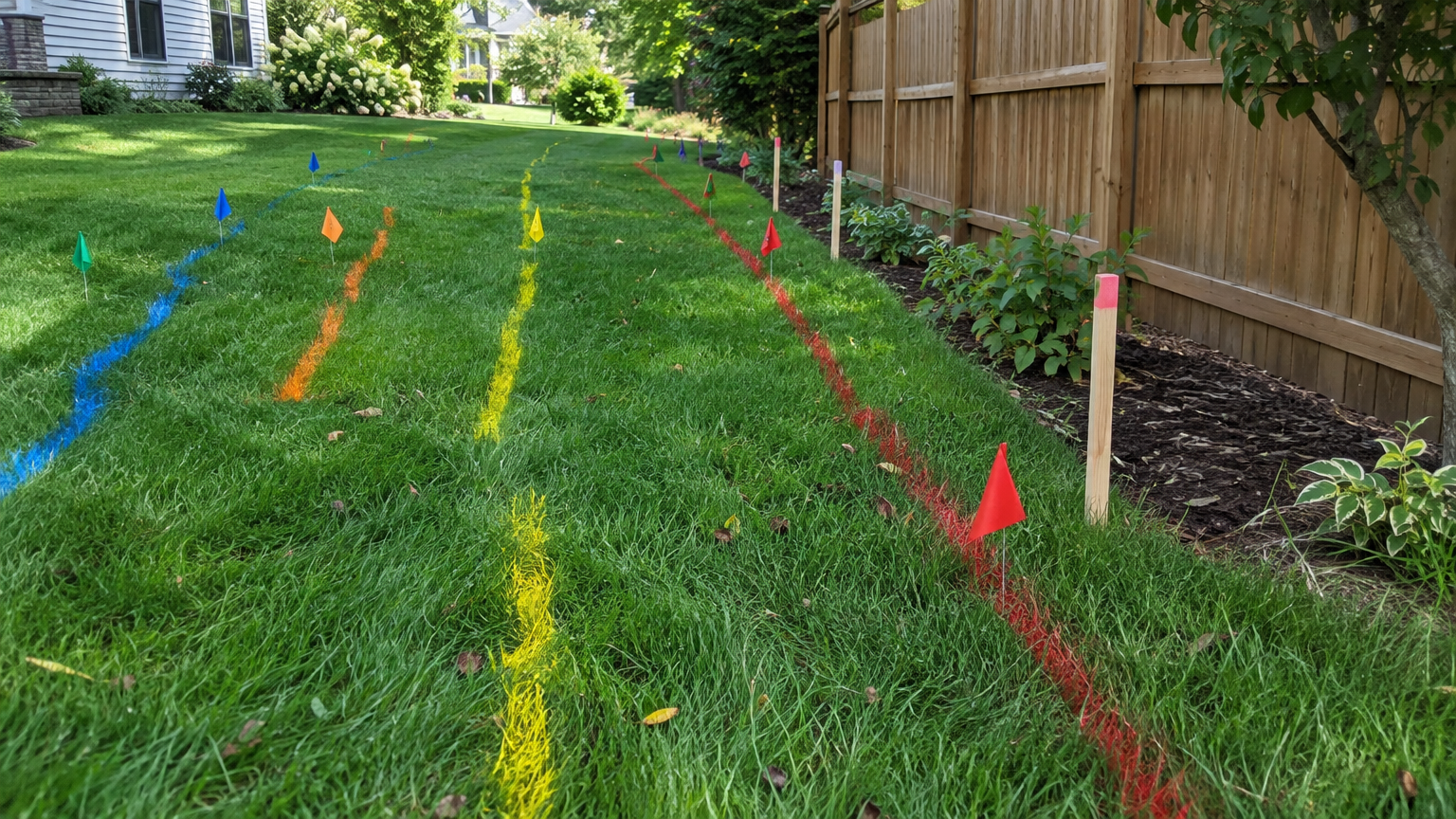
Utility marking colors identify the type of underground facility along a proposed fence route, using the APWA Uniform Color Code. Red marks electric power; yellow marks gas and petroleum; orange marks communications; blue marks potable water; green marks sewer and drains; and purple marks reclaimed water, irrigation, and slurry lines. The APWA color code and temporary marking guidance explains these standard colors.
Paint, flags, or other marks indicate a facility’s estimated route, not its precise location. Treat each mark as a warning and planning aid, not permission to dig directly over the line. As excavation approaches the estimated location, the facility’s exact position must be determined by safe and acceptable means, as required by OSHA’s excavation standard.
The tolerance zone is the area around a marked facility where extra care is needed. When local law or code does not define the zone, APWA recommends extending it to include the facility’s width plus 18 inches horizontally beyond each side. Within the applicable tolerance zone, use non-powered hand tools or a non-invasive method until the facility is exposed, following APWA’s tolerance-zone guidance. A visible line mark helps guide the approach, but careful exposure is needed to establish where the facility actually lies before continuing excavation.
Which Underground Lines Can 811 Miss?
811 may not identify customer-owned lines, including private irrigation and other services on your property. Public 811 requests notify participating utility owners to mark facilities covered by their response; they do not automatically account for every privately owned line. A private service may run beyond a utility’s facilities to serve irrigation or another feature on the property. Before finalizing fence-post locations, ask which facilities are included in the 811 response and whether a separate private locate is needed. A private-line locate is distinct from the public 811 service: Texas811 describes public 811 marking as free, while private locating is the property owner’s responsibility and may carry an extra fee.
How Should Utility Marks Shape Fence Layout?
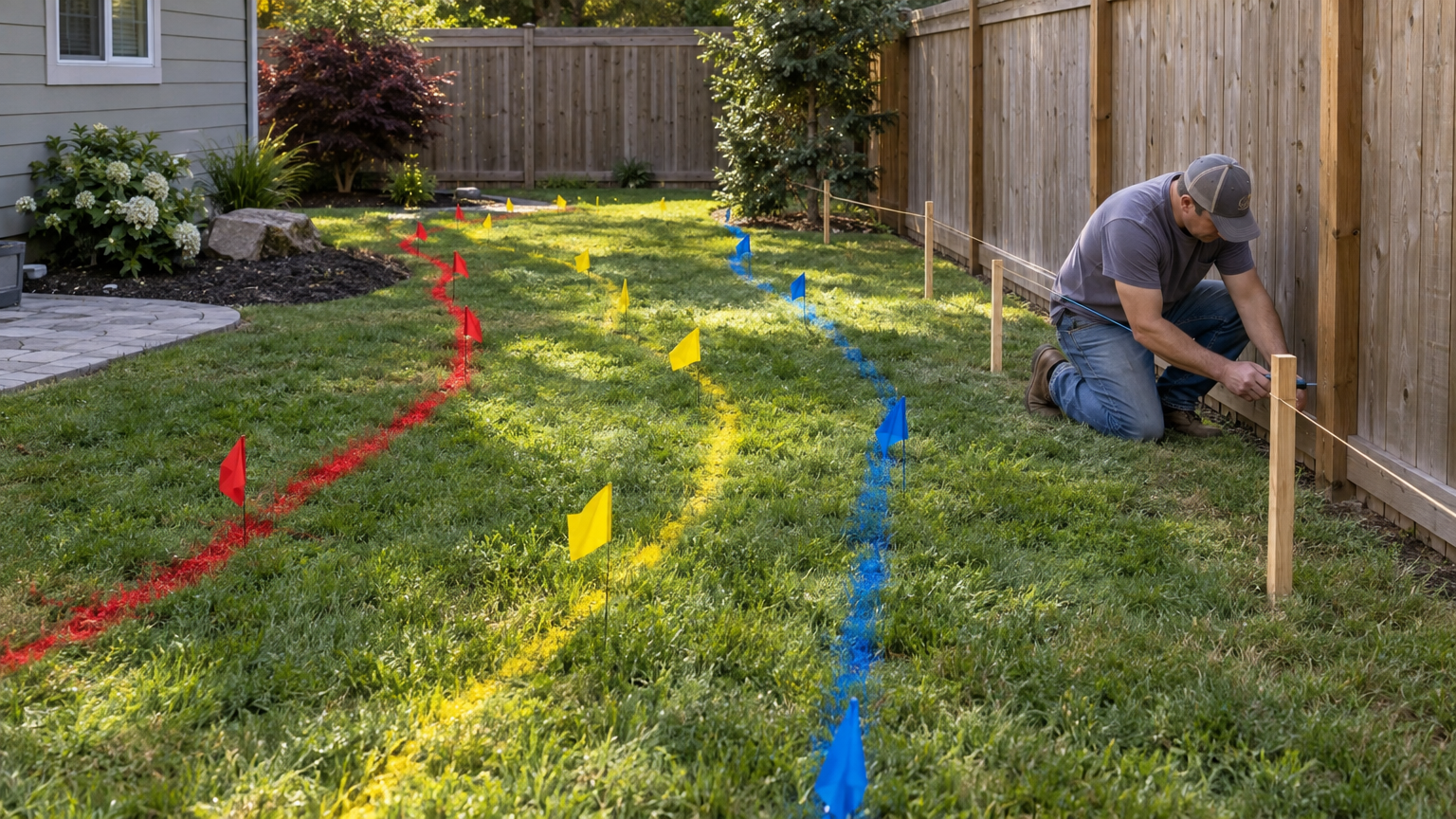
Utility marks should guide fence routing and post placement by showing where planned excavation may approach underground facilities. Compare the proposed fence route and every post location with all visible utility markings before work begins, including marks near the ends of the fence and inside the proposed enclosure.
Flag possible conflicts where a post hole, corner post, gate post, or equipment pad would fall on or near a marked route. Gate areas deserve careful review because gate posts and related equipment may require excavation beyond the fence line. Ask the installer to review each potential conflict while the layout is still adjustable.
If a marking conflicts with the plan, pause and coordinate a safe adjustment before digging. The installer can discuss whether to shift the fence or post location, or adjust the installation approach, with the relevant utility owner as needed. Do not move, cover, or ignore a mark to make the planned layout easier to install.
Keep the fence plan and locate information together so the installer can review them during project coordination. A drawing that shows the proposed route, post locations, corners, and gate area alongside the locate results makes potential conflicts easier to identify before excavation.
Utility markings help plan where excavation may need care; they do not establish the property boundary or replace property surveys, setback checks, or other project measurements. Confirm the fence line and dimensions separately before finalizing the layout.
What Should You Do If Marks Conflict With Fence Plans?
If a utility response is missing, a marking is unclear, or a mark conflicts with a planned post or gate location, stop and resolve the issue before excavation. Contact the 811 notification center to check the request status, or ask the relevant utility owner for direction. Keep digging out of the affected area until you know which facilities have responded and how to proceed.
Do not assume an unmarked area is clear. Public utility markings may not include private services, such as customer-owned irrigation lines, so ask whether a separate private locate is needed. If a fence post or gate post is close to a mark, clarify the conflict before deciding where excavation can safely take place.
Careful notification matters: the Common Ground Alliance’s 2024 DIRT Report analyzed 196,977 unique reported damages, and failure to notify a one-call center was the largest listed root cause, at 25% of reports. The Common Ground Alliance damage-report data shows why unresolved responses should not be treated as permission to dig.
As excavation approaches an underground installation’s estimated location, OSHA requires its exact location to be determined by safe and acceptable means. Follow OSHA’s excavation standard and the utility owner’s instructions before proceeding near a suspected line.
How Do You Hand Off Utility Information Before Installation?
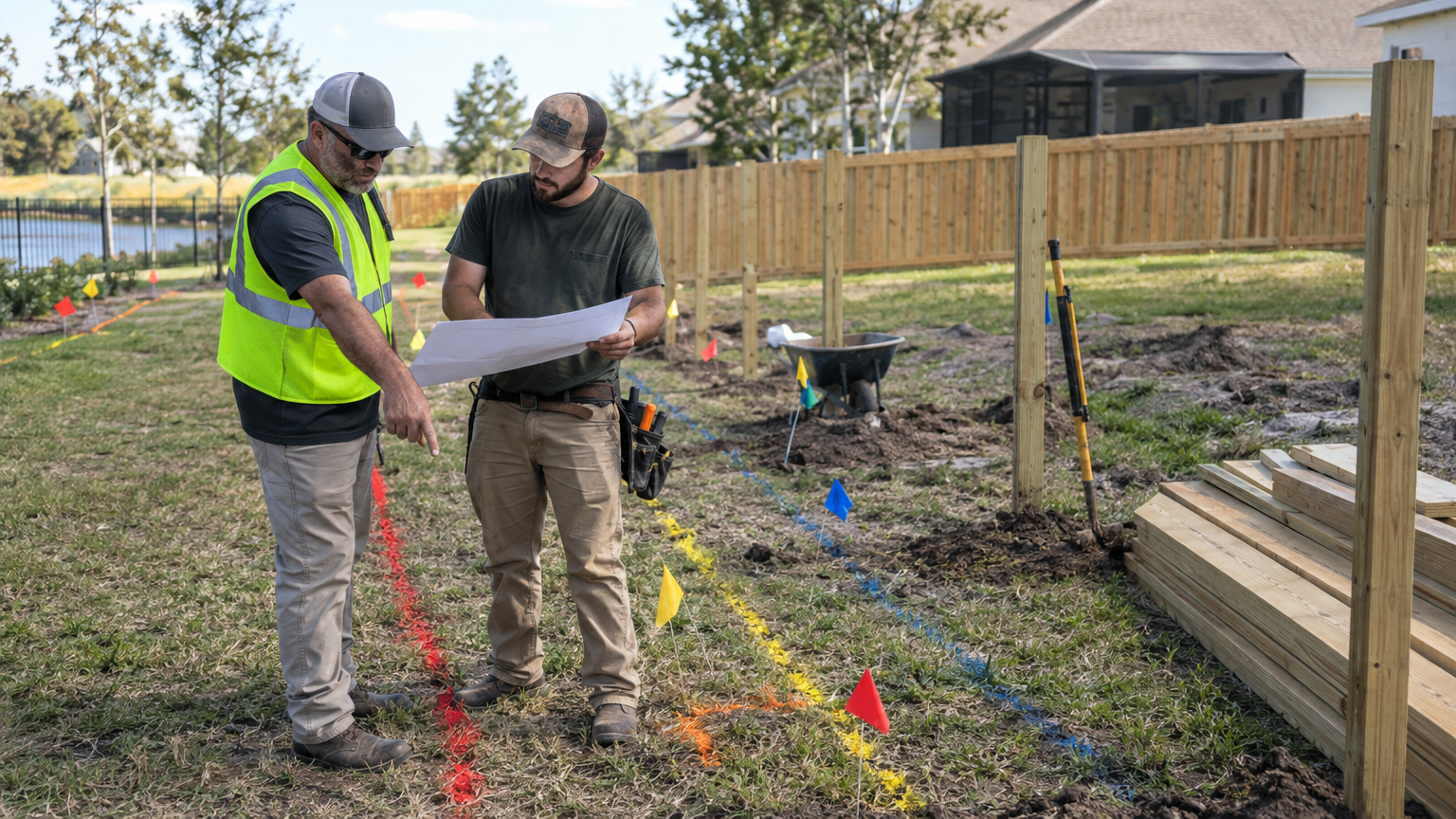
You hand off utility information by giving the installer the 811 response and any private-locate information, then reviewing open issues and the proposed fence and gate locations together before digging starts.
Before excavation, assemble the records and updates the installer needs:
– Keep the 811 response, including each utility’s status, available for the installer. Include any private-locate report or notes about customer-owned lines. – Identify unresolved responses and marked crossings on the proposed route. Explain which locations still need clarification and share any direction received from the notification center or utility owner. – Point out private lines and any areas where their routes or locations are uncertain. Do not treat the absence of a public mark as confirmation that a private service is absent. – Share planned layout adjustments, including shifts to the fence route, post locations, gate openings, or equipment areas, so the installer can compare the current plan with the locate information.
Ask the installer to review the proposed fence and automated gate locations against all available utility information before digging. A marked crossing near a post or gate may affect where excavation is planned, so make sure the installer knows about it even if the drawing has changed since the locate request. Keep the latest layout and locate records together, and clarify unresolved conditions before work proceeds in the affected area.
Utility information supports coordinated planning, but it does not guarantee that every underground conflict has been identified. Clear communication about what was located, what remains uncertain, and what has changed helps the installation team make informed decisions before excavation.
All County Fence and Gate, Inc. installs custom wood, wrought iron, vinyl, and chain link fencing, along with automated electric gates, throughout greater Los Angeles. Bringing the locate information and proposed layout into the same review helps guide a custom fence or gate plan suited to the property.
Plan Your Fence Installation Around Utility Marks
Before scheduling post-hole excavation, make one current layout sheet showing the fence line, each planned post, gate opening, and any gate equipment area. Add the utility marks and flag any post or gate location that overlaps or sits close to a marked route. If the layout has changed since the 811 request, note the changes and confirm whether updated marking is needed before work begins.
Send the layout with the 811 response and any private-locate information to your installer. For an unresolved utility response or a suspected private line, identify the affected section and keep excavation there on hold until the location is clarified. This gives the installation team a clear basis for discussing a route adjustment or another approach before digging.
All County Fence and Gate installs custom wood, wrought iron, vinyl, and chain link fences, as well as automated electric gates, throughout greater Los Angeles. When you contact us, share the marked-up layout and describe the fence or gate you are planning. If the project also involves a driveway, patio, deck, hardscaping, pool remodeling, or retaining wall, include those planned work areas so the overall property plan can be considered alongside the fence route.
Frequently Asked Questions
1. How long do utility markings remain usable before fence work starts?
Utility-marking validity depends on the status of the request and the applicable local rules, so do not assume the marks remain current for a fixed period. Ask the local 811 center whether the request is still valid for your planned start date, especially if the work has been postponed or the layout has changed.
2. What should you do if utility marking paint fades before installation?
If utility-marking paint fades, pause excavation near that route and contact the 811 center or utility owner for instructions on refreshing the marks. Do not guess the facility’s location from partial marks; wait for updated guidance before digging in the affected area.